
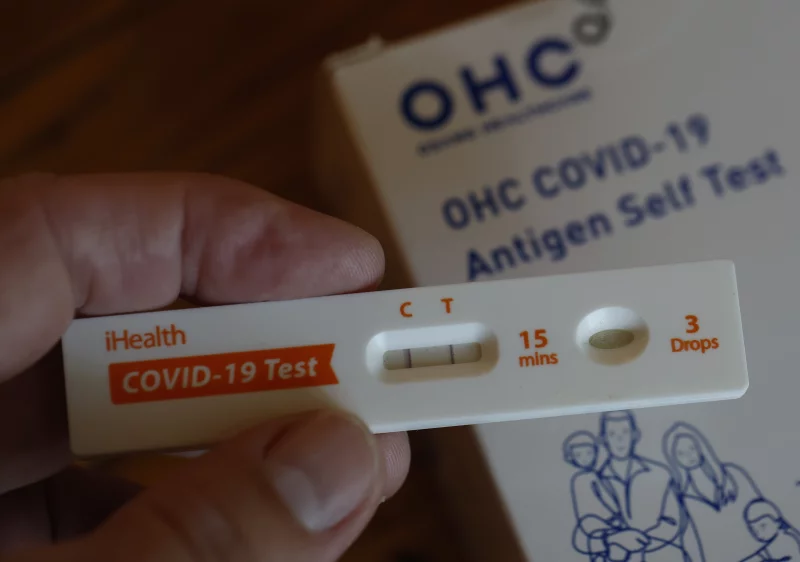
COVID-19 has become easy to forget. It no longer dominates daily life, hospital corridors or the evening news in the way it once did. But the virus has not disappeared, and a summer rise in infections can still catch people off guard.
The latest U.S. surveillance picture is more complicated than the phrase “summer surge” suggests. COVID-19 activity has remained relatively low compared with the major waves of the pandemic, yet seasonal increases can still occur, particularly as people travel, gather indoors and encounter changing SARS-CoV-2 variants.
The Centers for Disease Control and Prevention tracks the virus through wastewater, emergency department visits, hospitalizations and other indicators. Its current respiratory-virus data show COVID-19 activity at low levels nationally, although wastewater surveillance can provide an earlier indication that transmission is beginning to change.
That distinction matters. A rise in infections is not the same thing as a return to the conditions seen during the pandemic’s worst periods.
Still, for older adults, people with weakened immune systems and others at higher risk of severe disease, even a relatively small summer wave can have consequences.
Why COVID-19 can rise during the summer
COVID-19 does not follow exactly the same seasonal pattern as influenza. Flu typically becomes a major problem during the colder months, while SARS-CoV-2 has repeatedly produced significant increases outside the traditional winter respiratory-virus season.
Scientists still do not have one definitive explanation for that pattern.
Human behavior is part of it. Summer brings international travel, crowded airports, festivals, indoor gatherings during periods of extreme heat and large family events. Air conditioning can also push people indoors, where respiratory viruses spread more easily.
The virus itself keeps changing.
SARS-CoV-2 accumulates mutations as it circulates. Some new lineages disappear quickly, while others gain an advantage and become more common. The CDC continues to use genomic surveillance to monitor those changes and assess whether emerging variants could affect transmission, testing, treatment or vaccines.
The CDC COVID-19 surveillance data track several indicators that help distinguish a rise in infections from a rise in severe disease.
That difference is increasingly important because population immunity has changed dramatically since 2020.
Many people have acquired immunity through previous infection, vaccination or both. As a result, a new wave can produce plenty of infections without producing the same number of hospitalizations and deaths seen during earlier stages of the pandemic.
That does not make the virus harmless.
COVID-19 can still cause several days of fever, cough, exhaustion, headaches and other symptoms. Some people recover quickly. Others remain ill for much longer. A portion of infections can also lead to Long COVID, with symptoms that persist or return after the initial illness.
The risk is uneven across the population.
Older adults remain particularly vulnerable to severe COVID-19. So do people with certain underlying conditions and those who are moderately or severely immunocompromised.
For them, the question is not whether COVID-19 is still capable of causing a large national crisis. It is whether exposure turns into a serious personal health event.
That is a much smaller question, but it is still an important one.
Vaccines, variants and the changing COVID-19 landscape
Another reason summer COVID-19 coverage can become confusing is that vaccine policy is no longer static.
The U.S. Food and Drug Administration has already selected the composition of the 2026-2027 COVID-19 vaccines. The agency advised manufacturers to use a monovalent vaccine targeting the JN.1 lineage XFG variant, based on the viruses circulating and the available evidence about vaccine effectiveness.
The FDA’s 2026-2027 COVID-19 vaccine guidance says the updated vaccines are intended to more closely match circulating SARS-CoV-2 viruses.
That does not mean every person will face the same recommendation.
Current U.S. vaccination guidance has increasingly emphasized individual risk, particularly for older adults and people with factors that increase the likelihood of severe COVID-19. The CDC’s 2025-2026 guidance used shared clinical decision-making for many people under 65 while continuing to emphasize vaccination for those at higher risk.
The policy debate can therefore make the public-health message harder to follow.
For years, the message was simple: get vaccinated because COVID-19 is dangerous and widespread. Now the calculation is more individualized. Previous immunity, age, health conditions and recent infections all matter.
There is another development worth watching: treatments and preventive medicines are expanding.
In May 2026, the FDA approved Xocova, whose active ingredient is ensitrelvir, as post-exposure prophylaxis against COVID-19 in adults and adolescents aged 12 and older following contact with someone infected with the virus. The treatment is intended to be started as soon as possible and within 72 hours of exposure.
The FDA’s 2026 drug approval database lists Xocova among the novel drugs approved this year.
Its arrival adds another option to the COVID-19 toolbox, but it does not eliminate the need for vaccination, testing, medical care or other precautions. It also comes with important prescribing restrictions and potential drug interactions, meaning it is not something people should simply take without medical guidance.
Meanwhile, variants remain under constant observation.
The CDC’s wastewater surveillance has identified XFG among the variants being monitored in the United States. Wastewater is useful because it can reveal changes in viral circulation before traditional clinical data fully capture what is happening in communities.
That makes wastewater data particularly useful when trying to determine whether an apparent increase is becoming a broader wave.
Who should pay closer attention to a summer COVID-19 rise?
For most healthy adults, a summer COVID-19 infection is unlikely to resemble the severe disease that overwhelmed hospitals during the early pandemic years. That is one of the major changes in the virus’s place in American life.
But “less dangerous” is not the same as “no longer dangerous.”
Older people remain among those most likely to experience serious complications. The same is true for people whose immune systems are weakened by disease or treatment.
That creates a practical problem during the summer.
Someone may assume that a respiratory illness is simply a cold because COVID-19 has become less prominent. Meanwhile, a person living with them may have a much greater risk from the same infection.
The symptoms can also overlap with influenza and other respiratory infections. Fever, sore throat, coughing, congestion, fatigue and headaches do not identify the virus by themselves.
Testing can therefore still be useful when the result would change what someone does next, particularly around vulnerable relatives or people receiving medical treatment.
The CDC continues to use hospitalization and emergency-department data alongside wastewater and laboratory surveillance because no single measure gives a complete picture. A rise in wastewater detections, for example, does not automatically mean hospitals are about to fill up. Severity indicators have to be watched separately.
The CDC respiratory virus activity dashboard provides another way to compare COVID-19 activity with influenza and RSV across the country.
That broader view is useful this summer because COVID-19 is now competing for attention with a long list of other infections.
There is also a psychological factor. After years of pandemic warnings, many Americans have become understandably tired of thinking about COVID-19. That fatigue is unlikely to disappear just because the virus remains in circulation.
The more realistic picture is quieter than the one Americans knew in 2020 or 2021. COVID-19 continues to circulate, variants continue to evolve, and seasonal increases remain possible. At the same time, current national activity is far below the levels associated with the most disruptive waves of the pandemic.
For people at higher risk, however, that distinction offers little comfort if an infection becomes severe. Their risk remains the reason public-health officials continue to watch the virus even when most Americans have moved on.