
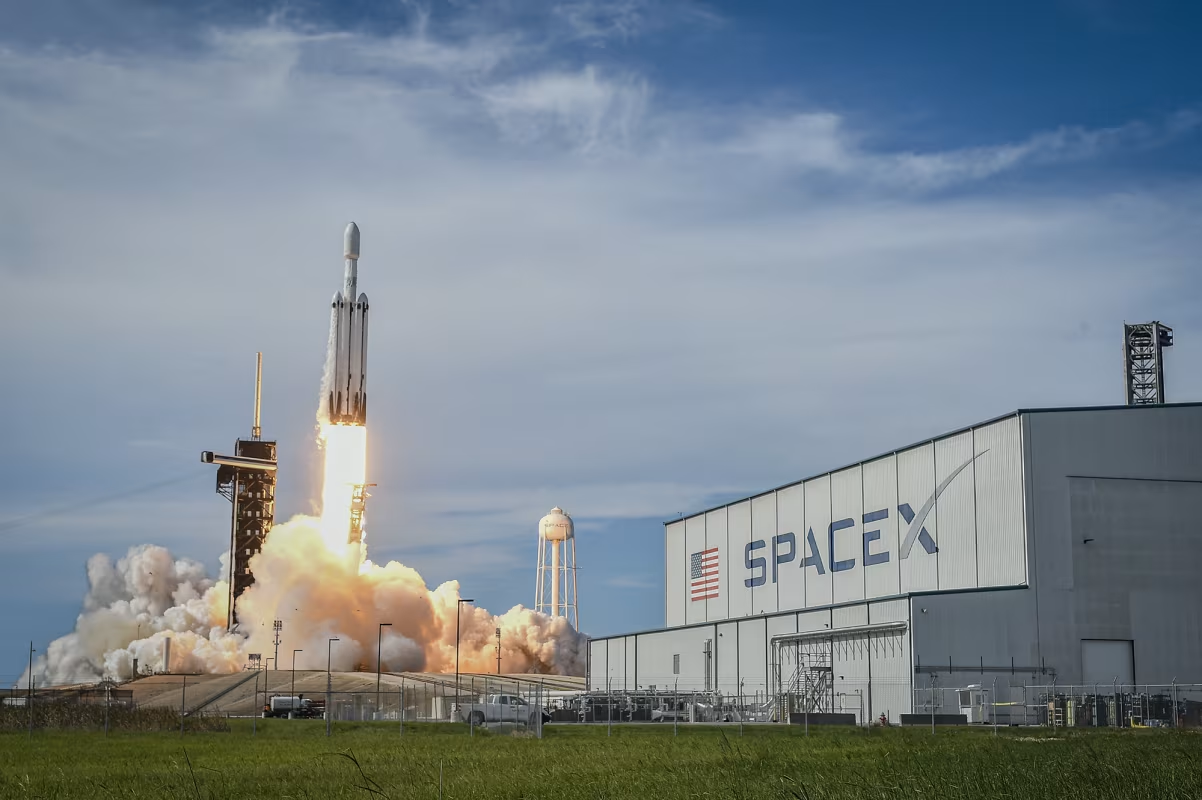
The proposed SpaceX IPO is attracting significant attention across financial markets due to its potential scale. There is also a growing connection between artificial intelligence and commercial space operations. If completed under the reported terms, the SpaceX IPO could raise approximately USD 75 billion. This would value the company at nearly USD 1.77 trillion and place it among the most valuable corporations in the world.
Founded by Elon Musk in 2002, SpaceX transformed from a private rocket manufacturer into a diversified technology company operating across launch services, satellite communications, and emerging AI initiatives. Therefore, investors are closely watching how the company plans to combine these sectors into a long-term growth strategy.
SpaceX IPO Highlights the Convergence of AI and Space Technology
The potential SpaceX IPO comes at a time when artificial intelligence remains one of the most influential drivers of market valuations. While the company is best known for reusable rockets and human spaceflight missions, recent strategic moves indicate a broader vision. This vision extends far beyond transportation to orbit.
SpaceX’s satellite internet network Starlink has already established a global presence, serving customers in numerous countries and supporting communications infrastructure in remote regions. Information about Starlink’s expanding capabilities can be found through Starlink satellite internet. This reference illustrates the scale of the company’s telecommunications operations.
The company’s future plans reportedly include deeper integration between AI systems, satellite networks, autonomous operations, and large-scale computing infrastructure. As a result, these initiatives have contributed to growing investor interest in the SpaceX IPO as market participants search for companies positioned at the intersection of multiple high-growth industries.
Artificial intelligence remains a rapidly evolving field. Industry developments tracked by organizations such as artificial intelligence standards continue to shape how advanced technologies are deployed across commercial sectors. This includes aerospace and telecommunications.
Why Investors Are Watching the SpaceX IPO Closely
Several factors distinguish the SpaceX IPO from traditional public offerings. First is the company’s dominant position in commercial launch services. SpaceX conducts frequent orbital missions for governments, private companies, and scientific organizations. This creates a substantial competitive advantage within the aerospace sector.
Second is the company’s growing satellite business. Starlink has evolved into a major revenue-generating platform capable of supporting consumers, businesses, and government agencies worldwide. This diversification reduces dependence on launch contracts alone and strengthens the broader investment narrative surrounding the SpaceX IPO.
Market observers are also evaluating how proceeds from a future public offering could support ambitious projects involving lunar exploration, Mars transportation systems, advanced satellite constellations, and AI-related infrastructure. Public information regarding ongoing exploration objectives can be reviewed through NASA human space exploration programs. In this area, commercial participation continues to expand.
The scale of the proposed valuation reflects expectations that SpaceX can maintain leadership across multiple technology sectors simultaneously. However, investors would still need to assess execution risks, capital requirements, regulatory considerations, and the long-term profitability of AI-driven initiatives.
Elon Musk’s Ownership and the Potential Market Impact
A successful SpaceX IPO would significantly affect both the aerospace industry and global capital markets. Elon Musk currently remains the company’s largest shareholder. Any public offering structure would likely preserve substantial influence over corporate decision-making through voting arrangements and ownership concentration.
The potential transaction would also serve as a benchmark for other technology companies considering public listings. Firms developing advanced AI systems, space technologies, and next-generation infrastructure may view the SpaceX IPO as a test case for investor appetite toward large-scale innovation-driven businesses.
Commercial space activity has expanded rapidly over the last decade, supported by increasing government partnerships and private-sector investment. Broader industry information is available through commercial space transportation. This information reflects the regulatory framework that supports launch operations and spaceflight activities.
As financial markets continue rewarding companies associated with artificial intelligence, investors will likely focus on whether SpaceX can convert technological leadership into sustained profitability. This consideration comes as the company pursues some of the most ambitious engineering projects ever attempted by a private enterprise.