
The phrase “Rivian CEO taking different approach than Elon Musk for humanoid robotics company” is becoming a defining part of RJ Scaringe’s broader technology strategy. While many comparisons between Rivian and Tesla have focused on electric vehicles, a new area of competition is emerging around artificial intelligence and humanoid robotics.
Scaringe, founder and chief executive of Rivian, is betting that intelligent robots will become a common sight in factories over the coming years. Unlike Elon Musk, however, he has chosen to build that vision through a separate company rather than incorporating humanoid robot development directly into the automaker itself.
The result is Mind Robotics, a rapidly growing startup that has already attracted significant investment and is positioning itself to become an important player in the future of industrial automation.
Rivian CEO Taking Different Approach Than Elon Musk for Humanoid Robotics Company Through Mind Robotics
Scaringe launched Mind Robotics with a structure intentionally designed to operate independently from Rivian. The company focuses on developing AI-powered humanoid robots capable of working alongside people in manufacturing and industrial environments.
According to Scaringe, separating the robotics business allows both companies to pursue specialized goals while maintaining a close strategic relationship. Rivian remains a significant shareholder and is expected to become one of the first major customers for the technology.
Industry observers continue monitoring advances in robotics through organizations such as Association for Advancing Automation, where developments in industrial robotics increasingly intersect with artificial intelligence.
Mind Robotics is currently expanding its workforce, recruiting software engineers, hardware specialists and data experts as it prepares to unveil its first product. Scaringe has indicated that an initial public demonstration could occur within the next year.
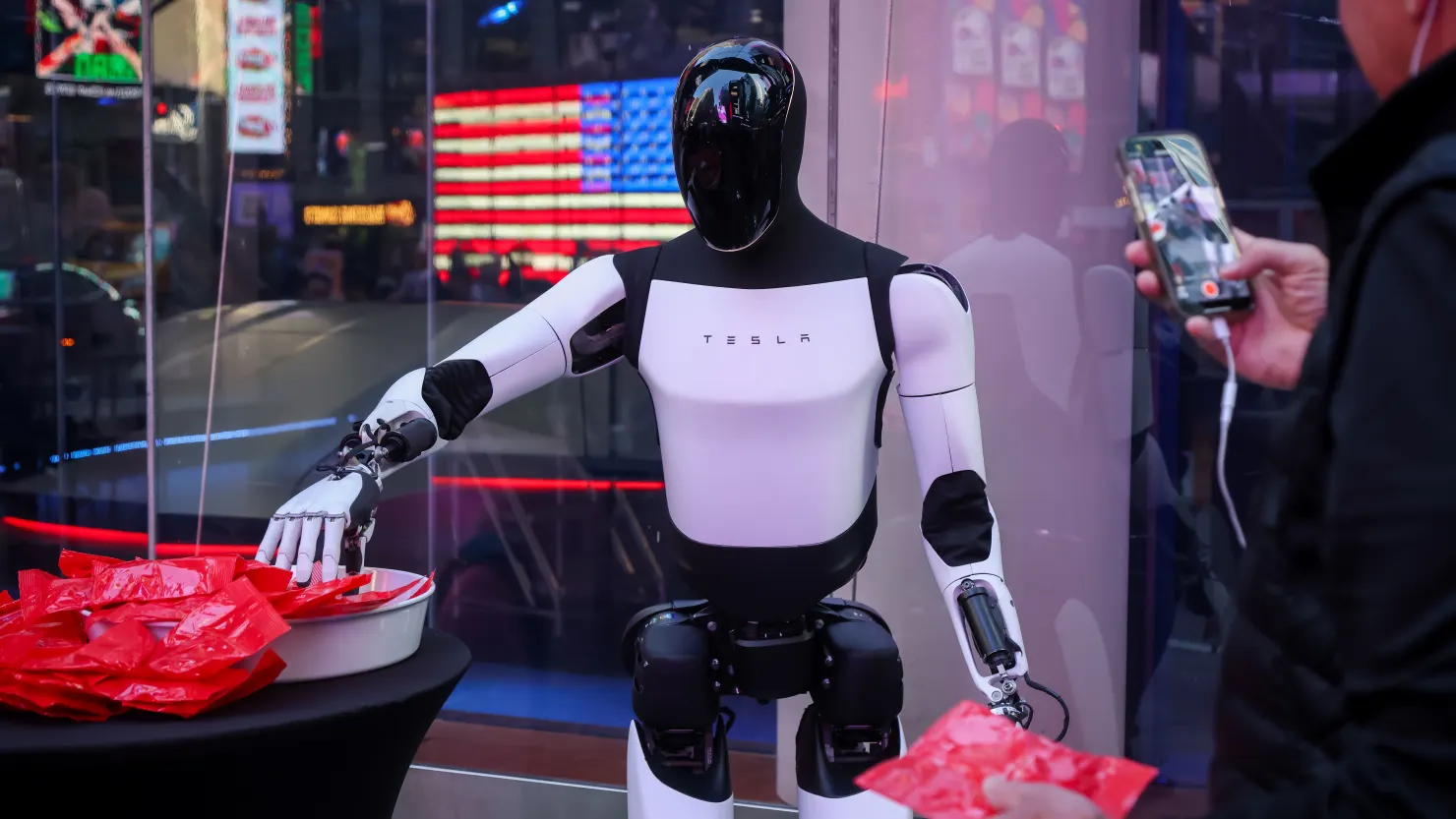
The approach differs significantly from Tesla’s strategy, where robotics development is being integrated more directly into the company’s broader product ecosystem.
Humanoid Robots Could Become Everyday Co-Workers in Manufacturing
Scaringe believes factories will eventually employ large numbers of humanoid robots working alongside human employees rather than replacing them entirely.
His vision centers on robots handling repetitive and physically demanding tasks while people focus on responsibilities requiring judgment, adaptability and advanced problem-solving skills.
Research into industrial automation continues across institutions including NationalInstitute of Standards and Technology, where experts study the relationship between robotics, productivity and workforce development.
Manufacturing companies worldwide continue reporting labor shortages, particularly for physically intensive roles. Supporters of humanoid robotics argue that intelligent machines could help address those gaps while improving operational efficiency.
Scaringe has repeatedly emphasized that widespread automation is likely to occur gradually. He expects human workers and robots to collaborate for many years before fully autonomous manufacturing facilities become commonplace.
That outlook contrasts with concerns expressed by critics who fear advanced robotics may eventually displace large portions of the workforce.
Artificial Intelligence Drives Rivian’s Long-Term Robotics Ambitions
Artificial intelligence sits at the center of Mind Robotics’ strategy. The company is using large-scale data, machine learning models and advanced computing systems to teach robots how to interact with complex real-world environments.
Scaringe has described the current period as one of the most important technological transitions of the modern era. He believes progress in AI is advancing faster than many people realize, creating opportunities that extend far beyond transportation.
Developments in machine learning and autonomous systems continue to be studied by organizations such as OpenAI and IEEE, where researchers are evaluating the future capabilities and societal impacts of intelligent systems.
Rivian itself is expected to benefit directly from the relationship. As both an investor and future customer, the automaker could deploy Mind Robotics technology within its own manufacturing operations once commercial products become available.
For now, the company is focused on demonstrating that humanoid robots can perform practical industrial work reliably, safely and efficiently. Whether that future arrives in a few years or over a longer timeframe, Scaringe is convinced that AI-powered robotic co-workers will become a familiar part of modern manufacturing much sooner than many people expect.