
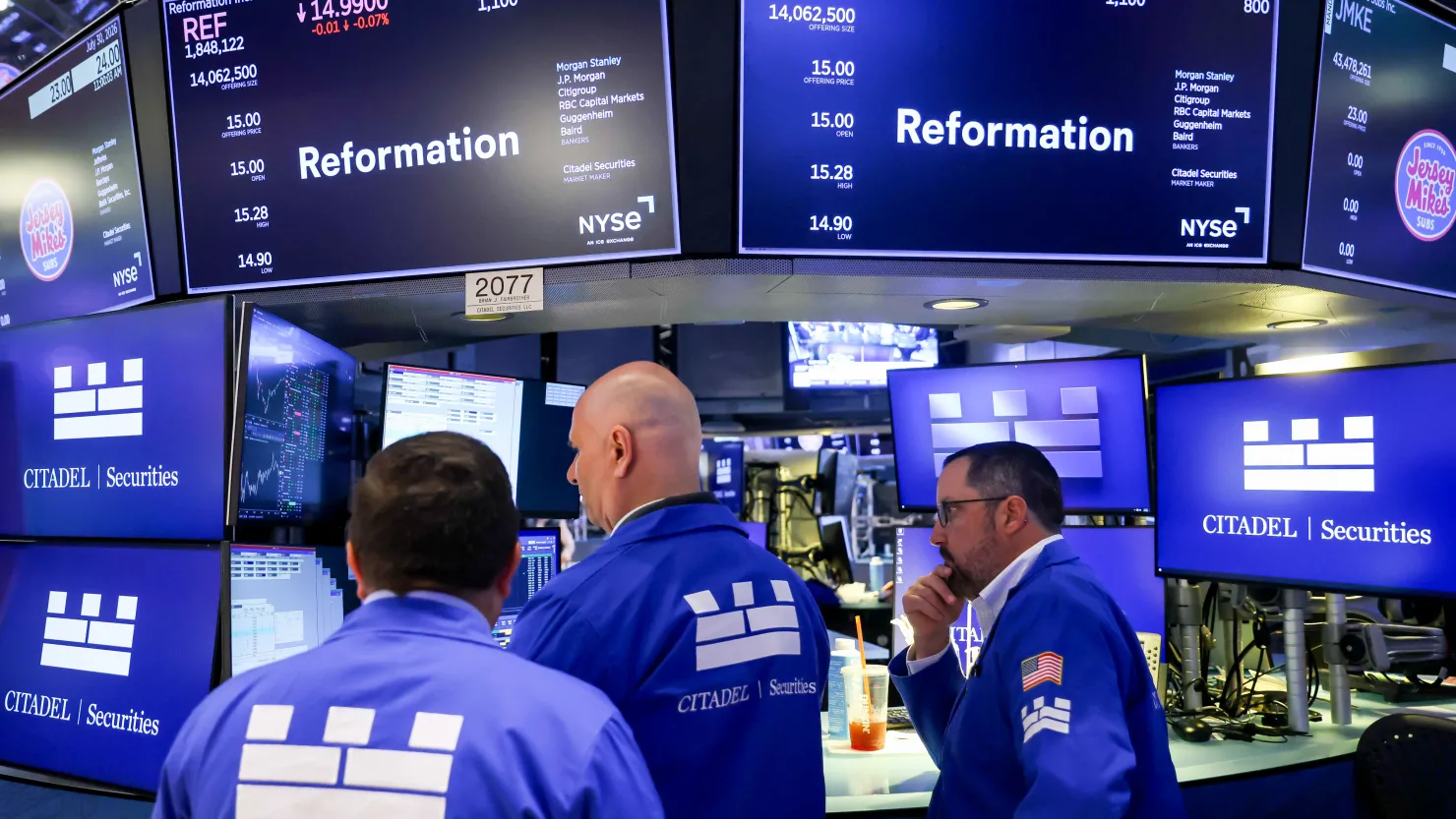
Reformation took its first steps as a publicly traded company on the New York Stock Exchange this week, signaling a new phase for a fashion brand that has spent the past several years expanding beyond its niche as a sustainability-focused womenswear label. While the company’s shares finished their debut session close to their initial offering price, executives emphasized that the public listing is intended to support long-term expansion rather than deliver immediate market gains.
The retailer raised fresh capital through its initial public offering, providing additional resources to accelerate store openings, strengthen digital operations and expand internationally. Company leadership described the IPO as the result of years of investment in brand development, supply chain improvements and customer acquisition.
Expansion Strategy Extends Beyond the U.S.
Reformation enters the public market after reporting several consecutive quarters of revenue growth and increasing profitability. Its retail footprint has expanded across North America and Europe, with stores operating in major metropolitan markets while its direct-to-consumer online business continues to account for a significant share of sales.
The company also plans to diversify its product assortment beyond its traditional dress collections, introducing additional apparel categories and accessories aimed at broadening customer engagement. Industry observers note that fashion companies with strong digital ecosystems have generally been better positioned to balance physical retail expansion with changing consumer shopping habits.
Investors can review the company’s public filings through . Securities and Exchange Commission, where newly listed companies disclose financial performance, business strategy and risk factors.
Premium Customers Continue to Drive Growth
Executives highlighted that Reformation serves a broad demographic despite its premium positioning. Younger shoppers continue to discover the brand through digital channels, while older consumers with higher disposable income remain an important source of repeat purchases.
Management believes this customer mix provides greater resilience during periods of economic uncertainty. Consumers purchasing premium apparel often reduce discretionary spending more gradually than lower-income households, allowing brands with loyal customer bases to maintain steadier demand.
The broader retail sector continues to monitor consumer confidence, inflation and discretionary spending trends. Updated economic indicators published by . Census Bureau Retail Statistics remain closely watched by investors evaluating future retail performance.
Public Markets Bring New Expectations
Going public introduces new challenges alongside greater financial flexibility. Quarterly reporting requirements, shareholder expectations and market volatility will place additional pressure on management to sustain growth while protecting margins.
Analysts expect Reformation’s future performance to depend on its ability to expand internationally without diluting the brand identity that fueled its early success. Continued investment in e-commerce, inventory management and customer loyalty programs is expected to play a central role in that strategy.
Additional information about listed companies and market activity is available through York Stock Exchange, while broader industry research on apparel and consumer spending trends can be found at Retail Federation. As Reformation begins its journey as a public company, investors will be watching whether its growth strategy can translate into sustained financial performance in an increasingly competitive global fashion market.