
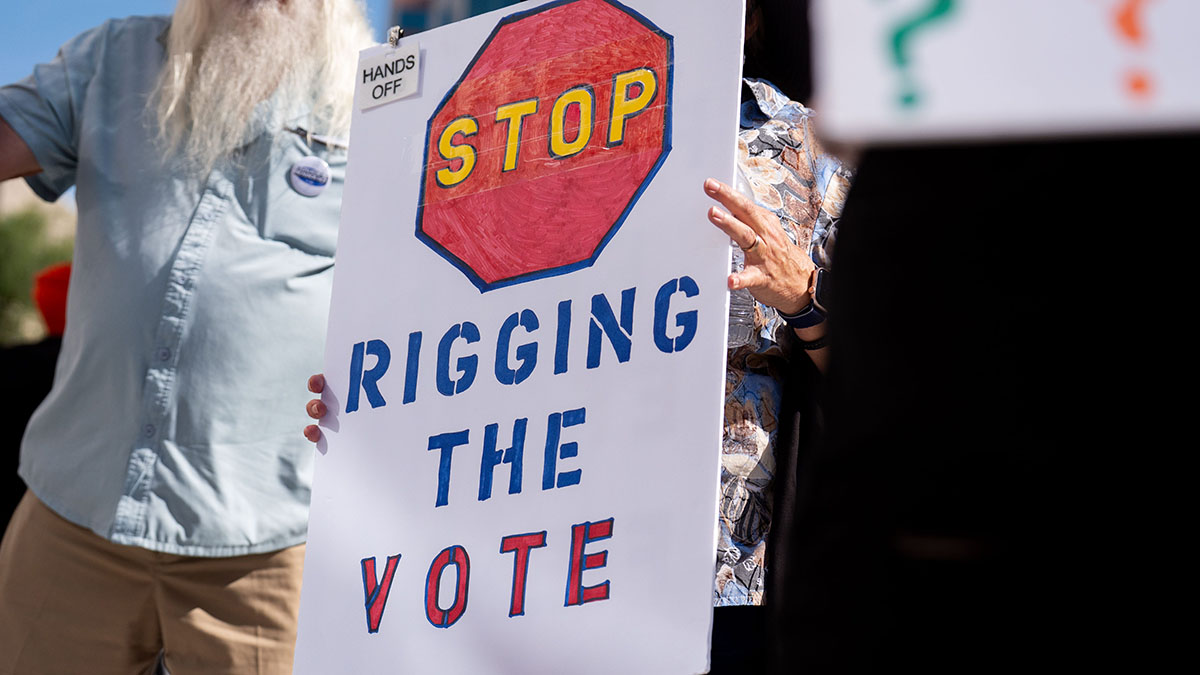
U.S. Redistricting Battle Intensifies as Court Rulings and Delayed Elections Create Confusion for Voters
The escalating redistricting battle across the United States is reshaping the electoral landscape, leaving voters navigating an increasingly complex and uncertain system. Recent legal challenges, delayed elections, and shifting district boundaries have intensified concerns about voter confusion and the broader impact on democratic participation.
Election officials and policy experts warn that while political parties compete for advantage, the practical consequences are being felt most directly by voters trying to understand where and how to cast their ballots.
Legal Challenges and Shifting District Maps
The redistricting conflict has accelerated following actions tied to the administration of Donald Trump, as well as a series of court rulings that have altered congressional maps in multiple states. In Louisiana, Jeff Landry postponed U.S. House primary elections after the Supreme Court of the United States invalidated an existing congressional map.
Similar disruptions have occurred in Alabama and Virginia, where court decisions and legal disputes have forced last-minute changes to district boundaries—even after mail-in ballots had already been distributed.
These developments follow broader legal shifts affecting the Voting Rights Act of 1965, which has historically played a central role in overseeing fair districting practices. More information on election law and districting can be found through National Conference of State Legislatures.
Voter Confusion and Electoral Disruptions
Election administrators, including former officials like Chris Piper, say the pace and scale of recent changes are unprecedented. Constant adjustments to district lines have made it difficult for voters to determine basic information such as their polling location, district boundaries, and candidates on the ballot.
Experts warn that confusion may lead to lower voter turnout, miscast ballots, or disengagement from the electoral process altogether. Advocacy organizations emphasize that clarity and consistency are essential for maintaining public trust in elections.
Efforts to provide voter guidance and district information are available through platforms like Vote.gov and Ballotpedia, which track election changes and candidate information nationwide.
Political Stakes and Impact on Representation
At the center of the redistricting battle is the competition for control of Congress, with both major parties seeking to maximize their electoral advantage. However, reform advocates argue that the process has become increasingly politicized, often prioritizing partisan outcomes over voter representation.
Organizations such as Unite America, led by Nick Troiano, have raised concerns about the long-term effects of these strategies. They warn that manipulating district boundaries can dilute voting power and undermine accountability.
Additional research on electoral fairness and districting reform is available through Brennan Center for Justice, which examines voting rights and democratic institutions in the United States.
As legal battles continue and new district maps are drawn, the consequences for voters remain significant. The evolving redistricting landscape is not only shaping political outcomes but also redefining how Americans engage with the democratic process at a fundamental level.