Hollywood Finally Gives Meteorologists a Leading Role in ‘Pressure’
For decades, meteorologists have rarely occupied center stage in major Hollywood productions. Disaster movies often feature storms, hurricanes, or tornadoes, but the scientists behind weather forecasting usually remain in the background. That changes with the release of Pressure, a historical drama that places weather science at the heart of one of the most important military operations in modern history.
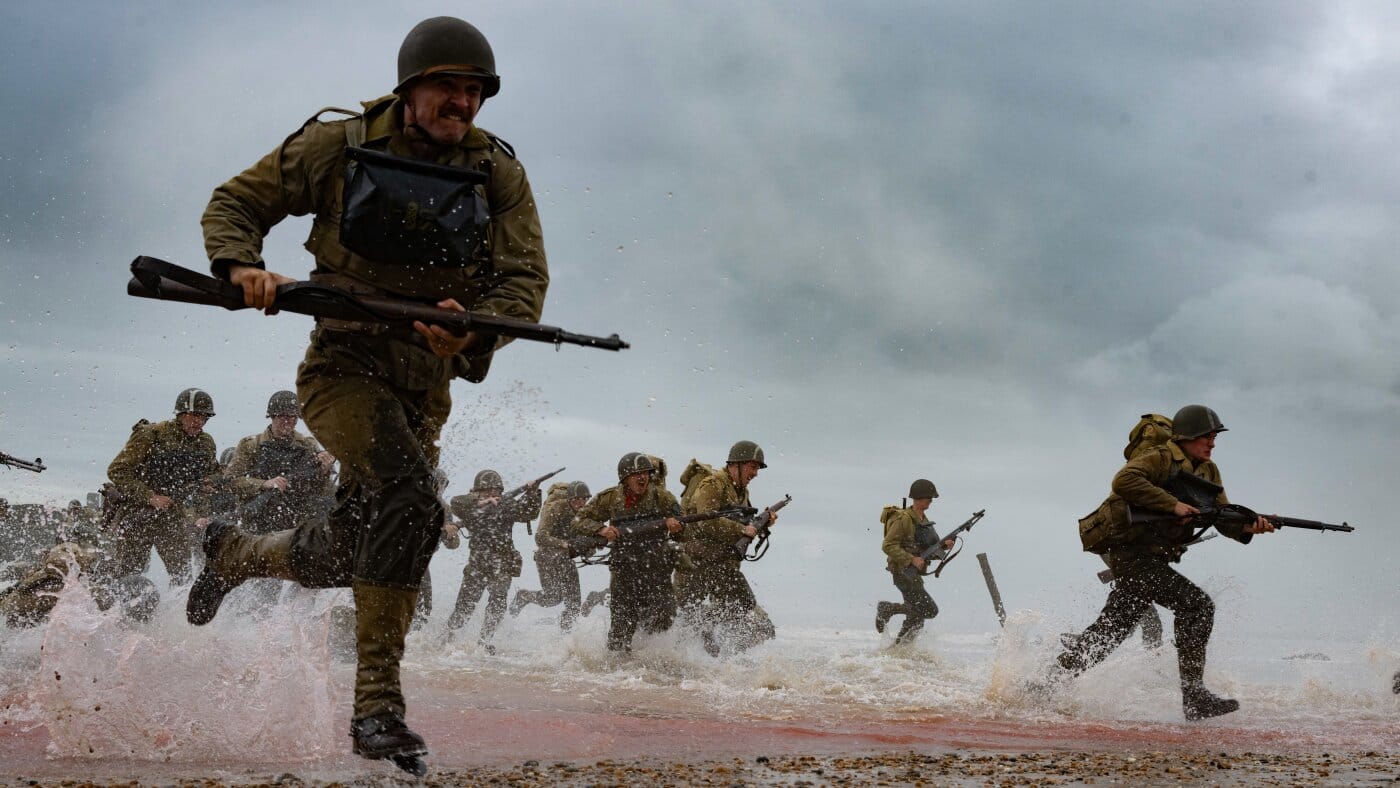
The film tells the story behind the weather forecasts that shaped the D-Day invasion during World War II, focusing on the immense pressure faced by Allied meteorologists responsible for advising military leaders before the Normandy landings. The movie stars Andrew Scott as Scottish meteorologist James Stagg and Brendan Fraser as Gen. Dwight D. Eisenhower.
Rather than focusing entirely on battlefield combat, the film explores how scientific forecasting became a decisive factor in military strategy. The title “Pressure” reflects both atmospheric pressure systems and the enormous responsibility weighing on weather experts who knew that inaccurate forecasts could change the course of the war.
The movie arrives at a moment when public interest in weather science and climate forecasting continues growing worldwide. Agencies such as the National Weather Service and the National Oceanic and Atmospheric Administration (NOAA) play increasingly important roles as extreme weather events become more frequent and unpredictable.
The D-Day Forecast That Changed History
One of the central themes in “Pressure” is the scientific disagreement between competing forecasting methods during the days leading up to the D-Day invasion in June 1944. At the time, American and European meteorologists used very different approaches to predict weather conditions across the English Channel.
The older American forecasting system relied heavily on historical weather trends. Forecasters studied previous atmospheric patterns from the same dates in earlier years and attempted to project similar conditions into the future. In the film, meteorologist Irving Krick strongly believes that the invasion date will bring calm weather based on historical records.
European scientists, however, were developing newer forecasting methods built around real-time atmospheric measurements collected across the Atlantic Ocean. Those measurements revealed a dangerous storm system approaching England and northern France.
The decision became critical because the D-Day operation required extremely precise weather conditions. Military planners needed enough moonlight for nighttime airborne operations, calm seas for troop landings, and clear visibility for naval bombardments and aircraft support.
Ultimately, meteorologists convinced Allied commanders to delay the invasion by one day. That brief postponement proved historically significant. The storm conditions disrupted German expectations while giving Allied forces a narrow weather window to launch the operation successfully.
Modern meteorology traces many of its advances to innovations accelerated during World War II. Today’s forecasting systems use sophisticated atmospheric modeling, satellite imaging, radar systems, and computer simulations that evolved from the scientific breakthroughs pioneered during that era.
Detailed climate and forecasting research can also be explored through the NASA Earth Observatory, which tracks atmospheric changes, global storms, and long-term climate behavior.
Weather Balloons, Radar, and the Birth of Modern Forecasting
“Pressure” also highlights the technological revolution that transformed weather forecasting during the war years. One of the film’s recurring visual elements involves weather balloons rising into storm-filled skies over the Atlantic Ocean. These scenes emphasize how upper-atmosphere observations became essential for understanding large-scale weather systems.
Before modern satellites existed, weather balloons represented one of the few ways scientists could measure atmospheric conditions at higher altitudes. The balloons collected data about temperature, humidity, wind speed, and pressure, allowing forecasters to identify incoming storm systems more accurately.
Even today, weather balloons remain a critical part of forecasting operations. Meteorological agencies around the world launch hundreds of balloons daily to monitor atmospheric changes and improve prediction accuracy.
Radar technology also emerged as a revolutionary scientific tool during World War II. Originally developed to detect enemy aircraft, radar systems unexpectedly revealed rainfall patterns and storm movement. Scientists quickly realized the technology could dramatically improve weather monitoring capabilities.
Over the decades, forecasting technology evolved from simple observational science into one of the world’s most data-driven scientific fields. Satellites, supercomputers, artificial intelligence, and real-time atmospheric sensors now provide meteorologists with enormous amounts of information that allow forecasts several days in advance with increasing accuracy.
Resources available through the World Meteorological Organization continue demonstrating how international scientific cooperation remains essential for tracking global weather systems and climate trends.
The Growing Importance of Weather Science in the Climate Era
Beyond its historical setting, “Pressure” carries modern relevance as governments and scientists confront increasingly dangerous weather conditions linked to climate change. The movie’s emphasis on scientific investment, atmospheric research, and forecasting accuracy reflects growing concerns about the future of global weather systems.
Scientists warn that rising global temperatures are contributing to stronger storms, heavier rainfall, heat waves, flash flooding, and more volatile atmospheric behavior. As a result, accurate forecasting has become more important than ever for disaster preparedness, aviation safety, agriculture, military planning, and emergency management.
Recent debates surrounding funding reductions for federal science agencies have also intensified concerns among researchers. Budget discussions involving NOAA, NASA, the National Science Foundation, and climate research laboratories have raised questions about the long-term future of atmospheric science programs in the United States.
Many experts argue that weakening scientific infrastructure could reduce forecasting accuracy and limit the ability to respond to increasingly severe climate-related disasters. Investments in meteorology, climate modeling, and atmospheric research are now viewed not only as scientific priorities but also as matters of public safety and national security.
“Pressure” succeeds because it transforms weather forecasting from a technical background subject into a powerful human drama. The film demonstrates how scientific decisions, atmospheric data, and meteorological expertise helped shape one of history’s most consequential military operations while also influencing the future of modern forecasting itself.