
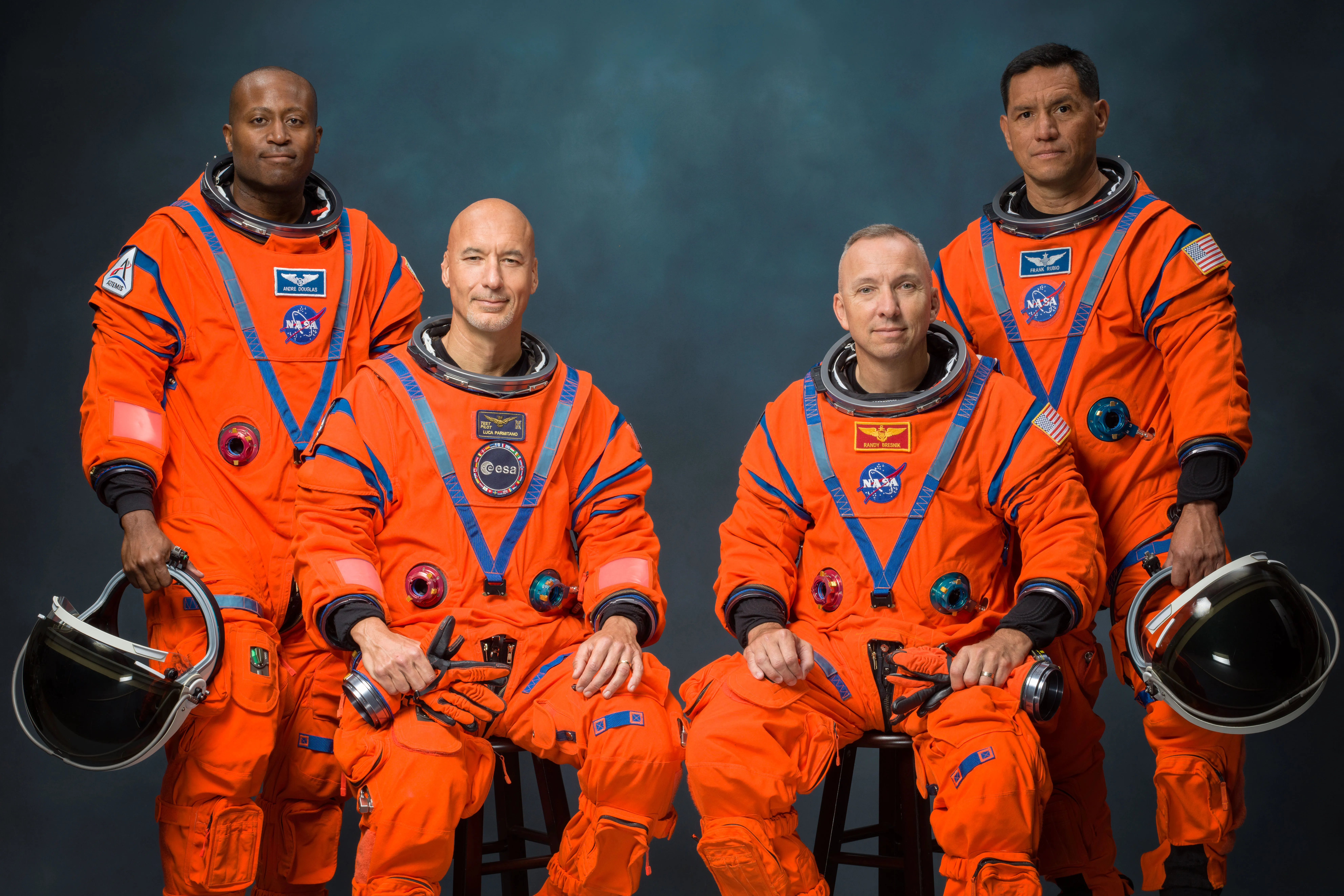
The Artemis III crew has officially been announced by NASA, marking another major milestone in the agency’s long-term effort to return humans to the Moon. The four-person international team will conduct a complex mission designed to validate key technologies and operational procedures required for future lunar landings.
Although Artemis III will not land astronauts on the Moon, the mission is considered one of the most important preparation steps in NASA’s broader lunar exploration strategy. The flight will test critical spacecraft systems, docking operations, and commercial lunar landers that are expected to play central roles in future missions to the lunar surface.
NASA officials describe the mission as one of the most technically challenging undertakings in the Artemis program, bringing together government and commercial partners to demonstrate capabilities necessary for sustained human exploration beyond Earth orbit.
Meet the Artemis III Crew Selected by NASA
The newly announced Artemis III crew combines experienced space travelers with emerging talent from NASA and international partners.
NASA astronaut Randy Bresnik will serve as mission commander. A former U.S. Marine Corps officer, Bresnik brings extensive experience from two previous space missions and has accumulated nearly five months in orbit throughout his career.
European Space Agency astronaut Luca Parmitano will act as pilot. Parmitano has participated in multiple spaceflights and is widely recognized for his contributions to international space operations. Information regarding international cooperation in human spaceflight is available through the European Space Agency.
Mission specialists Frank Rubio and Andre Douglas complete the crew roster. Rubio previously established a record for the longest single spaceflight by an American after spending 371 consecutive days in orbit. Douglas, a systems engineer and Coast Guard Reserve officer, will embark on his first journey into space.
NASA selected the team based on operational experience, technical expertise, leadership capabilities, and the unique demands of the mission. Information about the Artemis program can be found through NASA.
The crew will spend months training for spacecraft operations, docking procedures, emergency scenarios, and mission-specific objectives designed to support future lunar exploration efforts.
Artemis III Will Test Commercial Lunar Landers in Earth Orbit
Unlike previous Artemis missions that traveled around the Moon, Artemis III will remain in low-Earth orbit while conducting a series of critical spacecraft demonstrations.
The mission’s primary objective is to test the Orion spacecraft’s ability to rendezvous and dock with two separate commercial lunar landers currently under development.
The first phase will involve Blue Origin’s Blue Moon lunar lander. After the uncrewed spacecraft is launched into orbit, the Artemis III crew will travel aboard Orion and perform docking operations. Astronauts will enter the lander and evaluate life-support systems, operational controls, and other essential components.
Details about Blue Moon and lunar lander development are available through Blue Origin.
The second phase will involve SpaceX’s Starship lunar lander. Orion will rendezvous and dock with Starship, allowing astronauts to conduct additional evaluations and operational testing.
Information regarding Starship development and NASA’s commercial partnerships can be found through SpaceX.
These demonstrations are intended to verify that the spacecraft systems required for future lunar missions can operate safely and effectively before astronauts travel thousands of miles from Earth.
By conducting the tests in low-Earth orbit, NASA gains the ability to evaluate hardware and procedures in a more accessible environment while reducing mission risk.
The Path Toward Returning Humans to the Moon
Artemis III represents a crucial step in NASA’s broader goal of establishing a sustainable human presence on and around the Moon.
The mission comes at a time when both Blue Origin and SpaceX are continuing to develop and refine their lunar transportation systems. Progress by both companies will directly influence future mission schedules and the timeline for returning astronauts to the lunar surface.
Recent challenges have introduced uncertainty into some aspects of the program. Blue Origin is working through issues related to a launch-site incident involving its New Glenn rocket, while SpaceX continues advancing Starship testing as it pursues orbital flight capabilities.
Despite these challenges, NASA remains committed to a step-by-step approach that prioritizes safety, testing, and operational readiness before attempting another crewed lunar landing.
The Artemis program is designed to build upon lessons learned from previous missions while introducing new technologies capable of supporting long-term exploration. Future missions aim not only to return astronauts to the Moon but also to establish infrastructure that could eventually support deeper exploration of the solar system.
As preparations for Artemis III continue, the newly selected crew now carries the responsibility of validating many of the systems that future lunar explorers will depend upon. Their mission will help determine how NASA, its international partners, and commercial collaborators move forward in humanity’s next era of lunar exploration.