The Midtown office tower structural damage emergency brought one of New York City’s largest redevelopment projects to an unexpected standstill after structural columns buckled inside a high-rise undergoing conversion from office space into residential housing.
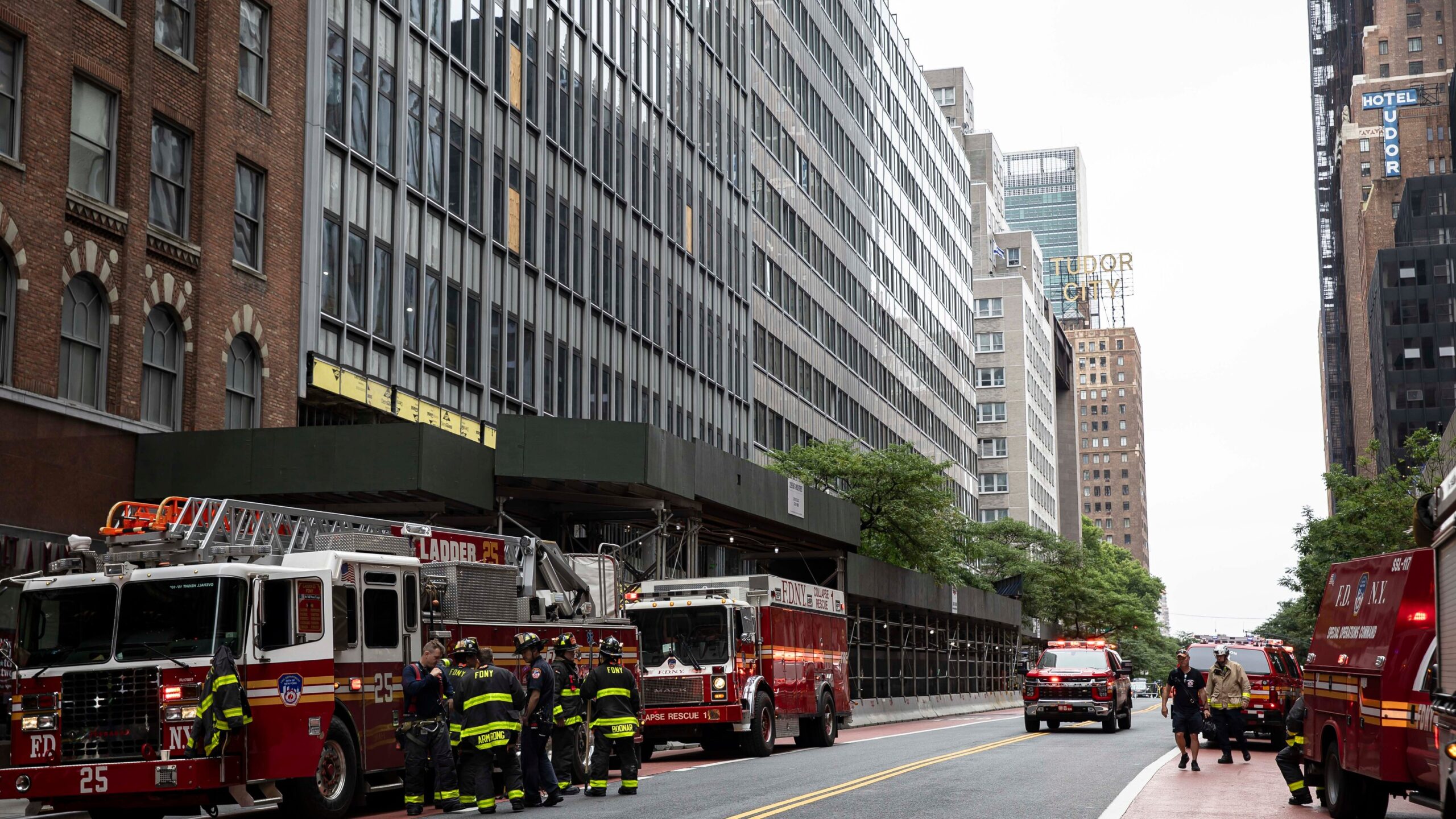
Emergency responders arrived Tuesday morning after reports of falling bricks from the former Pfizer headquarters on East 42nd Street. As engineers assessed the situation, concerns grew that the structural movement could increase the risk of a partial collapse, prompting authorities to establish a large safety perimeter and evacuate nearby buildings.
By Tuesday evening, city officials confirmed that the structure had stabilized sufficiently to allow contractors to begin installing temporary support systems designed to secure the building while further engineering evaluations continue.
Emergency Response Focused on Public Safety
The incident began shortly after 8:00 a.m. when emergency services received reports that debris had fallen from the building. Firefighters, structural engineers, police officers, and emergency management personnel quickly secured the surrounding area while conducting detailed inspections of the affected structure.
As a precaution, officials evacuated nearby residential and commercial buildings and restricted access to portions of Midtown Manhattan while monitoring the tower for additional movement.
Although structural instability raised concerns throughout the day, authorities reported that no injuries occurred, and the building’s movement gradually slowed enough for stabilization work to begin.
Engineers Begin Temporary Stabilization Work
Once engineers determined that the structure had become sufficiently stable, specialized contractors started installing temporary shoring to reinforce damaged sections of the building. These support systems are intended to prevent additional movement while structural experts complete a comprehensive evaluation of the tower.
Officials emphasized that engineering assessments remain ongoing and that additional inspections will determine when neighboring buildings can safely reopen. Some residents were permitted to return to their homes Tuesday evening, while other properties remained under evacuation orders pending further review.
The affected property had been undergoing an ambitious office-to-residential conversion, reflecting a broader trend across major U.S. cities aimed at transforming underused office buildings into housing developments.
Redevelopment Project Faces Engineering Review Before Work Resumes
The incident temporarily halted what had been one of New York City’s most significant adaptive reuse projects. Office-to-residential conversions have become increasingly common as developers respond to changing workplace trends and growing demand for housing in urban centers.
Before construction can resume, engineers will conduct detailed structural analyses to determine the cause of the column failure and identify any permanent repairs necessary to ensure the building meets all applicable safety standards. City officials are expected to continue monitoring the site throughout the stabilization process while coordinating with engineers, contractors, and property owners.
The investigation will also help determine whether additional safeguards or construction procedures should be implemented as redevelopment projects involving older high-rise buildings continue throughout Manhattan and other major metropolitan areas.