
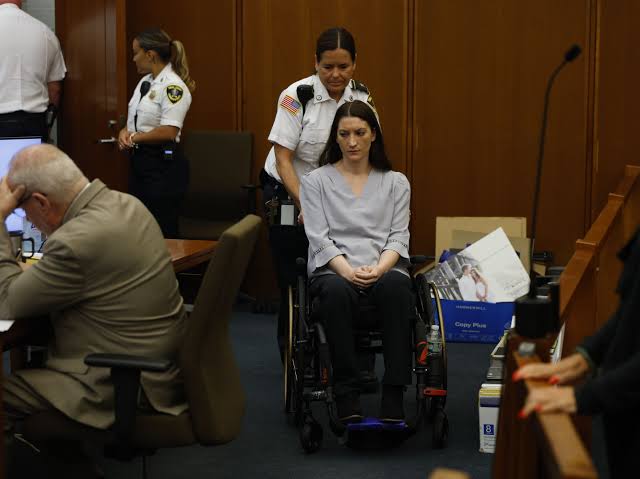
Postpartum psychosis care has become the center of a national conversation as the ongoing Lindsay Clancy trial raises difficult questions about maternal mental health, psychiatric diagnosis and the medical support available to new mothers.
The case has attracted widespread attention across the United States because it extends far beyond the courtroom. While prosecutors argue that Clancy deliberately killed her three children in 2023, her defense team maintains that she was experiencing severe postpartum psychosis and did not receive appropriate treatment.
Mental health advocates and medical specialists say the case underscores a much larger issue: the lack of awareness surrounding one of the most severe psychiatric conditions associated with childbirth.
Postpartum Psychosis Remains One of the Least Understood Maternal Mental Health Disorders
Postpartum psychosis is considered a rare but extremely serious psychiatric emergency that typically develops shortly after childbirth.
Unlike postpartum depression, which affects a much larger percentage of mothers, postpartum psychosis is estimated to affect between one and two women per 1,000 births. Despite its severity, many experts argue that the condition remains poorly understood and frequently goes undiagnosed.
Symptoms can include paranoia, confusion, anxiety, insomnia, delusions, hallucinations, mania and rapidly changing emotions. In many cases, symptoms appear suddenly and intensify within days.
One of the biggest challenges facing physicians is that postpartum psychosis is not currently recognized as an independent diagnosis in the Diagnostic and Statistical Manual of Mental Disorders (DSM), which serves as one of the primary references for psychiatric diagnoses in the United States.
Many researchers and advocacy organizations continue to argue that recognizing the disorder as a distinct condition would improve diagnosis, treatment and medical training.
Misdiagnosis and Limited Medical Training Continue to Create Barriers to Treatment
Mental health specialists have repeatedly emphasized that postpartum psychosis is often misunderstood by both patients and healthcare providers.
Because symptoms can overlap with depression, bipolar disorder, anxiety or sleep deprivation, many women initially receive incomplete or inaccurate diagnoses.
Experts argue that current healthcare systems are not adequately designed to identify psychiatric emergencies during the postpartum period.
Traditionally, many mothers have only one follow-up appointment approximately six weeks after giving birth. However, psychiatrists specializing in perinatal mental health believe that this timeline can delay intervention for women whose symptoms develop much earlier.
Researchers have also highlighted the need to expand education beyond psychiatrists and obstetricians.
Pediatricians, midwives, nurses, doulas and family physicians often interact with new mothers during the first weeks after childbirth and may be in a better position to identify behavioral changes that suggest a psychiatric emergency.
Many specialists also believe the United States could benefit from adopting treatment models already used in other countries, including specialized facilities where mothers and infants receive care together while medical teams evaluate both physical and psychological health.
Early Diagnosis and Specialized Treatment Can Significantly Improve Recovery
Despite the severity of postpartum psychosis, physicians emphasize that it is treatable.
Treatment often includes psychiatric evaluation, hospitalization when necessary, medication and ongoing psychological support. Studies have shown that mood stabilizers such as lithium can be highly effective in reducing symptoms and helping patients recover.
Electroconvulsive therapy has also demonstrated positive results in severe cases, although access remains limited in many healthcare systems.
Mental health advocates argue that improving outcomes will require a broader approach that includes earlier screening, better physician training, stronger support systems, expanded parental leave policies and increased access to specialized psychiatric care.
For many experts, the most important lesson emerging from the current national conversation is that maternal healthcare should focus not only on newborns, but also on the long-term psychological well-being of mothers and families.