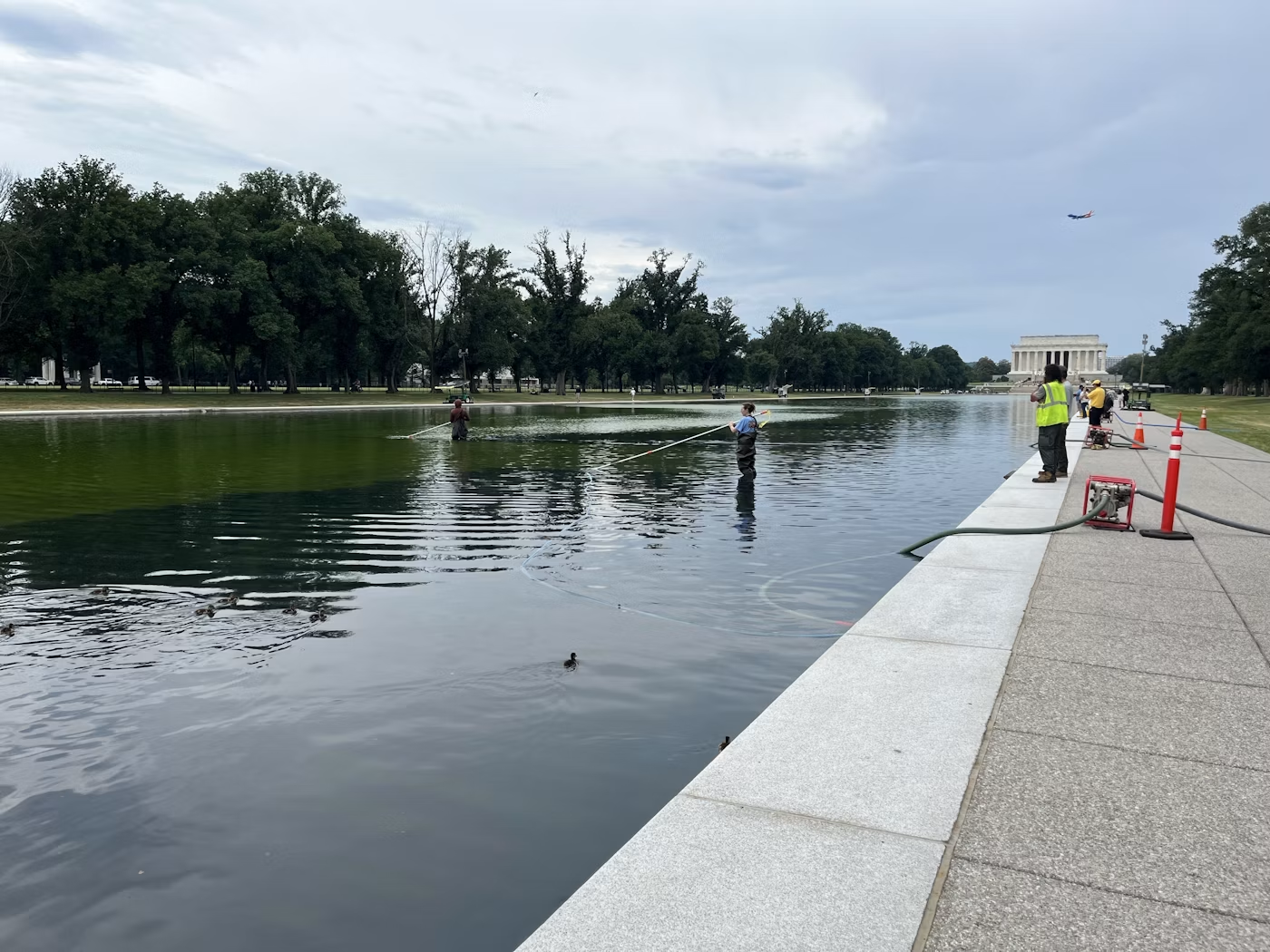
The Lincoln Memorial Reflecting Pool algae bloom has become a highly visible issue just weeks after the historic Washington, D.C. landmark underwent a significant renovation project. The pool, recently refilled after extensive resurfacing and repainting work, has taken on a striking green color. This is because algae rapidly spread throughout the water.
While the appearance surprised many visitors, aquatic scientists and water-treatment specialists say the phenomenon is neither unusual nor unexpected. Experts point to a combination of environmental conditions and recent construction activity. In addition, warm temperatures and the pool’s unique design are key factors contributing to the bloom.
The Reflecting Pool remains one of the most visited locations on the National Mall. It attracts millions of visitors annually who come to view the iconic reflection of the Washington Monument and surrounding memorials. Information about the site can be found through National Park Service.
Why Algae Quickly Developed in the Reflecting Pool
Scientists studying the water have identified the primary organism responsible for the green coloration as Desmodesmus, a common freshwater algae found throughout the Mid-Atlantic region. According to aquatic ecology experts, the species is not considered toxic and does not pose a significant threat to visitors or wildlife.
The conditions inside the Reflecting Pool create an ideal environment for algae growth. Shallow water, limited circulation, abundant sunlight, and minimal shade allow microscopic algae to reproduce rapidly during warmer months.
Researchers also note that renovation activities may have accelerated the process. Disturbances to sediment layers and changes in nutrient distribution can temporarily alter aquatic ecosystems. Therefore, these changes provide additional resources that support algae growth.
Another contributing factor may be the newly resurfaced interior of the pool. Darker surfaces absorb more solar energy, increasing water temperatures and creating favorable conditions for algae development.
Educational resources related to aquatic ecosystems and environmental science are available through National Oceanic and Atmospheric Administration.
Renovation and Weather Conditions May Have Accelerated Growth
The recent restoration project aimed to improve the appearance and condition of the Reflecting Pool. Following completion of the work, water was returned to the basin. As a result, some specialists describe the conditions as similar to a newly established pond.
Water treatment professionals often refer to this phenomenon as “new pond syndrome,” a situation in which algae blooms rapidly emerge after major changes to a water body. In newly filled or recently renovated systems, biological balances may not yet be fully established. Therefore, algae populations can expand quickly.
High temperatures experienced in Washington during recent weeks likely contributed to the problem. Extended periods of heat can increase water temperatures, speed biological activity, and promote rapid algae reproduction.
Historically, algae blooms have periodically appeared in the Reflecting Pool, including following previous renovation efforts. Similar maintenance challenges have occurred over the years as officials work to preserve one of the nation’s most recognizable landmarks.
Additional information about environmental monitoring and water quality management can be found through United States Environmental Protection Agency.
Crews Deploy Advanced Technology to Restore Water Clarity
Maintenance teams are using several methods to address the Lincoln Memorial Reflecting Pool algae bloom. One approach involves applying hydrogen peroxide treatments designed to eliminate algae while minimizing impacts on surrounding wildlife and the environment.
Officials are also utilizing advanced nanobubble ozone technology. This system introduces microscopic ozone-filled bubbles into the water, helping neutralize algae and other organic contaminants. Because the bubbles remain suspended in the water for extended periods, they continue working long after deployment.
Alongside these treatment methods, crews are conducting extensive vacuuming operations to remove dead algae from the bottom of the pool. Specialized equipment operates throughout the site as workers systematically clean affected areas and improve overall water quality.
Despite the visible progress, experts caution that maintaining a large, shallow body of water requires ongoing monitoring and treatment. The Reflecting Pool functions more like a managed aquatic environment than a conventional swimming pool. Consequently, this makes algae control significantly more complex.
As restoration efforts continue, officials remain optimistic that the combination of treatment technologies and maintenance work will gradually return the water to its intended appearance. This will also help reduce future algae outbreaks. More information about historic landmark preservation can be found through U.S. Department of the Interior.