The phrase “Japan reactor restart sparks fresh fears over nuclear waste storage” is gaining renewed attention as Japan brings more nuclear reactors back online to meet growing electricity demand. While the return of nuclear generation is being promoted as a way to strengthen energy security during a period of global market instability, the move has also revived concerns about a challenge that has remained unresolved for decades. Specifically, there are worries about where to permanently store the country’s growing stockpile of radioactive waste.
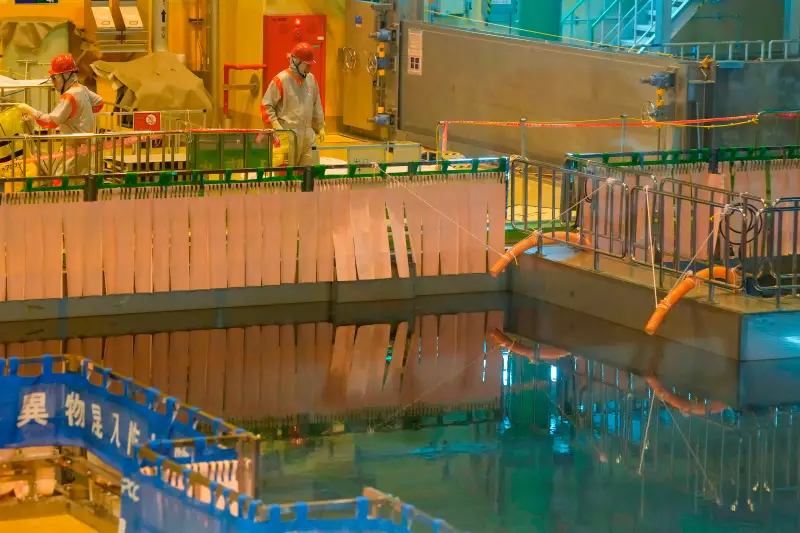
The issue has become increasingly urgent. Storage pools at several nuclear facilities are approaching capacity. Industry officials warn that without a long-term strategy for spent fuel management, reactor operations could eventually be constrained. This could happen regardless of energy demand.
Japan’s government continues to support nuclear power as part of its long-term energy strategy. Yet every reactor restart adds more spent fuel to a system already struggling to find space for existing radioactive materials.
Japan Reactor Restart Sparks Fresh Fears Over Nuclear Waste Storage as Capacity Shrinks
The restart of Reactor No. 6 at the Kashiwazaki-Kariwa Nuclear Power Station marked a significant milestone for Japan’s energy sector. The facility, operated by TEPCO, is part of the world’s largest nuclear power station. As a result, it has become a symbol of the country’s effort to expand electricity production after years of reduced nuclear activity following the Fukushima disaster.
However, the return of the reactor has also highlighted a growing storage problem. According to energy industry data, several Japanese nuclear plants could reach fuel storage limits within the next few years. This risk will increase if additional capacity is not developed.
Government energy planners continue reviewing long-term waste management policies through institutions such as Ministry of Economy, Trade and Industry. Officials are also evaluating future disposal and storage options there.
As of late 2025, spent fuel pools across Japan were operating at roughly 80% of total capacity. Industry executives have repeatedly warned that reactors cannot continue generating electricity indefinitely without a sustainable solution for handling radioactive waste.
The challenge extends beyond simple storage. Spent nuclear fuel remains highly radioactive and requires monitoring, cooling and specialized containment for extended periods.
Remote Pacific Island Emerges as Possible Site for Future Disposal Facility
Attention has increasingly focused on Minamitorishima, a remote island located approximately 2,000 kilometers south of Tokyo. Government officials have proposed studying the location as a potential site for long-term radioactive waste disposal.
The island has no permanent civilian population and is administered by local authorities connected to Tokyo. Its isolation has made it attractive to some policymakers searching for a location that may face fewer logistical complications. This is especially true compared to more densely populated regions.
The feasibility of such a project remains under review. Experts continue analyzing geological conditions through organizations including Japan Atomic Energy Agency. This agency plays an important role in nuclear research and waste management planning.
Not everyone supports the proposal. Residents and local representatives have expressed concerns about environmental risks, tourism impacts, and the long-term consequences of associating a remote island with high-level radioactive waste.
Critics also argue that selecting a sparsely populated area does not eliminate the responsibility of demonstrating long-term safety. Some experts note that any final repository would require monitoring and management over exceptionally long timeframes. These periods extend far beyond current political cycles.
Fuel Recycling Delays Add Pressure to Japan’s Long-Term Nuclear Strategy
Japan has long promoted fuel recycling as the preferred method for managing spent nuclear fuel. Under this approach, usable plutonium and uranium are extracted and reused rather than being permanently discarded as waste.
The strategy was designed to reduce waste volumes while improving energy security for a country with limited natural energy resources. Yet several major components of the recycling program have experienced delays, technical difficulties and rising costs.
Research institutions and policymakers continue evaluating recycling technologies through organizations such as International Atomic Energy Agency and World Nuclear Association. Both of these organizations monitor developments in nuclear fuel management and disposal strategies worldwide.
Many specialists now argue that direct disposal should be considered alongside recycling rather than as a distant alternative. They point out that reprocessing alone may not be capable of handling all future spent fuel inventories.
Meanwhile, communities located near nuclear facilities remain concerned about growing stockpiles. Questions persist regarding where future waste will ultimately be stored, how long interim facilities can remain operational, and whether existing plans can keep pace with Japan’s renewed commitment to nuclear power generation.
For local residents, the debate is no longer limited to energy policy. It has become a question of long-term responsibility and environmental stewardship. There are also questions about whether the country’s nuclear expansion can proceed faster than its ability to manage the waste it creates.