
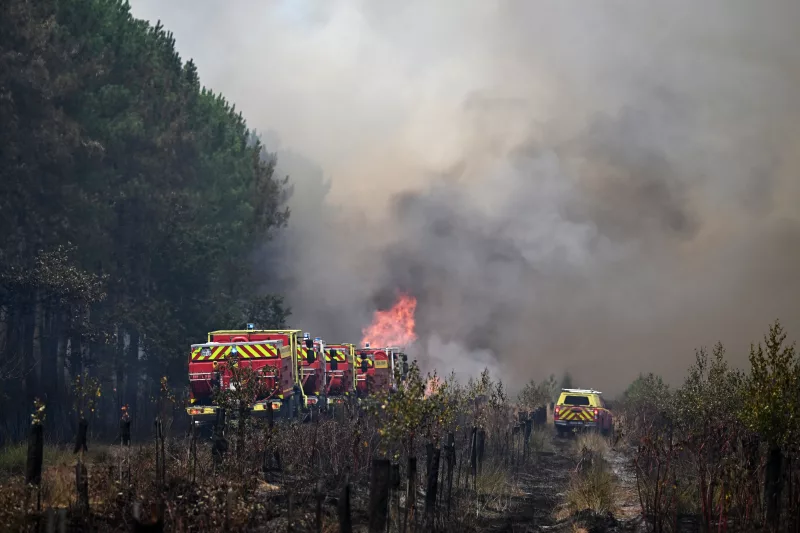
Fire crews across southwestern Europe remain on high alert after days of relentless wildfires forced large-scale evacuations and disrupted transportation, tourism and local economies. Although emergency teams have managed to stabilize several major fire fronts, authorities warn that a fresh surge in temperatures and dry winds could quickly reverse recent progress.
Thousands of firefighters continue working across France and Spain, where prolonged drought, low humidity and repeated heat waves have created ideal conditions for fast-moving wildfires. According to climate monitoring data published by Copernicus Climate Change Service, extreme weather patterns have contributed to longer and more intense fire seasons across southern Europe in recent years.
Emergency Services Race to Contain Remaining Hotspots
In southwestern France, firefighting teams have focused on reinforcing containment lines around vulnerable forests and residential communities. Heavy equipment, aerial water bombers and military engineering units have been deployed to strengthen firebreaks. These firebreaks are designed to slow the advance of flames should weather conditions deteriorate.
Authorities continue to classify several fires as stabilized rather than fully contained. Therefore, hidden hotspots could reignite if strong winds return. Regional weather forecasts from Météo-France indicate that high temperatures and falling humidity may increase wildfire danger throughout the week.
Meanwhile, local governments are maintaining evacuation plans for campsites, tourist accommodations and rural communities located near forested areas. Transportation networks, including sections of highways and regional rail services, continue to operate under restrictions. Furthermore, emergency crews prioritize public safety.
Spain Faces Another Severe Heat Wave
Spain is confronting similar challenges as firefighters battle multiple active blazes while the country enters another period of exceptionally high temperatures. Emergency authorities have expanded aerial operations. They are using helicopters and specialized aircraft to protect populated areas and prevent isolated fires from merging into larger complexes.
Meteorologists expect temperatures to exceed seasonal averages across several inland regions, increasing pressure on emergency responders already working around the clock. Forecasts released by AEMET suggest that elevated temperatures, combined with persistent drought, could maintain critical wildfire conditions through the coming days.
Officials continue urging residents to avoid unnecessary travel into forested zones and to immediately report any signs of smoke or uncontrolled burning.
Climate Conditions Are Extending Europe’s Fire Season
Environmental specialists increasingly view this year’s wildfire activity as part of a broader pattern affecting Mediterranean countries. Longer periods of drought, repeated heat waves and increasingly volatile weather have expanded the duration and intensity of wildfire seasons across southern Europe.
European institutions continue supporting cross-border emergency coordination through shared firefighting resources and civil protection mechanisms. Information about wildfire preparedness and emergency cooperation remains available through the European Commission Civil Protection Mechanism. This mechanism coordinates assistance among participating countries during large-scale natural disasters.
While emergency crews have achieved meaningful progress in several affected regions, officials caution that the coming days remain critical. Until temperatures fall and humidity improves, thousands of firefighters are expected to remain deployed. Authorities will monitor changing weather conditions and work to protect communities, infrastructure and environmentally sensitive landscapes.