Conflicting Campaign Messages Create Widespread Voter Uncertainty
Voters across Virginia are heading into a pivotal redistricting referendum amid growing confusion fueled by contradictory campaign messaging, overlapping political narratives, and unclear ballot language. The vote, which could reshape the state’s congressional map and shift political power in Washington, has become increasingly difficult for many voters to interpret.
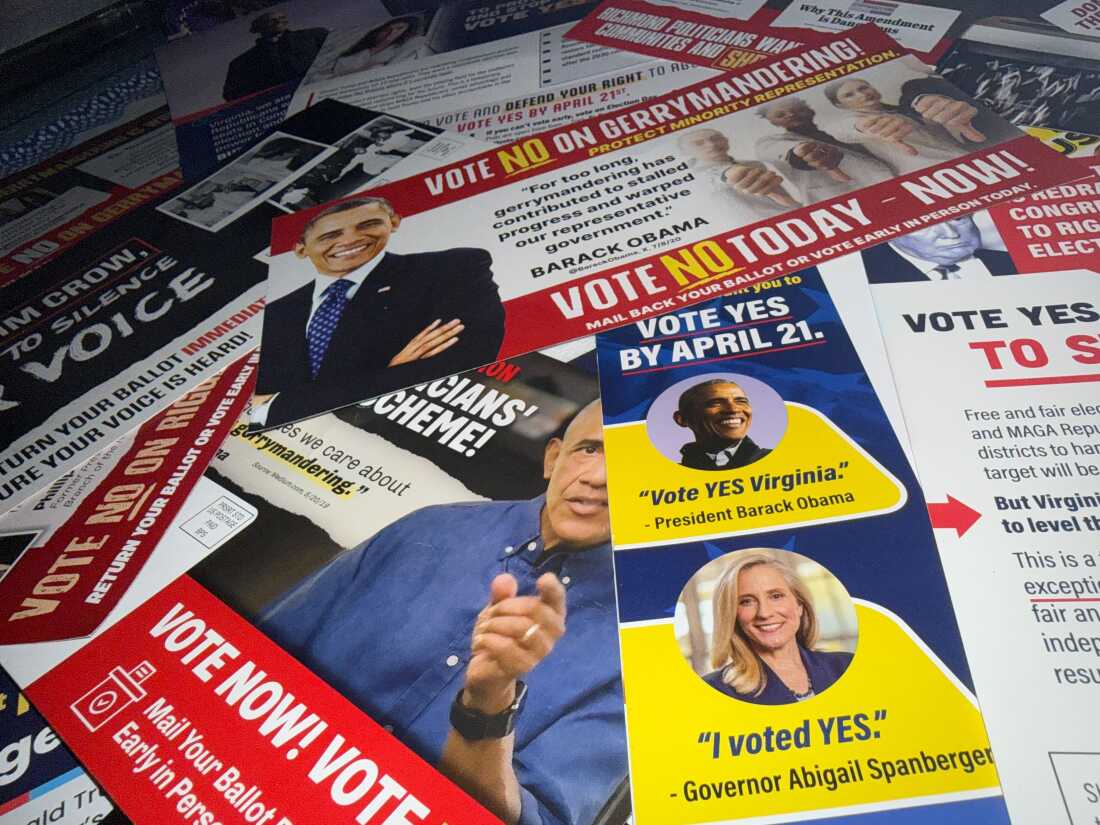
At the center of the controversy are campaign materials that appear to present conflicting signals. Some voters report seeing advertisements that seem to contradict public statements from elected officials, creating uncertainty about which position aligns with which outcome. Messaging strategies have included selective use of past political statements, repurposed video clips, and visually misleading campaign designs that blur the distinction between support and opposition.
The issue is further complicated by similarly named advocacy groups promoting opposite positions, making it harder for voters to distinguish between campaigns. This overlap has contributed to what analysts describe as “decision fatigue,” where excessive and conflicting information reduces voter confidence and clarity at the ballot box.
For additional context on redistricting processes in the United States, visit https://www.brennancenter.org y https://www.ncsl.org.
High-Stakes Political Impact Drives Aggressive Spending
The referendum carries significant national implications, as the proposed redistricting plan could shift several congressional seats and potentially influence the balance of power in the U.S. House of Representatives. This high-stakes outcome has led to unprecedented levels of campaign spending, with tens of millions of dollars flowing into both sides of the debate.
A substantial portion of this funding originates from nonprofit organizations structured in a way that does not require donor disclosure. These so-called “dark money” contributions have made it difficult for voters to identify who is financing campaign efforts, raising concerns about transparency and accountability in the electoral process.
Pro-redistricting groups have raised more than $64 million, while opposition campaigns have secured approximately $19 million, much of it from similarly opaque funding sources. Political action committees and nonprofit organizations have played a central role, often funding large-scale advertising campaigns, direct mail efforts, and media outreach strategies designed to influence voter perception.
To explore campaign finance transparency and election funding, visit https://www.opensecrets.org y https://www.fec.gov.
Ballot Language and Media Tactics Add to the Complexity
Beyond campaign messaging, the wording of the ballot question itself has become a focal point of debate. Critics argue that phrases such as “restore fairness” introduce subjective framing that may influence voter interpretation. For some voters, the language appears to suggest a preferred outcome, rather than presenting a neutral choice.
Media strategies have also contributed to the complexity of the information environment. Printed materials resembling traditional newspapers have been distributed to households, blending general interest content with political messaging that supports one side of the referendum. While organizers defend these publications as legitimate informational resources, critics argue they function as campaign tools that may not be immediately recognizable as advocacy.
Television advertisements have further intensified the information overload, incorporating past statements from political figures in ways that may not reflect current positions. This layering of messages has made it increasingly difficult for voters to form a clear understanding of the issue.
More information about election integrity and voter education can be found at https://www.usa.gov/election y https://www.eac.gov.
Turnout and Democratic Engagement at Risk
Experts warn that the cumulative effect of confusing messaging, heavy spending, and unclear ballot language could impact voter turnout. When voters feel uncertain or misled, they may be less likely to participate, potentially skewing election results toward groups with stronger mobilization efforts.
Despite these concerns, early voting numbers suggest continued engagement, with turnout levels approaching those seen in previous statewide elections. However, analysts note that sustained confusion could still influence final participation rates and voter decision-making.
As the referendum approaches, the Virginia redistricting vote highlights broader challenges facing modern elections, including information overload, transparency in political funding, and the growing complexity of voter communication strategies in high-stakes political contests.