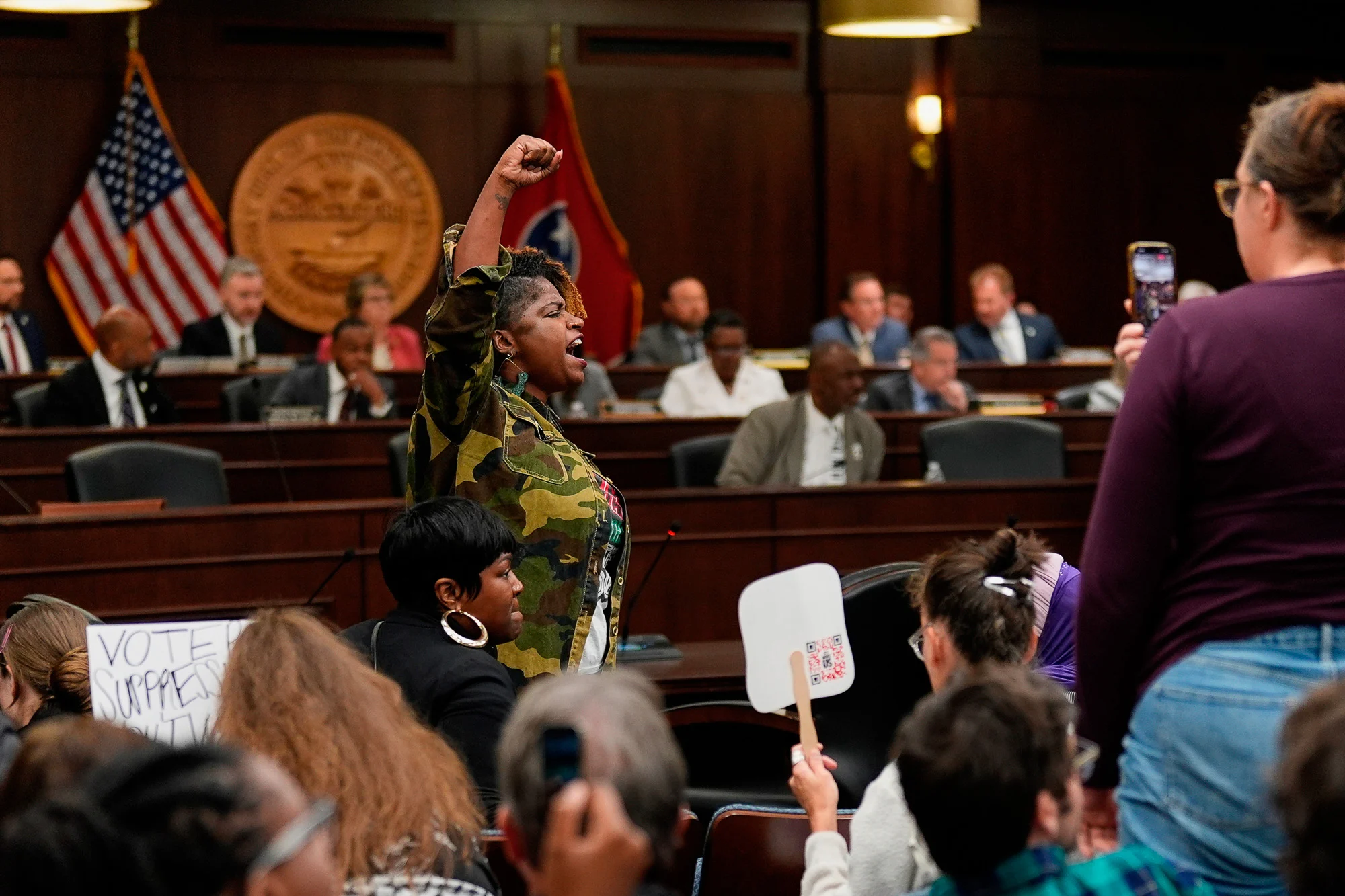
A new congressional map in Tennessee has ignited a deep debate over what representation truly means for voters, particularly in Memphis, a majority-Black city now divided across multiple districts. The redistricting effort follows legal and political shifts tied to the weakening of the Voting Rights Act of 1965, raising broader questions about fairness, voter influence, and the future of electoral power in the South.
The redesign of district boundaries has transformed familiar geographic markers into political dividing lines, reshaping how communities engage with the democratic process and how their voices are represented in Washington.
Redrawing Boundaries and Reshaping Political Power
The recent redistricting plan has split Memphis and Shelby County into three separate congressional districts, each extending into suburban and rural areas. This shift significantly alters the political composition of these districts, making them more likely to favor Republican candidates.
Historically, Memphis served as a consolidated urban voting bloc, but the new configuration disperses its population across broader regions. This approach, often debated in political science discussions available through https://www.brookings.edu/topic/elections/, reflects competing views on whether districts should prioritize geographic diversity or community cohesion.
Supporters of the redistricting argue that the new map better reflects the statewide population by integrating urban, suburban, and rural voters. Critics, however, contend that dividing a historically unified voting base weakens its political influence and disrupts community representation.
Further analysis of redistricting processes and electoral systems can be explored through https://www.ncsl.org/elections-and-campaigns/redistricting, which outlines how states redraw political boundaries following census updates.
Representation, Race, and Legal Challenges
The controversy surrounding Tennessee’s redistricting is closely tied to the legacy of the Voting Rights Act of 1965 and its role in protecting minority voting rights. Following key judicial decisions that reduced federal oversight, several southern states have moved quickly to redraw their maps.
Opponents of the new districts argue that race and political affiliation remain deeply intertwined, particularly in regions like Memphis. They claim that dispersing Black voters across multiple districts may dilute their electoral impact, raising concerns about equitable representation.
Legal challenges have emerged, with advocacy groups pointing to historical patterns of discrimination and questioning whether the new map undermines minority voting strength. Resources such as https://www.aclu.org/issues/voting-rights provide context on ongoing debates over voting access and district fairness in the United States.
At the same time, some policymakers argue that focusing solely on race in districting risks reinforcing divisions rather than promoting broader representation. This tension highlights the evolving interpretation of representation in modern American politics.
Voter Engagement and the Future of Democracy
Beyond legal and political arguments, the redistricting has had a tangible impact on voter sentiment in Memphis. Community leaders and residents have expressed concern that dividing the city across multiple districts could lead to confusion, disengagement, or reduced voter turnout.
For many voters, representation has traditionally meant having elected officials who understand local issues and advocate for community-specific needs. The new map challenges that expectation by linking Memphis neighborhoods with distant suburban and rural areas, sometimes hundreds of miles away.
Civic engagement resources like https://www.usa.gov/election help explain how voters can stay informed and participate despite changes in district boundaries. However, the broader question remains whether structural changes to district lines influence public trust in the electoral system.
As Tennessee becomes one of the first southern states to implement such sweeping changes after recent legal shifts, its experience may serve as a model—or a warning—for others. The debate over representation in Memphis reflects a larger national conversation about how democracy functions when political boundaries are redrawn and how voters navigate a system that continues to evolve.