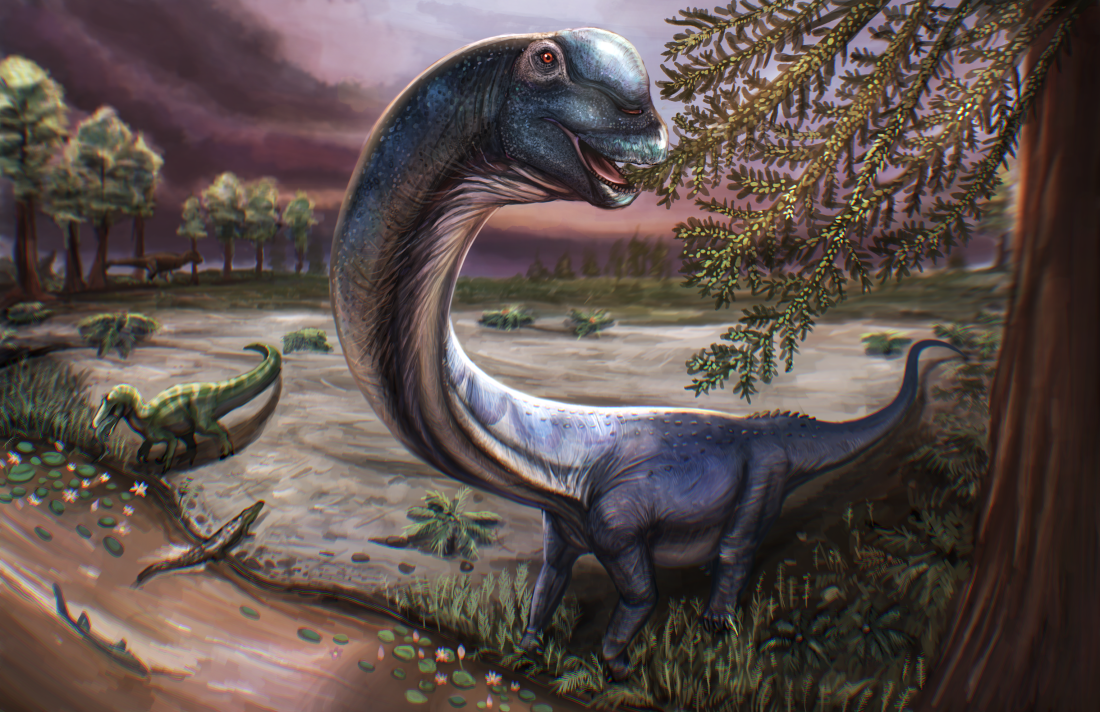
A groundbreaking paleontological discovery in Thailand has revealed what is now considered the largest dinosaur ever identified in Southeast Asia. The newly named species, Nagatitan chaiyaphumensis, represents a significant addition to the fossil record and provides fresh insight into the evolution of massive sauropods during the Early Cretaceous period.
Estimated to reach nearly 90 feet in length and weigh approximately $30,000 kilograms, this enormous herbivore rivals some of the largest land animals ever to exist. Its discovery underscores the growing importance of Southeast Asia in global paleontological research and highlights how much remains unknown about prehistoric biodiversity in the region.
Discovery and Excavation in Thailand
The fossil remains of Nagatitan chaiyaphumensis were first uncovered in 2016 in Thailand’s Chaiyaphum province by a local resident. Initial excavation efforts continued through 2019, but progress slowed due to limited funding. The project resumed in 2024 after new financial support enabled researchers to return to the site and conduct further analysis.
Scientists analyzed key skeletal components, including parts of the spine, ribs, pelvis, and limbs. One of the most notable findings was a front leg bone measuring nearly 6 feet in length, providing critical data for estimating the dinosaur’s overall size. Additional insights into fossil excavation techniques and global discoveries can be explored through https://www.nhm.ac.uk/discover/dinosaurs.html, which documents ongoing paleontological research worldwide.
Although the skeleton is incomplete, researchers emphasize that the quality and preservation of the recovered bones offer valuable information. The discovery adds to Thailand’s growing list of dinosaur species, reinforcing the country’s role in advancing fossil science in Asia.
Size, Classification, and Evolutionary Importance
Nagatitan chaiyaphumensis belongs to the group of long-necked herbivores known as sauropods, which dominated terrestrial ecosystems millions of years ago. These dinosaurs are characterized by their massive bodies, elongated necks, and long tails.
This species lived approximately 100 to 120 million years ago during the Early Cretaceous period, a time marked by significant evolutionary developments among large dinosaurs. While massive, this dinosaur falls within the “upper middle” range compared to later sauropods, some of which reached weights of up to $70,000 kilograms.
For broader scientific context on dinosaur classification and evolution, resources like https://www.britannica.com/animal/dinosaur provide detailed overviews of how these ancient creatures developed over millions of years. The discovery of this species suggests that Southeast Asia played a more important role in the early stages of sauropod gigantism than previously understood.
A Key Step Toward Giant Dinosaur Evolution
Researchers believe that Nagatitan chaiyaphumensis represents a transitional phase in the evolution of super-sized dinosaurs. During the Middle Cretaceous period, even larger sauropods began to appear in regions such as South America, China, and Africa, reaching unprecedented sizes.
This finding provides evidence of a gradual evolutionary trend toward gigantism, offering a clearer picture of how environmental and biological factors contributed to the rise of enormous dinosaurs. Educational resources such as https://www.smithsonianmag.com/science-nature/dinosaurs-what-we-know-180958421/ help illustrate how fossil discoveries continue to reshape scientific understanding.
The fossil site in Thailand may also represent one of the last geological formations in the region capable of preserving dinosaur remains. Scientists suggest that further discoveries of similarly large species in Southeast Asia are unlikely, making this find particularly significant. Continued exploration and documentation efforts, supported by institutions like https://www.nationalgeographic.com/science/article/dinosaurs, remain essential for uncovering Earth’s prehistoric past.
As paleontologists continue to analyze the remains, the discovery of Nagatitan chaiyaphumensis stands as a major milestone, expanding scientific knowledge of dinosaur evolution and reinforcing Southeast Asia’s place on the global paleontological map.