Stephen Colbert Brings The Late Show to an Emotional and Musical Conclusion
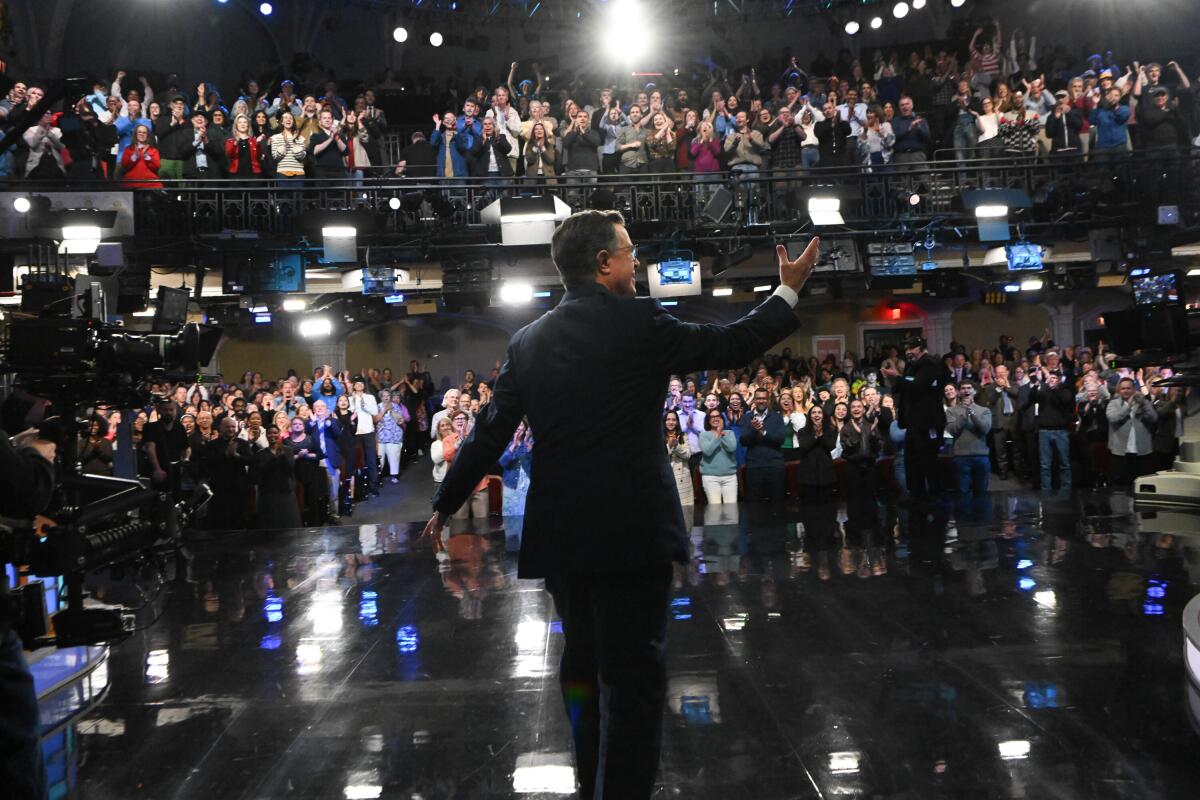
After nearly 11 years as host of The Late Show with Stephen Colbert, comedian and satirist Stephen Colbert closed the program with a finale that blended comedy, nostalgia, music and theatrical spectacle.
The final broadcast transformed New York’s legendary Ed Sullivan Theater into a celebration of television history and live entertainment, ending one of the most influential late-night eras of the streaming and political media age.
The finale featured an onstage performance of “Hello, Goodbye” by Paul McCartney, joined by Colbert, musician Elvis Costello and band leaders Louis Cato and Jon Batiste, who helped define the show’s musical identity over the years.
As the final moments unfolded, Colbert and McCartney switched off the theater lights together, symbolically ending a chapter in late-night television that traces back decades.
The Ed Sullivan Theater itself holds a special place in entertainment history. It famously hosted The Beatles’ first American television appearance in 1964, a performance widely considered one of the defining moments in modern pop culture.
Information about CBS programming and late-night television history can be explored through CBS y The Paley Center for Media.
Colbert Redefined Political Satire During a Transformative Era in Media
Stephen Colbert inherited The Late Show franchise in 2015 following the retirement of David Letterman, whose version of the program had dominated late-night television for more than two decades.
At the time, Colbert was already widely recognized for his work on The Colbert Report, where he built a reputation for blending political satire, character-driven comedy and media criticism.
His transition to network television coincided with a period of major cultural and political transformation in the United States. During his tenure, The Late Show increasingly evolved into a platform combining celebrity interviews with direct political commentary, particularly during the Trump presidency and the years following the COVID-19 pandemic.
Colbert’s monologues became known for aggressively satirical critiques of political leaders, media narratives and social polarization, helping the program achieve strong ratings and significant digital influence through online clips and streaming audiences.
Television analysts frequently credited Colbert with reshaping the identity of modern late-night television by merging traditional entertainment formats with rapid-response political commentary designed for social media circulation.
The program also distinguished itself musically, especially under the direction of Jon Batiste, whose energetic performances and improvisational style became a signature part of the show before his departure to pursue a broader music career.
Additional information about television awards and entertainment industry developments is available through Television Academy y The Recording Academy.
The End of an Era Reflects Broader Changes in Late-Night Television
The conclusion of Colbert’s run also reflects larger shifts affecting the entertainment industry and the future of late-night television itself.
Traditional network late-night programs have faced increasing competition from streaming platforms, podcasts, YouTube creators and social media personalities who now dominate many forms of political commentary and celebrity entertainment.
Audience viewing habits have changed dramatically over the past decade, with younger viewers increasingly consuming highlights through digital clips rather than watching full nightly broadcasts on television.
Despite those industry challenges, Colbert remained one of the most recognizable and politically influential figures in American entertainment throughout his tenure. His interviews frequently generated national headlines, while his comedic approach positioned him at the center of cultural and political debates.
The finale’s musical collaboration with Paul McCartney also carried deeper symbolic resonance because of the Ed Sullivan Theater’s connection to Beatles history. By ending the show with one of the most iconic musicians ever associated with the venue, Colbert linked his departure to a broader legacy of American television history.
Viewers also noted the finale’s whimsical visual style, including surreal staging elements and references to giant wormholes and theatrical transitions that mirrored the show’s longstanding combination of absurd humor and emotional sincerity.
Entertainment critics say the ending successfully captured the tone that defined Colbert’s version of The Late Show: intellectually sharp, emotionally self-aware and unapologetically theatrical.
As the lights dimmed inside the Ed Sullivan Theater, the conclusion represented more than the end of a television program. It marked the closing of a major chapter in network late-night comedy during a period when political satire, digital media and entertainment became increasingly interconnected in American culture.