Americans Face Record Travel Costs as Gasoline Prices Continue Climbing
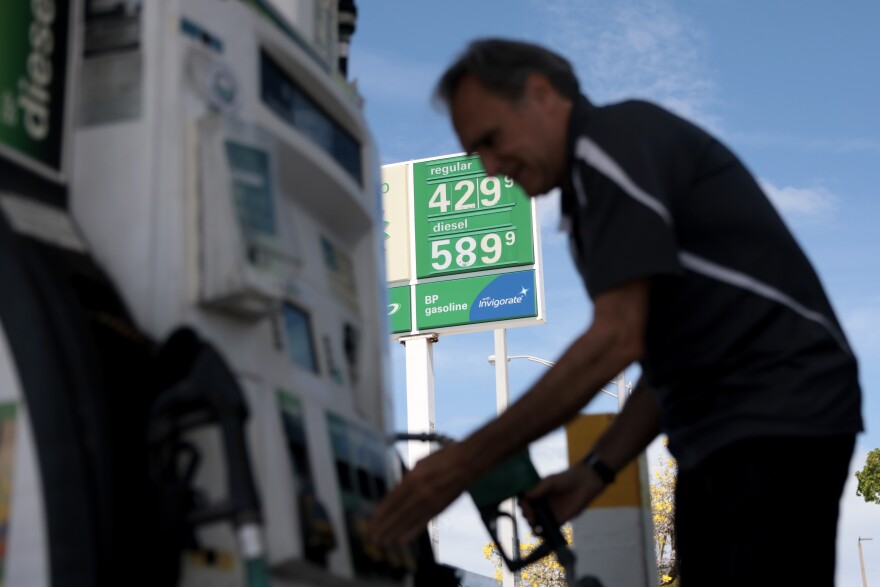
Drivers across the United States are confronting some of the highest fuel costs seen in years as gasoline prices surge ahead of one of the busiest travel weekends of 2026.
According to nationwide fuel tracking data, the national average price for regular gasoline has climbed to approximately $4.55 per gallon, reaching its highest level in four years. The increase comes as millions of Americans prepare for holiday travel while ongoing geopolitical tensions involving Iran continue disrupting global energy markets.
Despite the elevated costs, travel demand remains extremely strong. Transportation analysts estimate that roughly 45 million Americans are expected to travel during the holiday period, setting a new seasonal record even as consumers struggle with inflation and rising household expenses.
The latest fuel price spike has intensified political pressure on both federal and state leaders as voters increasingly express frustration over the cost of commuting, vacations and basic transportation.
In states such as California, where fuel prices remain among the highest in the nation, political leaders and oil companies are openly blaming one another for the continued increases. Governor Gavin Newsom recently criticized Chevron amid a growing dispute over refining capacity, energy regulations and offshore oil transportation policies.
Fuel market trends and energy price updates continue to be monitored through AAA Gas Prices y U.S. Energy Information Administration.
Drivers Search for Practical Ways to Reduce Fuel Costs
As gasoline prices continue rising, many Americans are adjusting daily habits in an effort to reduce fuel consumption and control transportation expenses.
Transportation experts say one of the simplest ways to save fuel is by reducing driving speed. Vehicles generally operate more efficiently at moderate highway speeds, while aggressive acceleration and rapid braking can significantly increase gasoline usage.
Drivers are also increasingly using route-planning apps to avoid traffic congestion and reduce idle time, particularly in heavily populated metropolitan regions where stop-and-go traffic consumes additional fuel.
Carpooling and public transportation usage have also increased in several major cities as commuters attempt to offset the impact of higher gasoline costs. Some employers are once again encouraging remote work flexibility to reduce commuting burdens on employees.
In addition, many consumers are reconsidering vehicle choices entirely. Sales of hybrid and electric vehicles continue rising as drivers seek alternatives to volatile fuel markets and long-term gasoline expenses.
Automakers are expanding electric vehicle production rapidly as demand grows for lower-cost transportation solutions. Major manufacturers including Tesla, Ford Motor Company and General Motors continue investing heavily in EV technology and battery infrastructure.
At the same time, experts note that switching to an electric vehicle is not financially realistic for every household, especially as vehicle prices and borrowing costs remain elevated.
Consumers researching fuel-efficient transportation options can find additional resources through U.S. Department of Energy Fuel Economy Guide y Environmental Protection Agency.
Political Tensions and Global Conflict Continue Driving Energy Uncertainty
The current surge in gasoline prices has been closely linked to instability in global oil markets following the expansion of military conflict involving Iran and the ongoing disruptions in the Strait of Hormuz, one of the world’s most important energy shipping corridors.
Energy analysts warn that prolonged instability in the region could continue limiting supply flows and increasing fuel volatility worldwide. Even the possibility of shipping disruptions can rapidly affect crude oil futures and refinery operations.
The economic consequences are becoming increasingly visible across the United States as rising fuel prices affect not only drivers but also airline tickets, shipping costs and consumer goods prices.
Political tensions surrounding energy policy are also intensifying domestically. In California, Chevron has publicly criticized state regulations for contributing to higher gasoline prices, while California officials argue that oil companies are exploiting supply conditions and maintaining excessive profit margins.
The dispute reflects a broader national debate over energy independence, fossil fuel production and the transition toward renewable energy systems.
Some policymakers are pushing for expanded domestic oil drilling and refinery development to stabilize prices, while others argue the current situation demonstrates the need for faster investment in clean energy infrastructure and public transportation systems.
Global energy developments and transportation policy updates continue to be tracked through International Energy Agency y U.S. Department of Transportation.
For millions of Americans preparing to travel, however, the debate remains secondary to the immediate reality of higher costs at the pump. As summer travel accelerates and geopolitical tensions persist, consumers are increasingly being forced to rethink how often they drive, what vehicles they purchase and how they manage everyday transportation expenses in an increasingly uncertain economy.