النفط Markets React to Strait of Hormuz Reopening
Oil markets shifted sharply after Iran signaled that commercial shipping could resume through the Strait of Hormuz, easing immediate concerns about global supply disruptions. The القرار triggered a rapid decline in crude prices, with Brent falling to around $90 per barrel and U.S. crude dropping below $85 after previously surging past $110 during the height of the tensions.
This reversal has already begun to ripple through fuel markets. Analysts tracking global energy trends, including data referenced by the <a href="/es/”https://www.eia.gov/”/">U.S. Energy Information Administration</a>, indicate that such price movements typically translate into lower gasoline costs for consumers within days or weeks.
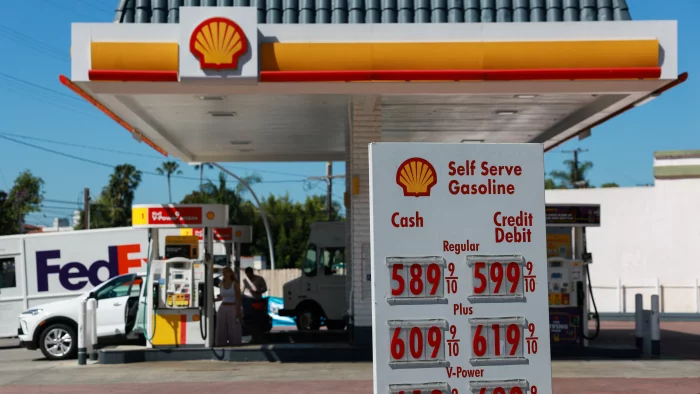
Drivers across the United States are now likely to see relief at the pump. The national average for gasoline, which recently climbed above $4 per gallon, is expected to dip below that threshold in the near term if crude prices remain stable. Wholesale fuel markets have already started adjusting, reflecting the speed at which supply expectations have shifted.
Despite this rapid response, the transition from falling oil prices to cheaper gasoline is not immediate. Retail stations often sell fuel purchased at earlier, higher prices, creating a lag before consumers fully benefit from the انخفاض in crude costs.
Pump Prices Begin to Reflect Market Changes
As wholesale gasoline prices decline, retail stations are gradually following suit. Platforms such as <a href="/es/”https://www.gasbuddy.com/”/">GasBuddy</a> show early signs of price reductions in several regions, suggesting that the downward trend is gaining traction.
Market analysts expect the national average to fall into a range between $3.65 and $3.85 per gallon within the coming weeks, assuming no new disruptions occur. The pace of decline has been notably faster than usual, with wholesale prices reacting within hours of changes in futures markets—an uncommon development that reflects the شدت of recent volatility.
Consumers, however, may experience uneven price changes depending on location. Factors such as regional supply chains, taxes, and local demand can influence how quickly savings are passed on. In some areas, prices may remain elevated slightly longer as stations work through existing inventory.
Economic indicators tracked by institutions like the <a href="/es/”https://www.imf.org/”/">International Monetary Fund</a> highlight how energy price swings can quickly affect household spending, making even modest reductions in fuel costs significant for consumers already navigating broader economic uncertainty.
Lingering Volatility and Long-Term Recovery
Although the reopening of the Strait has provided short-term relief, oil markets remain far from stable. Prices are still considerably higher than pre-conflict levels, when crude traded closer to $60 per barrel. The potential for renewed geopolitical tensions continues to cast uncertainty over future price movements.
Infrastructure damage across key النفط-producing regions adds another layer of complexity. Estimates suggest that repairs to affected facilities could reach as high as $50,000,000,000, delaying a full recovery in production capacity. Even undamaged النفط fields and refineries require time to resume normal operations, as they are not designed for rapid shutdowns and restarts.
Shipping delays also play a role. Once production resumes, crude oil and refined fuels must still be transported globally, often taking weeks to reach end markets. Data from organizations such as the <a href="/es/”https://www.iea.org/”/">International Energy Agency</a> underscores how logistical bottlenecks can prolong the impact of supply disruptions long after immediate risks have subsided.
As a result, while gasoline prices are expected to decline in the short term, the broader energy landscape remains sensitive to shifts in supply, demand, and geopolitical developments.