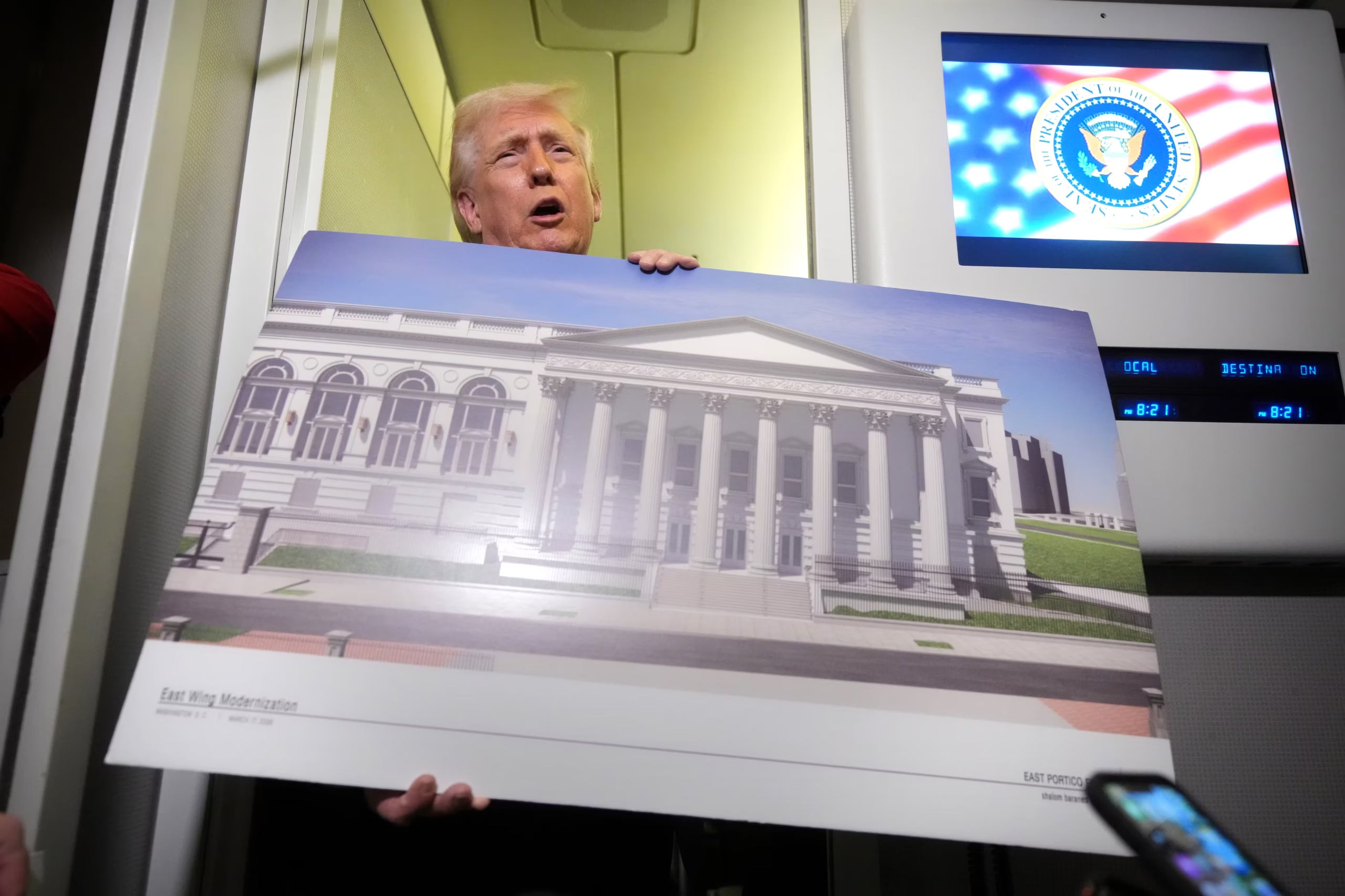
Court Ruling Halts Key Phase of Ballroom Construction
A federal judge has once again stalled plans for a $400 million White House ballroom, intensifying a high-profile legal dispute involving former President Donald Trump and preservation advocates. The ruling allows only below-ground construction to proceed, including security-related facilities, while prohibiting visible structural development above ground.
The decision was issued by Richard Leon, who clarified that earlier restrictions remain in place unless Congress authorizes the project. The ballroom, planned as a 90,000-square-foot venue, would replace the historic East Wing, which had already been demolished as part of the initiative.
Judge Leon emphasized that while national security considerations are valid, they do not override legal requirements tied to federal construction approvals. His ruling reinforces limits on executive authority when it comes to altering historically significant government properties.
Trump Responds as Legal Fight Moves to Appeals Court
Following the decision, Donald Trump strongly criticized the ruling, accusing the judge of bias and arguing that the delay undermines national security. He has maintained that the ballroom project is both a functional and symbolic enhancement to the White House, intended to host large-scale events and official gatherings.
The administration has already signaled its intent to escalate the case to the United States Court of Appeals for the District of Columbia Circuit, seeking to overturn the restrictions. This move marks the latest step in a broader legal strategy aimed at reviving the full scope of construction.
At the center of the dispute is whether the project qualifies for exemptions tied to security infrastructure. Government attorneys argue that elements of the ballroom plan are essential for protecting against modern threats, including drones and other risks. However, the court has drawn a clear distinction between security-related construction and the broader architectural project.
Preservation Groups Applaud Decision Amid Ongoing Debate
The legal challenge was originally brought by the National Trust for Historic Preservation, which opposes the demolition of historic structures and the expansion of new construction without proper oversight. The organization welcomed the ruling, describing it as a necessary step to protect the historical integrity of the White House.
Its president, Carol Quillen, stated that the decision reinforces the importance of accountability in federal development projects. Preservation advocates argue that the East Wing holds cultural and historical value that cannot be easily replaced.
Meanwhile, the National Capital Planning Commission had previously granted approval for the project, adding another layer of complexity to the case. The overlap between planning approval and judicial oversight highlights the tension between development ambitions and regulatory frameworks.
As the case moves forward, the central question remains whether national security concerns can justify bypassing standard legislative procedures. The outcome could set a precedent for how future infrastructure projects tied to federal properties are evaluated and approved.