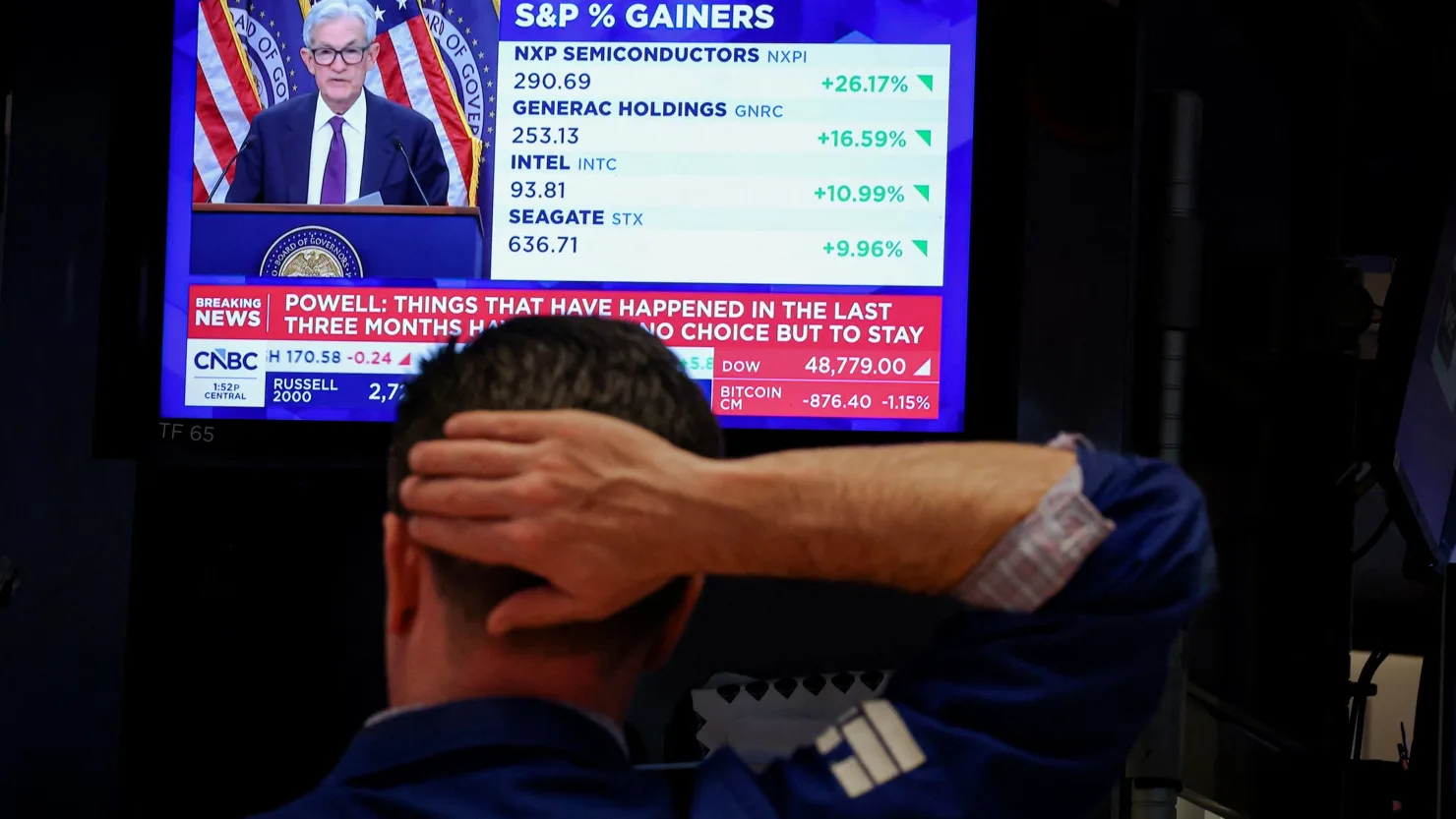
Financial markets are increasingly signaling concern that the Federal Reserve may not be acting aggressively enough to contain inflation. This comes as Kevin Warsh prepares to assume leadership of the U.S. central bank. Additionally, bond investors, economists and traders are closely watching recent inflation data and Treasury market movements. They are looking for signs that interest rates could remain elevated longer than previously expected.
According to analysts tracking fixed-income markets, the relationship between short-term Treasury yields and the federal funds rate is now suggesting investors believe current monetary policy may still be too loose to fully control persistent price pressures. This situation creates a complicated environment for the incoming Federal Reserve leadership. Policymakers are attempting to balance inflation control with economic growth.
Recent economic reports show renewed inflationary pressure following geopolitical disruptions and higher energy costs. As a result, debate over the central bank’s next move has intensified. Financial institutions and market participants monitoring policy developments through the Federal Reserve are increasingly reconsidering expectations for future interest-rate cuts.
Treasury Market Reflects Inflation Concerns
Economists noted that the yield on the 2-year U.S. Treasury has climbed above the current federal funds rate. Many investors interpret this development as a warning that inflation risks remain elevated. Furthermore, this market signal has often reflected expectations that the central bank may eventually need to tighten policy further.
Wall Street analysts say traders are beginning to shift away from assumptions that rate reductions are imminent. Instead, some investors now believe policymakers may need to maintain restrictive monetary conditions. They may even consider additional increases if inflation continues accelerating.
The latest inflation data has added to those concerns. Consumer prices showed stronger-than-expected annual gains, while wholesale inflation readings also accelerated sharply. Economic researchers tracking inflation indicators through the U.S. Bureau of Labor Statistics have pointed to rising costs across several sectors, including energy, transportation and consumer goods.
Analysts argue that inflation remaining above the Federal Reserve’s long-term 2% target for several consecutive years has weakened confidence that price pressures are fully under control. Therefore, bond investors are demanding higher yields to compensate for long-term inflation risks.
Kevin Warsh Faces Immediate Policy Pressure
Kevin Warsh, recently confirmed to succeed Jerome Powell as chair of the Federal Reserve, enters the position at a time of heightened economic uncertainty. Consequently, markets are already scrutinizing his policy outlook and trying to determine whether the central bank will adopt a more hawkish stance under his leadership.
Warsh has publicly discussed the need for what he described as a “regime change” in monetary policy strategy. His comments have fueled speculation that the Federal Reserve could place a stronger emphasis on restoring price stability. This may happen even if tighter financial conditions slow economic activity.
The pressure surrounding the transition also comes amid ongoing political debate over interest rates. President Donald Trump has repeatedly argued that lower borrowing costs would help stimulate economic growth and strengthen business investment. However, many investors now believe inflation dynamics could limit the central bank’s flexibility.
Market expectations monitored through the CME Group show traders have largely abandoned forecasts for rate cuts later this year. At the same time, probabilities tied to future rate increases have risen in recent weeks. Inflation readings continued to surprise economists.
Inflation Outlook Complicated by Global Tensions
Geopolitical developments have further complicated the Federal Reserve’s policy outlook. Rising energy prices and global supply concerns linked to international conflicts have increased uncertainty about inflation trends. This comes as we head into the second half of the year.
Financial strategists say the central bank now faces the challenge of responding to inflation that appears increasingly tied to external economic shocks rather than solely domestic demand. Higher commodity costs and disruptions in global trade routes have contributed to renewed concerns. As a result, inflation could remain stubbornly elevated.
Investors are also closely watching the broader bond market for additional signs of shifting expectations. Analysts following sovereign debt markets through the U.S. Department of the Treasury noted that Treasury yields across multiple maturities have reacted sharply to recent economic releases and policy commentary.
Some economists believe the Federal Reserve may ultimately need to communicate a stronger commitment to controlling inflation in order to restore market confidence. Others warn that maintaining high rates for too long could create additional risks for employment growth, business investment and financial stability. The economy must adjust to tighter monetary conditions.