Harvard Scientists Warn Research Funding Crisis Is Reshaping American Science
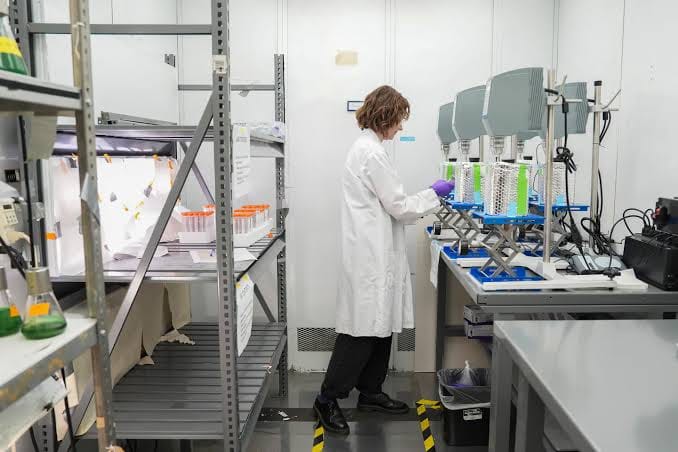
Inside a nearly empty laboratory at Harvard University, computational biologist Sean Eddy surveys what remains of a research environment that once operated at the forefront of genomic science.
Rows of unused workstations, silent desks and missing computer equipment now occupy spaces that were previously filled with researchers studying DNA sequencing, evolutionary biology and computational genomics. According to Eddy, the transformation happened after federal funding connected to his work was terminated during the Trump administration’s ongoing restructuring of research priorities and government spending.
The situation unfolding inside laboratories like Eddy’s is becoming increasingly common across the United States as universities, medical centers and scientific institutions confront growing uncertainty over federal support for research programs.
Researchers warn that the consequences could extend far beyond individual laboratories. Scientists in fields ranging from neuroscience to cancer research say instability surrounding grants and government-backed programs may weaken America’s position as a global scientific leader while slowing progress on treatments for diseases including Alzheimer’s, autism and neurological disorders.
Federal research funding has historically served as one of the foundational pillars of innovation in the United States. Institutions such as National Institutes of Health y National Science Foundation support thousands of scientific projects annually, helping universities and private laboratories develop technologies that later influence medicine, artificial intelligence, biotechnology and public health.
Now, however, many scientists say the funding environment has become increasingly unpredictable.
Researchers Fear Long-Term Damage to Medical and Technological Innovation
Sean Eddy’s work has played a major role in modern computational biology. Over the course of his career, he and his team developed software tools widely used by scientists to compare DNA and protein sequences, identify genes and analyze evolutionary patterns across species.
These systems became deeply integrated into biological research worldwide and are routinely used in studies connected to cancer detection, neurodevelopmental disorders and genetic disease analysis.
According to researchers in the field, many genomic studies conducted today depend on computational tools developed over decades through federally supported academic research. Scientists argue that weakening those research ecosystems could create ripple effects throughout medicine and biotechnology.
The growing concern extends particularly to younger scientists entering research careers. Universities and laboratories across the country are reporting increased anxiety among graduate students, postdoctoral fellows and early-career researchers who now question whether long-term scientific careers remain financially sustainable.
Neuroscientists and medical researchers warn that uncertainty surrounding grants may discourage talented students from entering fields that require years of specialized education and training. Some institutions are already seeing reductions in hiring, delayed projects and laboratory downsizing.
Research organizations argue that interruptions in funding do not simply pause scientific progress temporarily. Long-term studies often depend on continuous data collection, stable staffing and highly specialized technical expertise that can be difficult to rebuild once laboratories shut down.
Additional information regarding federal biomedical research programs and scientific initiatives can be accessed through Centers for Disease Control and Prevention y U.S. Department of Health and Human Services.
Experts also note that the United States has historically relied on scientific leadership to maintain economic competitiveness in sectors such as pharmaceuticals, biotechnology and advanced computing. Interruptions to research infrastructure could eventually affect broader innovation pipelines connected to private industry and national economic growth.
Political Debates Over Research Funding Intensify Nationwide
The debate surrounding federal science funding has become increasingly political as policymakers argue over government spending priorities, academic independence and the role of public institutions in scientific advancement.
Supporters of funding reductions argue that federal agencies require stronger oversight and greater accountability regarding how taxpayer money is distributed. Critics, however, contend that broad cuts and administrative disruptions risk undermining decades of scientific progress and damaging international collaboration.
Universities across the country are now reassessing budgets, delaying major projects and seeking alternative funding sources from private donors and industry partnerships. Some institutions fear that dependence on private financing could reshape research priorities by favoring commercially profitable projects over long-term foundational science.
Scientists also warn that international competitors are rapidly increasing investments in artificial intelligence, genomics and medical innovation. Countries in Europe and Asia continue expanding research infrastructure while aggressively recruiting scientific talent from abroad.
As uncertainty grows in the United States, some American researchers are reportedly considering opportunities overseas where funding conditions may appear more stable.
Within Harvard and other major research institutions, many scientists describe the emotional toll of seeing once-thriving laboratories dismantled after years of collaborative work. Eddy himself reflected on the contrast between the lab’s past and present while pointing to animal illustrations placed on the walls years earlier by his daughter during the laboratory’s original design process.
For researchers who have dedicated decades to scientific discovery, the empty workspaces symbolize more than lost funding. They represent growing fears about whether the next generation of American scientists will inherit the same opportunities that once made the United States the world’s dominant center for research and innovation.