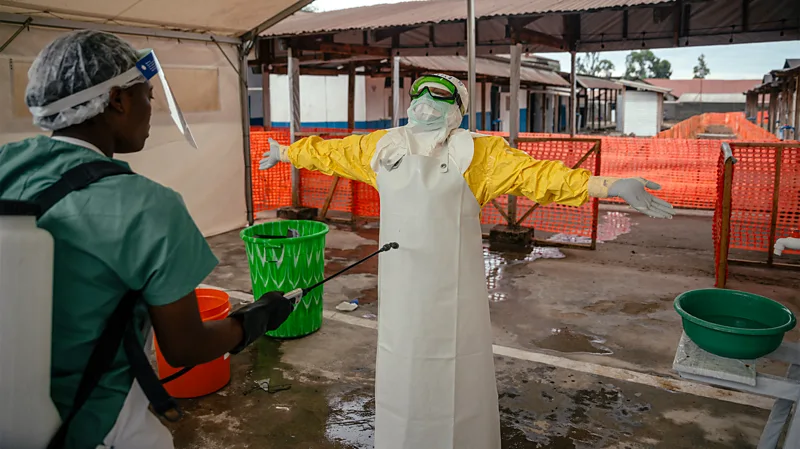
As headlines about infectious diseases return to global attention, their influence may extend far beyond public health. While outbreaks such as Ebola in Central Africa or isolated cases of hantavirus remain geographically limited, psychologists argue that simply reading about them can subtly change how people think, judge others, and respond to social situations.
Researchers studying what is known as the “behavioral immune system” suggest that the human brain has evolved psychological defenses designed to reduce exposure to illness long before physical infection occurs. These responses, although once beneficial for survival, may also influence political opinions, moral judgments, and perceptions of strangers in today’s interconnected world.
The Behavioral Immune System: An Ancient Survival Strategy
Unlike the biological immune system, which reacts after harmful microorganisms enter the body, the behavioral immune system functions as an early warning mechanism. It encourages people to avoid situations, objects, or individuals that might appear to pose a risk of infection.
Disgust is considered one of its most recognizable responses. The unpleasant reaction to spoiled food, foul odors, or visible signs of disease evolved as a protective mechanism that reduced contact with potential pathogens.
Psychologists believe these instinctive reactions extend beyond physical avoidance. During periods when disease threats become more noticeable, individuals often show a greater tendency to follow established social norms and become more cautious in their everyday decisions.
Experimental studies have supported this theory. Participants reminded of previous illnesses or exposed to images associated with infection frequently demonstrated stronger conformity with group opinions than participants exposed to unrelated negative events. Researchers argue that, throughout human evolution, communities that cooperated during disease outbreaks were more likely to limit transmission and improve collective survival.
How Disease Awareness Can Influence Moral and Social Judgments
The behavioral immune system may also affect how people evaluate the actions of others. Several psychological experiments indicate that reminders of contagious diseases can lead participants to issue stricter moral judgments and display less tolerance toward behaviors viewed as unconventional or socially inappropriate.
Scientists suggest that this tendency may have evolved because maintaining group rules during outbreaks reduced opportunities for disease transmission. In modern societies, however, those same psychological mechanisms may influence situations that have little or no connection to actual health risks.
Some researchers have also explored whether disease awareness affects perceptions of unfamiliar groups. Their findings indicate that heightened concern about infection can temporarily reduce trust toward outsiders, even when no genuine health threat exists. These reactions are believed to occur automatically rather than through deliberate reasoning.
The concept has attracted growing academic attention, with institutions including https://psych.ubc.ca/“>University of British Columbia continuing to investigate how evolved psychological defenses interact with modern social behavior.
Lessons From the COVID-19 Era Continue to Shape Research
The global COVID-19 pandemic offered researchers an unprecedented opportunity to observe whether laboratory findings also appeared in real-world settings. Surveys conducted in several countries identified relationships between increased concern about infection and changes in social attitudes, including greater interpersonal caution and stronger support for rule compliance.
However, psychologists emphasize that these associations should not be interpreted as universal or deterministic. Human behavior results from numerous interacting influences, including education, cultural background, personal experiences, political beliefs, family environment, and personality traits.
Organizations such as https://www.who.int/“>World Health Organization continue to stress that accurate public health information remains essential during outbreaks, helping reduce unnecessary fear while encouraging evidence-based preventive measures. Likewise, scientific resources available through https://www.cdc.gov/“>Centers for Disease Control and Prevention provide updated guidance on infectious diseases without encouraging stigmatization of affected communities.
Experts note that individuals differ significantly in their sensitivity to disease-related cues. Some people naturally experience stronger concerns about contamination, while others remain relatively unaffected by similar information. This variation helps explain why responses to outbreak news differ widely across populations.
Ongoing research published through organizations such as https://www.apa.org/“>American Psychological Association continues to examine how psychological defense mechanisms influence decision-making in modern societies. Although awareness of disease can subtly shape perception and behavior, scientists emphasize that these unconscious tendencies represent only one factor among many that contribute to human judgment and social interaction.