For filmmaker Destin Daniel Cretton, movies have always been more than entertainment. They were a way to explore the world, understand other cultures and discover the emotional experiences that connect people.
Growing up in Maui with five siblings, Cretton says his mother limited their television time. Instead, the children created their own entertainment, inventing plays, dance routines and fight choreography.
That changed during a family trip to California, when his grandmother lent him a VHS camera.
“I became the person who was documenting the trip.”
The experience introduced Cretton to the possibilities of filmmaking. After visiting Hollywood, Universal Studios and Disneyland, he returned to Maui inspired to make movies with his siblings.
“I was making movies nonstop,” he recalls.
Movies Became His Way of Understanding the World
Cretton says watching movies with his father and family allowed him to travel without leaving Maui.
Through cinema, he was exposed to different cultures and lifestyles, including what childhood and adolescence were like for young people living on the U.S. mainland.
But his biggest lesson was that people were not as different as they might initially appear.
His experiences watching films showed him that, despite cultural and geographical differences, people often share remarkably similar emotions.
That idea has become an important element of Cretton’s filmmaking.
From Working With At-Risk Teenagers to Making Short Term 12
After graduating from college, Cretton’s first major job was at a group home for teenagers considered at risk.
The experience profoundly changed his understanding of people and their circumstances.
He later transformed those experiences into the acclaimed 2013 film Short Term 12, starring Brie Larson, Rami Malek and LaKeith Stanfield.
Cretton describes working at the group home as one of the most difficult but rewarding experiences of his life.
The young people he encountered had experienced circumstances he had never faced himself. At the same time, many of them demonstrated a level of maturity that surprised him.
The experience taught him to look beyond people’s behavior and understand the experiences and pain beneath the surface.
That empathy would become one of the defining characteristics of his work as a filmmaker.
Filmmaking Was Once Just a Hobby
Cretton did not initially see filmmaking as a career.
After graduating with a communications degree, he struggled to find a conventional job. He continued making short films whenever he could, saving money to finance them.
To support himself, he worked a series of jobs, including teaching high school video production, working at a hotel, operating projectors and shooting wedding videos.
For several years, filmmaking remained something he pursued alongside his regular work.
Eventually, his passion became his profession.
From Independent Films to Marvel
Cretton went on to direct films including The Glass Castle and Just Mercy, before entering the Marvel universe with Shang-Chi and the Legend of the Ten Rings in 2021.
Working on Shang-Chi gave him an experience he had not realized was missing from his career.
For the first time, he found himself on a major film set where many of the people around him shared similar Asian cultural experiences.
Cretton says the environment felt familiar and comfortable, allowing him to talk openly about his upbringing and his family.
The experience also helped him recognize that his Hawaiian and Asian heritage did not need to be separated from his identity as a filmmaker.
Instead, those elements could become part of his creative perspective.
Bringing That Perspective to Spider-Man: Brand New Day
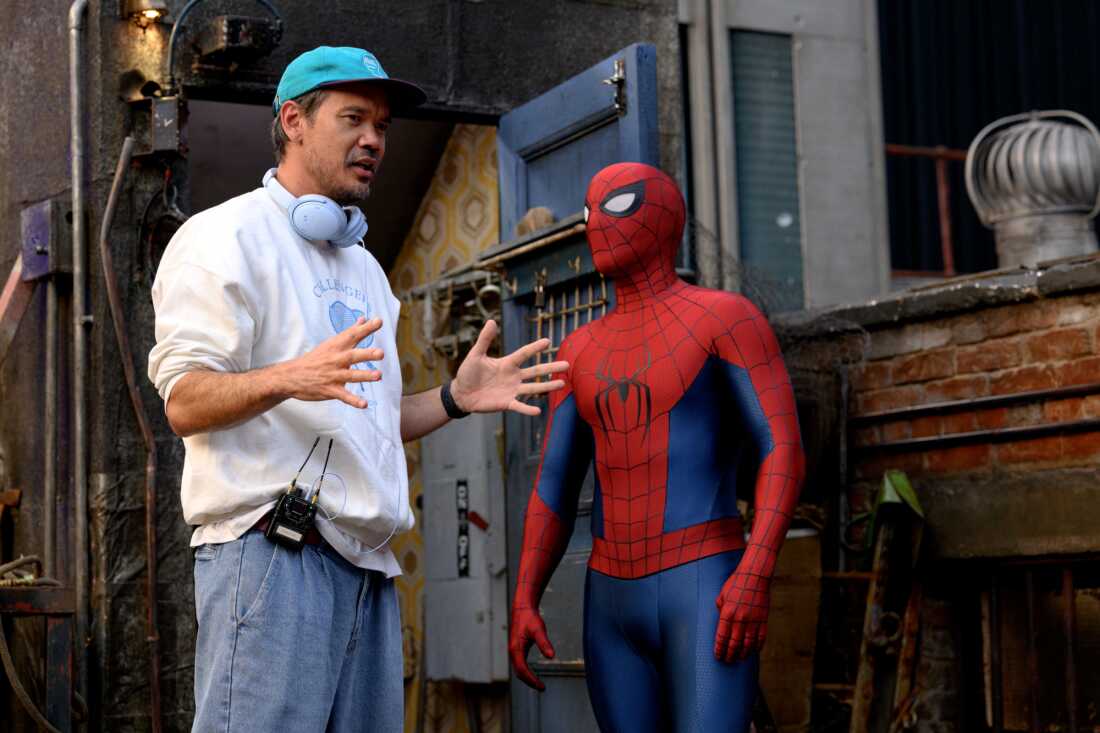
Cretton’s latest project, Spider-Man: Brand New Day, brings those personal themes into one of Hollywood’s most recognizable superhero franchises.
At the center of the film is Peter Parker’s experience of loneliness and his struggle to find direction.
Cretton says he drew partly from his own experiences during his twenties, when friends seemed to be moving forward with their lives while he felt uncertain about his own path.
That feeling of being surrounded by people who appear to have everything figured out while privately feeling alone became an emotional reference point for his approach to Peter Parker.
For Cretton, the superhero story is therefore also about something deeply human: the need for connection.
Family and Community Remain Central to His Work
Family has become one of the most consistent themes throughout Cretton’s films.
He says many of his stories explore family in different forms and examine what happens when people lose their connection to the communities that know and understand them.
That theme is particularly important in Spider-Man: Brand New Day, where family and community are central to the story.
Cretton’s own experiences have shaped that perspective.
His relationship with his father, whom he describes as passionate but also capable of intense anger and darkness, taught him to become highly sensitive to other people’s emotions.
As a child, he learned to recognize his father’s emotional state and adapt to it.
As a director, Cretton says that sensitivity has become an unexpected professional skill. He believes he can often sense what an actor is feeling when they arrive on set and understand what they need from him.
Cinema as a Connection Between People
From a VHS camera in Maui to some of Hollywood’s biggest productions, Destin Daniel Cretton’s career has remained connected to the same fundamental idea: stories can bring people closer together.
Movies allowed him to discover the world as a child. His work with teenagers taught him empathy. His experience making Shang-Chi helped him embrace parts of his cultural identity that he had previously kept separate from filmmaking.
And now, through Spider-Man: Brand New Day, he is bringing those ideas to a global audience.
For Cretton, filmmaking is ultimately about understanding people — and reminding audiences that beneath differences in culture, background or circumstance, there are emotions that connect us all.