The battle for control of the U.S. Senate is intensifying as primary elections continue to shape one of the most competitive political landscapes in recent years. With only a handful of primaries remaining, both Republicans and Democrats are focusing their resources on a small group of states. These states could determine which party controls the chamber after the November general election.
Democrats are aiming to gain enough seats to reclaim the Senate majority. Meanwhile, Republicans remain confident they can defend their advantage despite facing several highly competitive races.
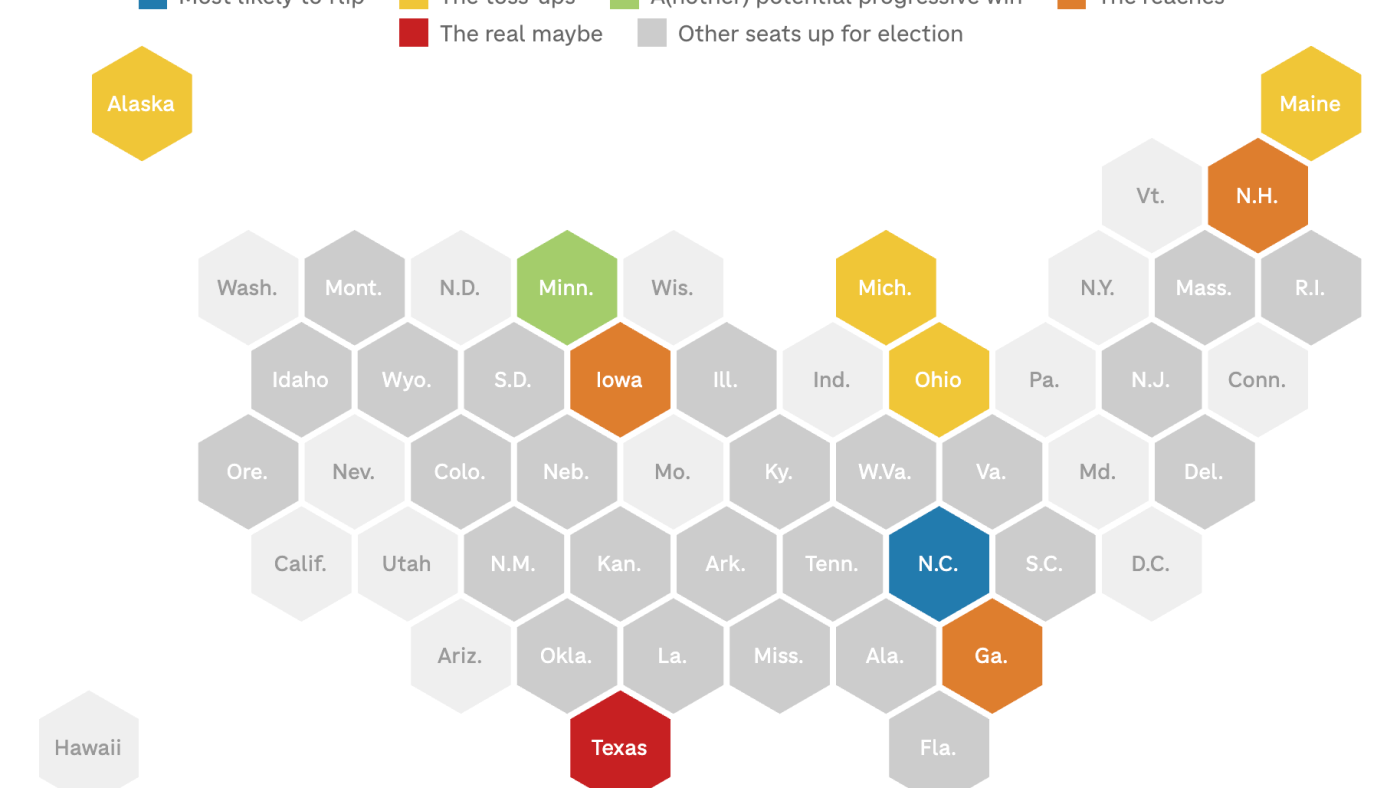
North Carolina Emerges as the Top Battleground
Political analysts widely view North Carolina as the Democrats’ strongest opportunity to flip a Republican-held Senate seat.
The open race has drawn significant national attention, with both parties investing heavily in advertising, fundraising, and voter outreach. Democrats are relying on strong statewide recognition and a campaign centered on economic issues. In contrast, Republicans believe favorable voter registration trends and a competitive grassroots operation will help them retain the seat.
Because the contest does not feature an incumbent senator, both parties see North Carolina as one of the defining races of the 2026 election cycle.
Several Swing States Remain Highly Competitive
Beyond North Carolina, a number of closely watched races are expected to determine the balance of power in Washington.
Alaska, Maine, Michigan, and Ohio are considered among the most competitive contests, with each featuring unique political dynamics. In some states, retirements have created open-seat opportunities, while others involve incumbent senators defending vulnerable positions.
Michigan continues to attract attention because of a closely watched Democratic primary that reflects broader ideological divisions within the party. Meanwhile, Ohio and Maine remain key battlegrounds where both parties believe they have realistic paths to victory.
Other important races are unfolding in Minnesota, Georgia, New Hampshire, Iowa, and Texas. In these states, demographic trends, fundraising, and voter turnout could significantly influence the final outcome.
Senate Majority Could Depend on a Handful of States
Control of the Senate may ultimately come down to only a few closely contested races.
Republicans are defending seats in several competitive states while attempting to capitalize on favorable political conditions in others. Meanwhile, Democrats are focusing on affordability, healthcare, and economic concerns as they seek to expand their coalition and appeal to independent voters.
Political strategists from both parties acknowledge that national issues—including the economy, inflation, foreign policy, and voter turnout—are likely to play a major role during the final months of the campaign.
With billions of dollars expected to be spent on advertising and voter outreach before Election Day, the remaining Senate contests are expected to receive intense national attention. Both parties will compete for control of one of the most influential legislative bodies in the United States.