Major automakers are pressing Congress to permanently ban the sale, import and manufacturing of Chinese connected vehicles, as well as related hardware and software, in the United States. Moreover, the industry says lawmakers should act before the current congressional session ends on January 3.
The Alliance for Automotive Innovation, which represents companies responsible for the vast majority of vehicles sold in the U.S., made the request in a letter to congressional leaders on Thursday. They argue that China’s expanding automotive industry presents both an economic and national security challenge. In addition, Chinese manufacturers are expanding their presence in overseas markets.
The latest push comes as Congress considers bipartisan legislation aimed at restricting Chinese connected vehicles. However, the debate has become increasingly complicated because some global automakers operating in the U.S. have significant Chinese investment or business ties.
John Bozzella, president and CEO of the Alliance for Automotive Innovation, said Chinese automakers are using subsidized vehicles equipped with connected technology to expand internationally. Consequently, he argued that the United States should establish a permanent policy before Chinese manufacturers gain a significant foothold in the domestic market.
The Alliance has previously backed legislation introduced by Senators Bernie Moreno and Elissa Slotkin that would restrict Chinese vehicles and related technologies from entering the U.S. market. You can learn more at Alliance for Automotive Innovation’s position on the proposed ban
Why automakers want a permanent Chinese connected vehicles ban
The industry’s concerns center on two separate but related issues: competition from Chinese vehicle manufacturers and the data and cybersecurity risks associated with connected vehicles.
Modern vehicles increasingly depend on cellular connectivity, wireless communications, onboard computers, cameras, sensors and software. Those systems can collect and transmit information. As a result, U.S. lawmakers and automakers are concerned about how vehicle data could potentially be accessed or used.
A connected vehicle is broadly defined in federal legislation as a vehicle that integrates networked hardware with automotive software and communicates through technologies such as cellular, satellite or other wireless connections. Consequently, that definition means the proposed restrictions could extend beyond complete vehicles to specific components and software used within them. See U.S. Senate legislation defining connected vehicles
The security debate is occurring alongside a broader U.S. effort to reduce potential dependence on technology from China and other countries considered national-security concerns.
The Department of Commerce has already established restrictions targeting certain connected-vehicle technologies linked to China and other countries of concern. Automakers have supported the national-security objective while also warning that changing complex global supply chains can take time.
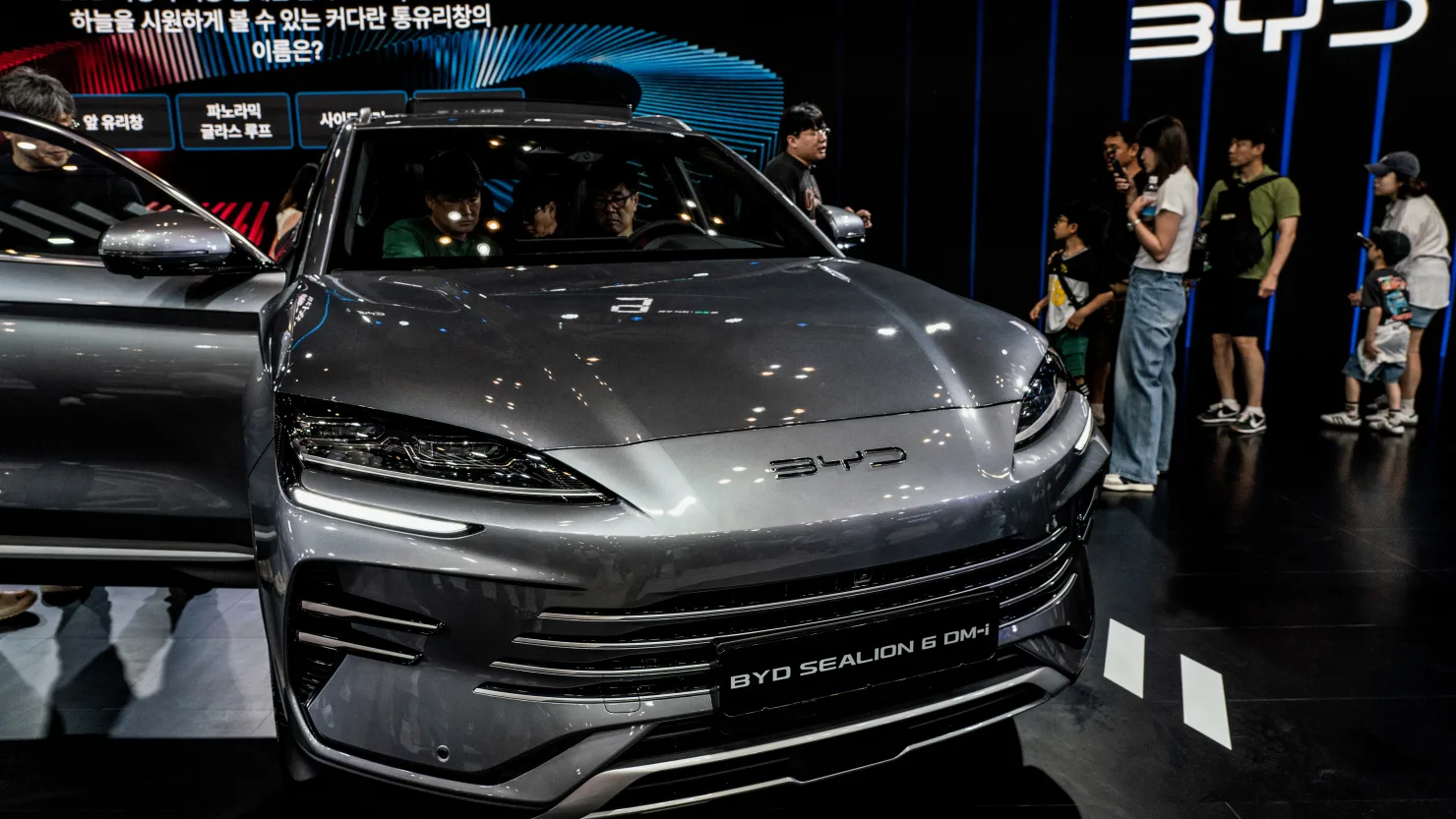
For the auto industry, however, the concern is not limited to technology. Companies such as BYD and Geely have expanded their international sales. They are also competing with established automakers on price, electric-vehicle technology and software.
BYD’s international expansion illustrates the scale of that competition. For example, the company said its new-energy vehicles were present in more than 120 countries and regions by April 2026. It also reported that its cumulative NEV sales exceeded 16.5 million units by the end of May. Learn more at BYD’s global market and vehicle information
Chinese automakers remain largely excluded from the U.S. passenger-vehicle market. However, the Alliance argues that waiting until they establish a substantial presence could make it more difficult to respond.
Congress faces pressure as Mercedes-Benz raises a complication
The legislative debate has also exposed a challenge for lawmakers: defining what constitutes a Chinese vehicle or Chinese-controlled automotive technology. They must do so without unintentionally affecting established international manufacturers.
One proposal moving through the Senate Commerce Committee could potentially affect Mercedes-Benz because Chinese investors hold a significant stake in the German automaker. Notably, Mercedes-Benz is also a member of the Alliance for Automotive Innovation.
That situation has prompted the industry group to call for what it describes as a balanced approach. The Alliance wants restrictions aimed at Chinese vehicles and high-risk technologies. At the same time, they want to ensure that companies with legitimate operations in the United States are not unnecessarily caught by ownership provisions.
Bozzella said the organization wants to work with lawmakers to develop a policy that allows all of its member companies to continue operating. He also wants them to compete in the U.S. market.
The political timetable adds another layer of uncertainty. In particular, the November midterm elections could affect congressional priorities. They could also change the amount of time available for lawmakers to reach an agreement before the current session ends.
The Senate has already considered legislation addressing connected-vehicle security. A separate bill introduced by Slotkin, the Connected Vehicle National Security Review Act, sought to establish a federal framework for reviewing transactions involving information and communications technology used in connected vehicles. See Connected Vehicle Security Act proposal
The Alliance’s latest letter therefore represents more than a request for higher tariffs or restrictions on individual vehicle imports. Instead, the group is seeking legislation that would establish a permanent prohibition covering Chinese vehicles and the hardware and software that support their connected functions.
For automakers, the objective is to prevent a repeat of the competitive pressure they say Chinese manufacturers have already created in Europe, Latin America and other international markets.
For Congress, the challenge is balancing those economic and national-security concerns against the complex ownership structures and global supply chains that define today’s automotive industry. Therefore, the Alliance is urging lawmakers to resolve those questions before the current congressional session concludes on January 3.