
China economy growth cooled significantly during the second quarter of 2026, with official data showing the country’s gross domestic product expanded 4.3% year over year, the slowest pace since late 2022. The result fell below market expectations and marked a notable slowdown from the 5.0% recorded during the first quarter.
Although exports continued to perform strongly, supported by global demand for Chinese electric vehicles, semiconductors and artificial intelligence-related products, economists say weaker consumer spending and declining investment continue to limit the country’s broader economic recovery.
Official economic statistics are available through the <a href=”https://www.stats.gov.cn/english/“>National Bureau of Statistics of China</a>.
China economy growth supported by exports but challenged at home
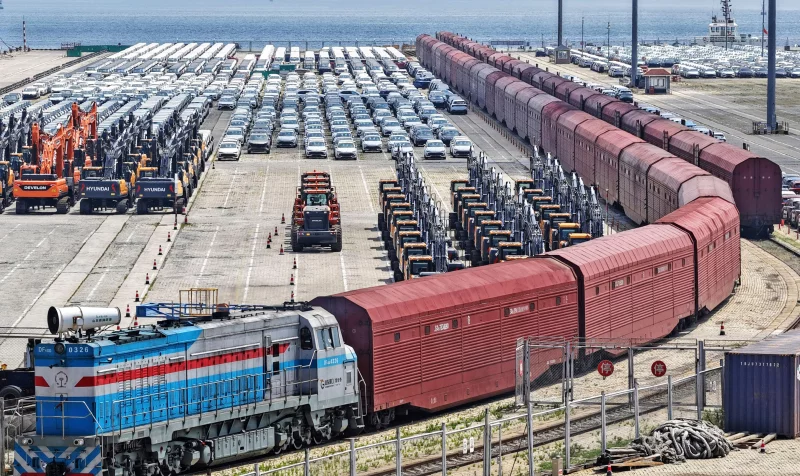
China’s export sector remained the economy’s strongest driver. Customs data showed exports increased 17.6% during the first half of the year compared with the same period in 2025, including a 27% jump in June.
Government support for advanced manufacturing has accelerated production of electric vehicles, robotics, computer chips and other high-value technologies. Industrial output also continued expanding during the first six months of the year.
However, domestic demand failed to keep pace. Retail sales rose only 1.3%, while investment in fixed assets declined 5.7%. Housing prices also remained under pressure as the country’s prolonged real estate downturn continued to weigh on consumer confidence.
Global economic forecasts and analysis can be found at the <a href=”https://www.imf.org/“>International Monetary Fund</a>.
Several economists argue that China’s economic model is becoming increasingly dependent on exports and government-backed industrial investment while household consumption remains subdued.
High-tech industries reshape China’s economic outlook
Analysts say Beijing’s strategy of prioritizing advanced technologies has strengthened China’s position in sectors such as artificial intelligence and electric vehicles, but it has also created concerns about long-term economic balance.
Heavy investment in automation, robotics and semiconductor manufacturing has boosted industrial production, yet many labor-intensive industries and consumer-focused businesses continue to experience slower growth. Some experts warn that rapid technological expansion could also reduce employment opportunities in traditional sectors.
The <a href=”https://www.worldbank.org/“>World Bank</a> has repeatedly emphasized the importance of stronger domestic consumption to support sustainable long-term growth in major developing economies.
Government officials acknowledged that the gap between production and domestic demand remains a challenge, particularly as uncertainty in the global economy continues.
Consumer confidence remains a key challenge
Chinese households have remained cautious about spending amid concerns over employment, wages and the prolonged weakness in the property market. That trend has limited the benefits of stronger exports for the broader economy.
Despite these challenges, Beijing continues targeting annual economic growth between 4.5% and 5.0% for 2026. Overall expansion during the first half of the year reached 4.7%, keeping the government broadly on track to meet its objective if domestic activity improves during the second half.
Economic indicators and international development research are also published by the <a href=”https://www.oecd.org/“>Organisation for Economic Co-operation and Development (OECD)</a>, which continues to monitor China’s transition toward a more innovation-driven economy.