A Film Designed to Provoke
Filmmaker, rapper, and activist Boots Riley says his goal as an artist is not comfort—but confrontation. His latest project, I Love Boosters, continues that mission by deliberately pushing audiences to feel both drawn in and unsettled.
Riley describes his work as an effort to “instigate class struggle,” framing art as a tool to question how power and wealth operate in society. His approach blends satire, humor, and political commentary to force engagement rather than passive viewing.
The Story Behind I Love Boosters
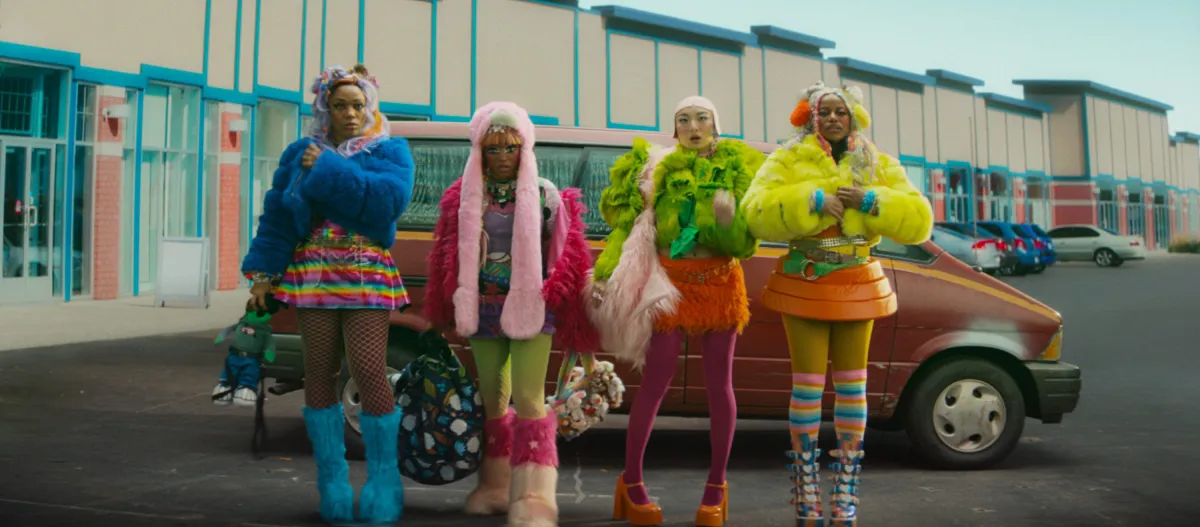
Set in the Bay Area, I Love Boosters follows a group of women who shoplift high-end fashion items and resell them at lower prices. The narrative centers on economic inequality, presenting “boosting” not just as crime, but as a response to systemic barriers around access and wealth.
The film’s title comes from a song by The Coup, Riley’s long-running hip-hop group known for politically charged lyrics. As with much of his work, the film blends music, storytelling, and ideology into a single creative statement.
A Career Built on Social Commentary
Riley is known for projects that challenge conventional narratives. His earlier film Sorry to Bother You used surreal comedy to critique corporate culture and labor exploitation, while the series I’m a Virgo explored race, identity, and power through magical realism.
With I Love Boosters, Riley continues this pattern—using unconventional storytelling to examine issues like class division, consumerism, and resistance.
Roots in Activism
Riley’s political perspective is rooted in his early experiences with labor organizing. As a teenager, he became involved in supporting worker strikes in California, which shaped his belief that collective action can challenge systems of power.
He has also described organizing a high school walkout, an experience that illustrated both the potential and the risks of activism. These formative moments continue to influence his creative work, where themes of resistance and solidarity are central.
Art That “Compels and Repels”
Riley openly embraces the idea that his work may divide audiences. He aims to create a “push and pull” effect—drawing viewers in while also making them uncomfortable enough to question their assumptions.
Rather than offering clear answers, I Love Boosters invites debate: Is it a critique of inequality, a defense of radical redistribution, or a satire of both? The ambiguity is intentional.
A Broader Conversation on Class and Culture
At its core, I Love Boosters is less about shoplifting and more about the systems that shape economic life. By focusing on characters navigating inequality in unconventional ways, Riley encourages audiences to reflect on broader questions about fairness, access, and power.
Whether viewers agree with its message or not, the film reinforces Riley’s long-standing goal: to use art as a catalyst for discussion—and, potentially, for change.