A BLM wild horse roundup in Colorado is reigniting a long-running debate. The controversy centers on how the federal government should manage America’s wild mustangs and the public lands where they live.
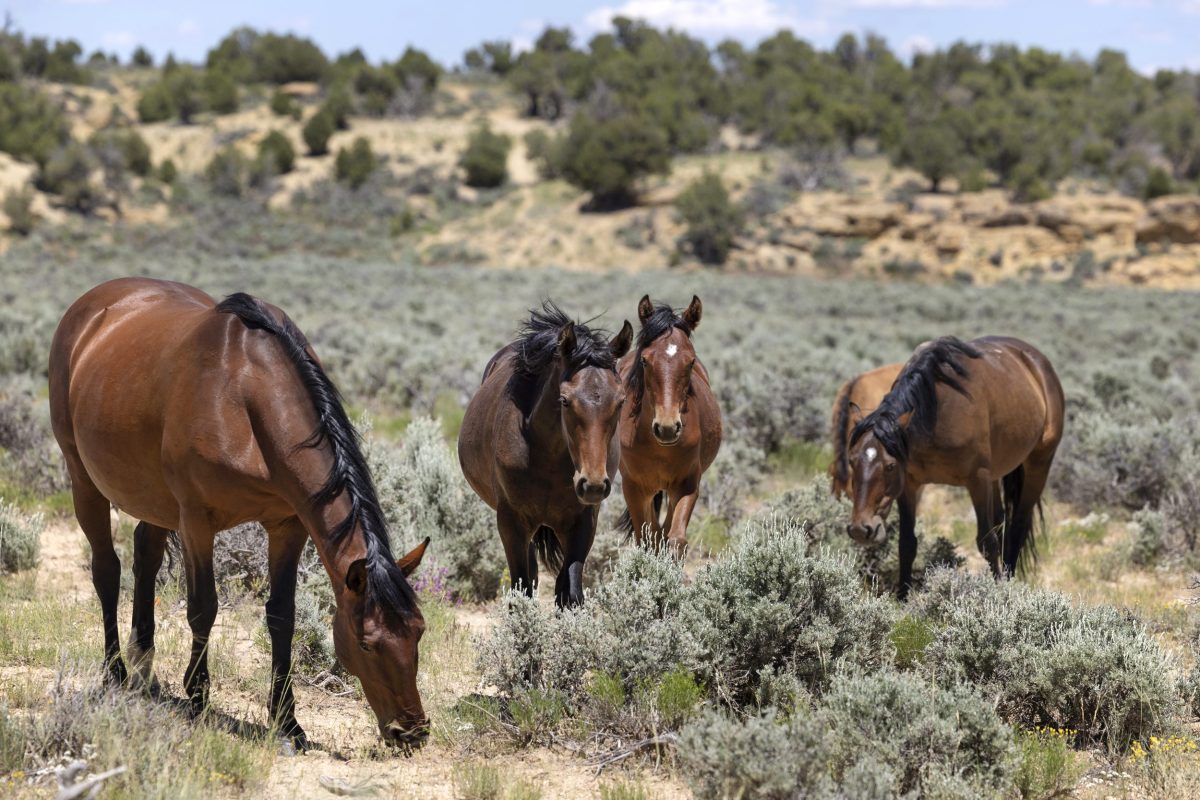
In Rio Blanco County, west of Meeker, Bureau of Land Management crews used helicopters to guide groups of wild horses through the high desert toward capture pens. Notably, approximately 1,000 horses are scheduled to be gathered during the operation.
For horse advocates, the roundup represents the painful removal of animals from the wild. Meanwhile, for federal land managers, ranchers and some local officials, it is part of an effort to prevent horse populations from exceeding what the landscape can sustainably support.
The disagreement reflects a broader challenge across the American West. Stakeholders struggle to balance wildlife conservation, livestock production, public land health and the preservation of a powerful symbol of the region’s history.
Why the BLM Is Conducting a Wild Horse Roundup in Colorado
The Bureau of Land Management manages wild horses and burros on public lands across 10 Western states.
The agency says its responsibility includes maintaining healthy rangelands while managing populations of wild horses that can reproduce rapidly.
Wild horse herds can increase substantially over relatively short periods without population controls. Therefore, when the BLM determines that the number of horses in a particular herd management area exceeds what the available habitat can support, it may conduct gathers to remove animals from the range.
The Colorado operation is taking place in the Piceance-East Douglas Herd Management Area.
During the BLM wild horse roundup, helicopters are used to locate groups of mustangs and encourage them to move toward temporary capture facilities.
Horse advocate Robyn Smith watched the operation through a high-powered camera lens. She said seeing horses running freely across the sagebrush was beautiful, but watching families become separated after capture was deeply emotional.
“That’s a family. That’s a family out there,” Smith said.
Once horses are captured, the BLM determines how they will be managed. Young foals may be reunited with their mothers, while other animals can ultimately be placed into adoption, sale or long-term holding programs.
The agency currently cares for approximately 60,000 horses in off-range facilities.
Land Management and the Debate Over Wild Horse Populations
The controversy surrounding the BLM wild horse roundup is closely connected to the condition of Western rangelands.
Supporters of the roundups argue that excessive horse populations can place pressure on limited water and vegetation resources. This is especially the case in arid areas where food and water availability fluctuate dramatically.
Rio Blanco County Commissioner Callie Scritchfield, a former rancher, said she has seen horses struggling to survive during difficult conditions.
She believes managed facilities can sometimes provide animals with more reliable access to food and water than severely degraded rangeland.
Range expert Troy Osborn has also argued that public lands must support multiple species. At the same time, he insists that the condition of the ecosystem should remain a central consideration.
Wild horses, however, represent only one of the pressures on Western rangelands.
The BLM estimates that more than 85,000 wild horses live on federal lands nationwide. Meanwhile, millions of cattle also graze across public and private lands throughout the West.
Ranchers maintain that livestock are subject to management plans and grazing controls. However, wild horse populations can grow without the same type of population limits.
Critics of the BLM’s approach counter that the agency’s management decisions can place too much emphasis on livestock grazing and land-use priorities. In addition, they argue that the agency fails to adequately protect wild horses in their natural habitat.
The result is a continuing dispute over what constitutes a sustainable population and who should determine how public rangelands are used.
Adoption Offers Some Mustangs a New Life
Not every horse captured during a BLM wild horse roundup remains in a government holding facility.
The BLM says approximately 8,000 wild horses were sold or adopted during the previous year. This created opportunities for some mustangs to transition from life on public rangeland to private homes.
For Cindy Day of Colorado, adopting a wild horse changed her perspective on the entire debate.
Day adopted Moses four years ago. She described the gray mustang as extremely difficult to handle when he first arrived. Over time the two developed a strong relationship.
Today, Day works with Moses regularly at her ranch near Grand Junction. She trains him to become comfortable with a saddle and hopes eventually to ride him on trails surrounding the property.
Day also volunteers with Piceance Mustangs, a nonprofit organization that supports wild horse management efforts.
Her work includes helping with adoption programs. She also assists with fertility-control efforts designed to reduce population growth without relying exclusively on removals.
She once opposed wild horse roundups but says her experience on the range changed her perspective.
“You go and you spend time on the range, and you realize that there’s too many of them,” she said.
For other advocates, however, the roundup remains a symbol of what they see as a larger failure. Specifically, they believe there is a lack of alternatives that allow more horses to remain in the wild.
A Continuing Fight Over the Future of America’s Mustangs
The debate over wild horses extends far beyond Colorado.
Mustangs have become deeply associated with the identity of the American West, representing freedom, resilience and the country’s frontier history. Their presence on public lands also raises complicated questions about ecological management and the competing demands placed on Western landscapes.
The BLM says population management is necessary to protect rangeland health. It also prevents horses from suffering when available resources cannot support growing herds.
Horse advocates argue that capture operations can be traumatic and disrupt established social groups. Furthermore, these operations can lead to large numbers of animals spending years in holding facilities.
The two perspectives collided again as trailers carrying captured horses left the Colorado roundup site.
Some horses resisted the helicopters and attempted to escape into the surrounding landscape. Others were loaded into trailers and transported away from the range.
For advocates watching the operation, those moments represented the loss of a life lived freely across the open West.
For land managers, the same operation represented an attempt to maintain a balance between wild horse populations and the fragile ecosystems on which horses, livestock and other wildlife depend.