
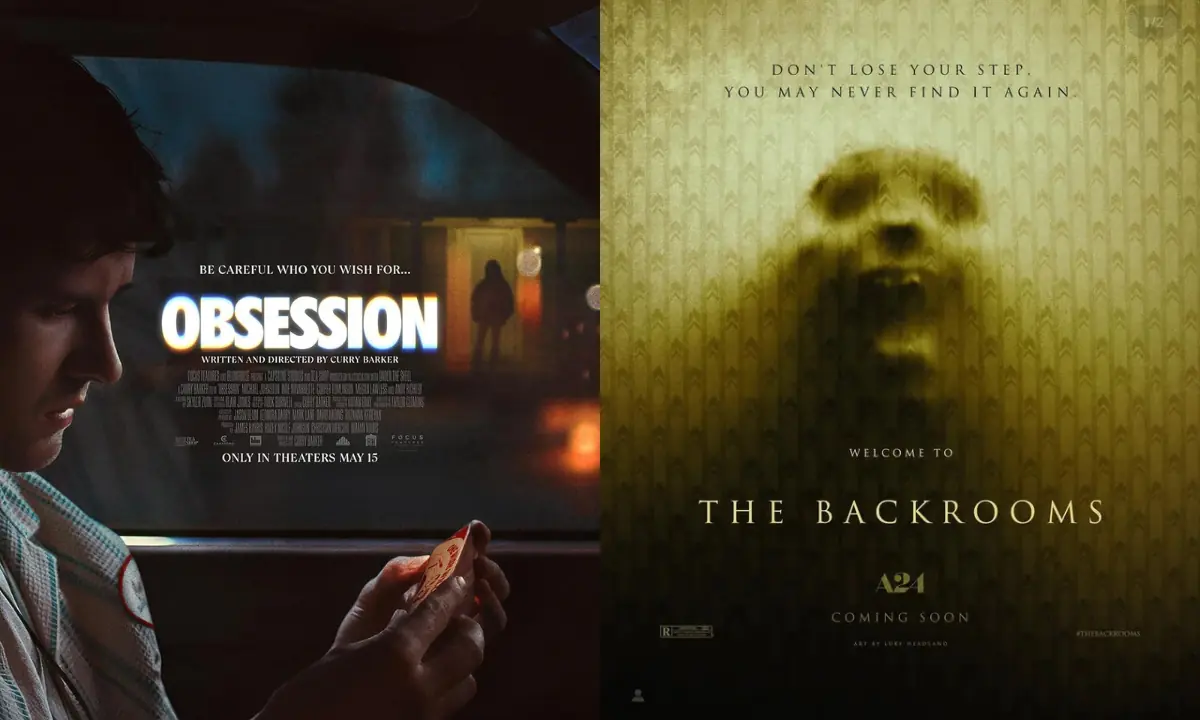
Backrooms and Obsession Become Breakout Horror Sensations at the Box Office
Backrooms and Obsession have emerged as two of the most surprising box office success stories of the year, proving that innovative storytelling and fresh creative voices can still capture audiences in a crowded entertainment landscape. Directed by filmmakers barely in their twenties, the two horror films have transformed internet-inspired concepts and psychological suspense into commercial hits that continue to attract moviegoers across North America.
The success of both productions highlights a growing trend within the film industry: audiences are increasingly embracing original horror stories that rely on atmosphere, tension, and emotional complexity rather than franchise familiarity. While each movie approaches fear from a different angle, both have generated strong word-of-mouth and impressive ticket sales, establishing their directors as rising talents in modern filmmaking.
Backrooms Brings an Internet Horror Phenomenon to Mainstream Audiences
Backrooms began as an online horror concept that quickly evolved into a global internet phenomenon. The unsettling idea centers on an endless maze of seemingly abandoned office spaces, illuminated by fluorescent lights and surrounded by monotonous yellow walls and aging carpets. The setting’s eerie simplicity sparked years of fan theories, videos, and online storytelling.
Director Kane Parsons first gained attention through a successful web series that expanded the mythology surrounding the mysterious environment. Now, his feature-film adaptation has introduced the concept to a much larger audience.
The film follows Clark, portrayed by Chiwetel Ejiofor, a struggling furniture store owner who unexpectedly discovers an entrance into the strange labyrinth hidden beneath his business. As Clark repeatedly ventures deeper into the maze, he becomes consumed by its mysteries, documenting locations, mapping unexplored sections, and searching for answers about the space’s origins.
Additional information about the film can be found through A24, which has become known for supporting unconventional and artist-driven horror productions.
What distinguishes Backrooms from traditional horror films is its ability to create unease through isolation and uncertainty. Rather than relying solely on visible threats, the film transforms ordinary architecture into a source of psychological discomfort. Endless hallways, vacant rooms, and repetitive designs become symbols of confusion, obsession, and emotional entrapment.
The film’s strong box office performance demonstrates how internet-born storytelling can successfully transition into mainstream cinema when supported by compelling filmmaking and strong performances.
Obsession Turns a Supernatural Premise Into Psychological Horror
While Backrooms explores physical and emotional isolation, Obsession takes a more intimate and disturbing approach to fear. Directed by 26-year-old filmmaker Curry Barker, the supernatural thriller has become one of the most profitable releases of the year despite its modest production budget.
The story follows Bear, a quiet music-store employee who harbors feelings for his coworker Nikki. After acquiring a supposedly magical object capable of granting a wish, he impulsively wishes that Nikki would love him more than anyone else in the world.
What initially appears to be a fantasy quickly transforms into a nightmare. As the wish takes effect, Nikki’s emotions become increasingly extreme and uncontrollable. Her affection evolves into dangerous fixation, creating a psychological spiral that threatens both characters and everyone around them.
Movie fans tracking new horror releases can explore industry information through IMDb, where the film has generated growing attention among audiences and genre enthusiasts.
One of the movie’s greatest strengths is its exploration of consent, autonomy, and emotional manipulation. Rather than focusing solely on supernatural elements, the narrative examines the consequences of violating another person’s free will.
Inde Navarrette delivers a performance that captures the internal conflict experienced by her character, presenting a woman struggling against forces that are reshaping her emotions and identity. This emotional complexity elevates the film beyond conventional horror tropes and contributes significantly to its critical and commercial appeal.
A New Generation of Horror Filmmakers Is Reshaping Hollywood
The success of Backrooms and Obsession reflects a broader shift occurring within the horror genre. Young filmmakers who grew up immersed in internet culture, digital content creation, and independent storytelling are bringing new perspectives to mainstream audiences.
Unlike many large-budget productions, these films prioritize atmosphere, originality, and psychological depth. Their creators understand modern audience behavior and are capable of transforming niche concepts into widely accessible entertainment.
The growing influence of independent horror can be seen throughout the industry, including major genre showcases such as Sundance Film Festival and professional organizations like Motion Picture Association, where discussions increasingly focus on emerging creative voices and innovative production models.
Both films also demonstrate that horror remains one of the most reliable genres for discovering new talent. Lower production costs allow directors to take creative risks, while audiences remain eager to support original stories that challenge expectations.
As Backrooms and Obsession continue their theatrical runs, their success serves as evidence that compelling ideas, strong execution, and unique artistic vision can still compete with major studio franchises. The achievements of Kane Parsons and Curry Barker may represent the beginning of a new era in horror filmmaking, one driven by creators who understand how modern audiences consume stories and how fear continues to evolve in the digital age.