
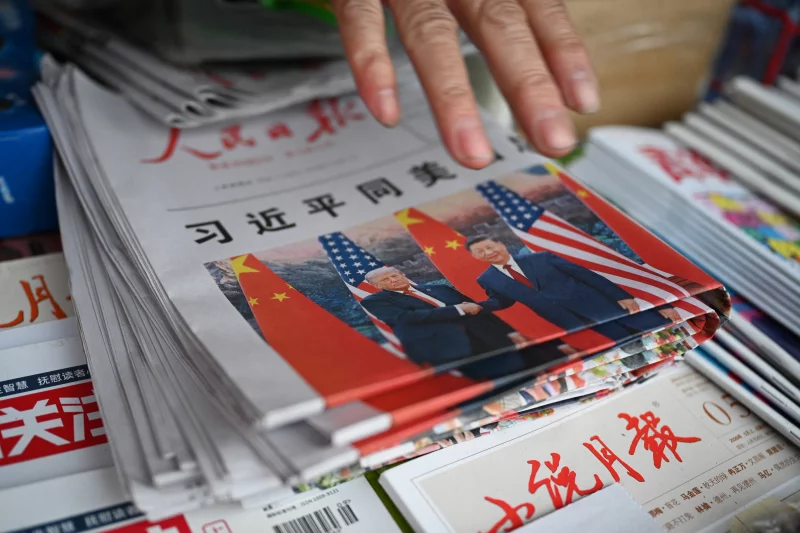
One week after the high-profile summit between U.S. President Donald Trump and Chinese President Xi Jinping in Beijing, new details are emerging about the agreements discussed behind closed doors. While both governments described the meetings as constructive and stabilizing, their official statements reveal notable differences in how each side interprets the outcomes.
The summit took place during a period of heightened geopolitical and economic uncertainty. Washington sought to ease tensions in its prolonged trade conflict with Beijing while also protecting strategic supply chains linked to technology, manufacturing, and defense industries. China, meanwhile, entered the talks focused on reviving domestic economic momentum, restoring disrupted imports, and securing access to key American technologies.
Although both sides promoted the meetings as a diplomatic success, analysts say the contrasting announcements demonstrate how the two superpowers continue to frame negotiations according to their own political priorities and strategic interests.
The discussions covered a wide range of topics, including agricultural trade, Boeing aircraft purchases, tariffs, semiconductor access, critical minerals, and regional security concerns involving Taiwan and the Middle East.
Trade and Agriculture Remain at the Center of Negotiations
One of the clearest differences between the American and Chinese statements involves agricultural trade. The White House claimed that China agreed to purchase at least $17 billion annually in American agricultural products through 2028, presenting the commitment as a major victory for U.S. farmers and exporters.
Chinese officials, however, described the agreement differently. Beijing confirmed plans to improve access for U.S. agricultural products but avoided specifying fixed purchase targets or dollar amounts. Instead, Chinese authorities emphasized reciprocal market openings for products including dairy, aquatic goods, and ornamental plants.
The gap in messaging reflects a longstanding difference in negotiating style between the two governments. Washington frequently highlights numerical trade commitments, while Beijing tends to avoid publicly endorsing rigid import quotas tied to political agreements.
The summit also included discussions surrounding U.S. beef and poultry exports. American officials stated that China would renew authorizations for hundreds of U.S. meat-processing facilities and remove restrictions affecting beef imports. Chinese statements confirmed the resumption of some licenses but stopped short of identifying the scale described by Washington.
Trade analysts monitoring developments through organizations such as World Trade Organization say the inconsistencies are not necessarily signs of disagreement, but rather examples of how each government communicates economic diplomacy to domestic audiences.
Tariffs also remain a central issue in the evolving relationship. China indicated that both sides would continue discussing reductions tied to products valued at more than $30 billion, while also expressing hope that existing tariff limits negotiated during earlier talks would remain in place.
American officials largely avoided publicly addressing future tariff levels, focusing instead on broader themes of economic cooperation and supply chain stability.
Boeing Deal Highlights Strategic Economic Priorities
Among the most attention-grabbing announcements following the summit was China’s confirmation that it plans to purchase 200 Boeing aircraft, a deal expected to provide a major boost for the U.S. aerospace industry.
President Trump had previously promoted the agreement as one of the summit’s signature achievements, suggesting the broader arrangement could eventually expand to as many as 750 aircraft orders. The deal arrives at a crucial time for Boeing, which has faced increasing competition and fluctuating international demand in recent years.
China’s version of the agreement added an important detail absent from the American announcement: the United States would provide guarantees related to aircraft engines and related aviation components. This reflects Beijing’s broader objective of securing stable access to critical technologies and industrial supplies.
The aerospace agreement underscores how deeply interconnected the two economies remain despite years of tariffs, export restrictions, and political disputes. China continues to represent one of the world’s largest aviation markets, while American manufacturers rely heavily on international demand to sustain production and employment.
Energy and critical minerals also played a major role in the negotiations. The United States emphasized China’s willingness to address concerns surrounding rare earth mineral exports and restrictions affecting processing technologies.
China, however, defended its export control policies as lawful and necessary, stating that approvals would continue only for compliant civilian applications. Rare earth minerals remain strategically vital because they are used in electronics, renewable energy systems, military equipment, and advanced manufacturing.
The discussions occurred as global markets continue monitoring disruptions tied to Middle East instability and supply chain vulnerabilities affecting major economies worldwide.
Taiwan and Global Security Issues Remain Sensitive
Despite the economic announcements, the summit also exposed ongoing tensions over geopolitical and security matters. Taiwan emerged as one of the most delicate subjects discussed during the meetings.
Chinese officials reiterated that Taiwan remains a central issue in relations between Beijing and Washington. Xi reportedly warned that mishandling the Taiwan issue could place bilateral relations in jeopardy, reinforcing China’s longstanding position regarding the self-governed island.
Official U.S. statements did not directly reference Taiwan, though comments made later by President Trump about arms sales sparked concern among observers monitoring regional stability and cross-strait relations.
International policy experts tracking developments through institutions such as Council on Foreign Relations note that Taiwan continues to represent one of the most significant flashpoints between the two governments, particularly as military activity and diplomatic tensions increase in the Indo-Pacific region.
The leaders also discussed broader international security issues, including the ongoing conflict involving Iran and concerns surrounding the Strait of Hormuz. American officials stressed that Iran should never obtain nuclear weapons and emphasized the importance of keeping international shipping routes open.
Chinese officials framed the conversations more cautiously, focusing on maintaining regional stability and preserving commercial shipping operations during the ceasefire period.
Meanwhile, uncertainty remains over the future of the current trade truce between the two countries. Existing agreements are scheduled to expire later this year, though both governments signaled interest in maintaining dialogue to avoid renewed economic escalation.
Observers following developments through International Monetary Fund research say the relationship between the United States and China continues to shape global trade flows, investment confidence, supply chains, and financial markets far beyond the two countries themselves.