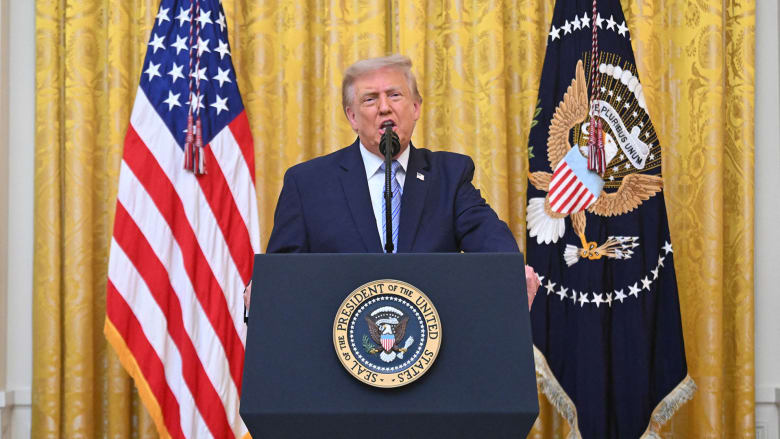
President Donald Trump used a primetime speech from the White House to argue that America’s election system remains vulnerable to fraud and foreign influence. He also unveiled newly declassified intelligence documents related to election security.
Although Trump said his objective was to strengthen confidence in elections, critics noted that the speech did not present new evidence. Specifically, it did not show that fraudulent votes altered the outcome of any U.S. election.
Trump Raises Election Security Concerns
During the approximately 25-minute address, Trump claimed the newly released documents exposed significant weaknesses in the nation’s election infrastructure.
Among the issues he highlighted were:
- Foreign access to voter information.
- Security concerns involving voting machines.
- Allegations regarding noncitizens appearing on voter registration rolls.
- Calls for stronger voter identification requirements.
The administration published supporting documents online during the speech, though many were heavily redacted.
Claims About China and Voter Data
Trump alleged that China obtained information connected to approximately 220 million U.S. voter records beginning before the 2020 election.
Election officials have long acknowledged that many states publicly release portions of voter registration data under state law.
Previous intelligence assessments concluded that foreign governments—including China, Russia, and Iran—have attempted to influence public opinion through online information campaigns. However, U.S. intelligence agencies have stated they found no evidence that foreign actors altered voting systems, ballots, vote tabulation, or election results during the 2020 election.
Voting Machine Security
The White House also highlighted cybersecurity concerns involving electronic voting equipment.
Election security specialists generally agree that voting systems contain vulnerabilities that should continue to be addressed. At the same time, they emphasize that modern U.S. elections include multiple layers of protection, including:
- Paper ballots in most jurisdictions.
- Post-election audits.
- Recounts.
- Independent state and local election administration.
Experts note that identifying theoretical vulnerabilities is different from demonstrating that those vulnerabilities were successfully exploited during an election.
Noncitizen Voter Registration
The administration also asserted that hundreds of thousands of noncitizens appear on voter rolls in several states.
The White House cited data from the Department of Homeland Security’s SAVE database. States may use the database to verify citizenship information during voter registration maintenance.
Election researchers have consistently found that confirmed cases of noncitizen voting remain rare. In addition, some reviews have shown that citizenship verification systems can occasionally produce false matches involving U.S. citizens.
Renewed Push for the SAVE America Act
Trump again urged Congress to approve the SAVE America Act, legislation that would require proof of U.S. citizenship when registering to vote. It would also establish additional voter identification requirements.
Supporters argue the proposal would strengthen election integrity and public confidence.
Opponents contend that documented voter fraud is extremely uncommon. Moreover, they warn the requirements could make registration more difficult for eligible voters who do not readily possess qualifying documents.
Critics Say Speech Offered No New Evidence
Following the address, Democratic lawmakers and election experts argued that the released materials largely repeated previously known information. They said the documents did not introduce new findings.
Several election specialists said the documents discussed known cybersecurity risks and foreign information operations. However, they did not provide evidence that election systems had been manipulated or that illegal voting changed election outcomes.
As debate over election integrity continues ahead of future federal elections, both supporters and critics of the administration expect voting security to remain a major political issue.