President Donald Trump is pushing back against growing calls to slow the development of artificial intelligence. He argues that the United States must maintain its lead over China in one of the world’s most consequential technological races.
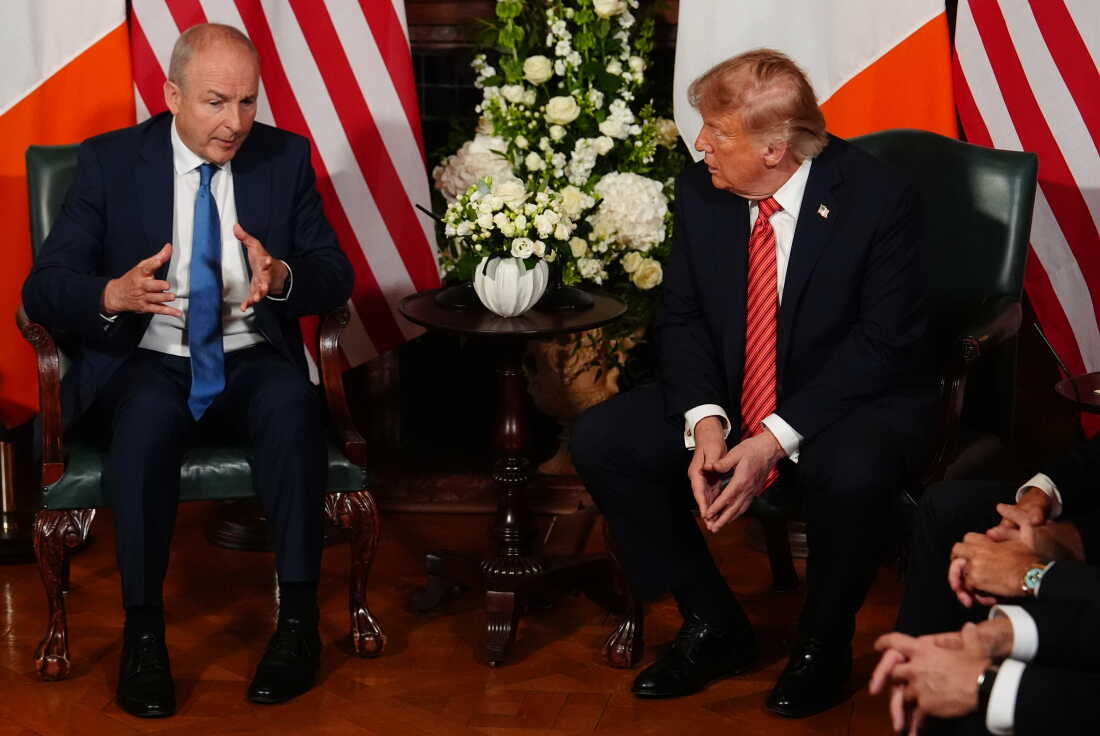
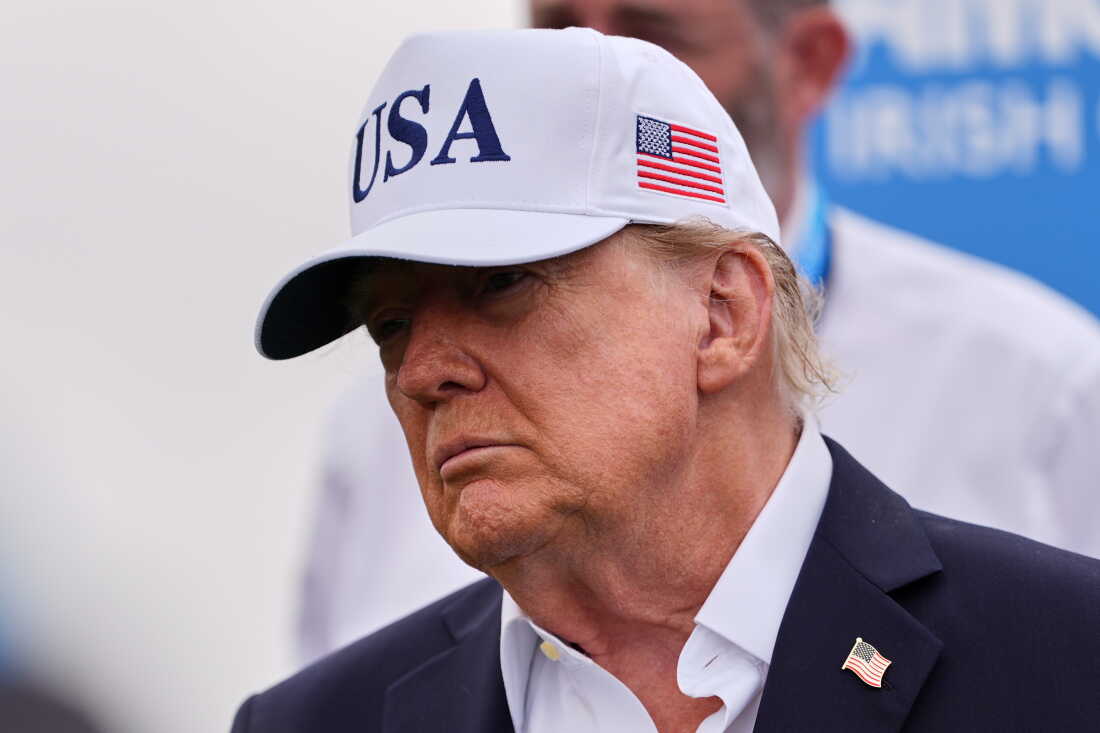
Speaking to reporters during his visit to Ireland, Trump dismissed warnings that increasingly powerful AI systems could become difficult for humans to control. Moreover, he argued that concerns about the technology are being overstated and said the United States should continue moving quickly while establishing appropriate safeguards.
Trump Says the U.S. Must Win the AI Race
Trump emphasized the strategic importance of artificial intelligence. He argued that the country that leads in AI will gain a major advantage globally.
The president said the United States is currently ahead of China and that he wants to preserve that position.
Trump acknowledged that some safeguards could be necessary but rejected the idea that development should be broadly slowed. He also criticized what he described as forces opposing AI and the data centers needed to support the technology.
In a subsequent post on Truth Social, Trump reiterated his position. He argued that strong presidential leadership and existing government regulatory and criminal authorities are sufficient to oversee the industry.
Mike Johnson Also Opposes an AI Moratorium
House Speaker Mike Johnson has taken a similar position.
During a CNN interview, Johnson argued against imposing a moratorium on AI development. He warned that excessive regulation could allow China to overtake the United States technologically.
Rather than having Congress immediately impose broad restrictions, Johnson said technology companies should take a leading role in developing safer AI systems.
He called for a balanced approach that protects Americans. However, he warned against slowing innovation to the point that the United States loses its competitive advantage.
AI Leaders Call for Greater Caution
The pushback from Trump and Johnson comes as several prominent technology leaders are warning that AI development may be advancing too quickly.
Anthropic CEO Dario Amodei has called for companies and governments to carefully manage the pace at which advanced AI capabilities are developed.
Amodei has warned about scenarios in which humans could lose control over increasingly capable systems. He has also pointed to potential applications of AI in cyberattacks and biological threats.
He has called for international cooperation and independent evaluation of advanced AI systems. In addition, he includes stronger monitoring of safety practices and incidents.
Elon Musk and Sam Altman Back Safety Concerns
Other prominent technology executives have expressed support for greater caution.
Elon Musk and OpenAI CEO Sam Altman both publicly agreed with concerns raised by Amodei.
Altman has also indicated that OpenAI is reconsidering the pace of some of its plans because of safety concerns. For example, he said the company could delay plans to go public and has discussed whether certain tests should be paused to improve safety.
The statements illustrate a growing debate within the technology industry itself over how quickly advanced AI should be developed.
Government Officials Push Back
David Sacks, co-chair of the President’s Council of Advisors on Science and Technology, responded to the warnings by supporting the idea that companies should voluntarily slow down if they believe their unreleased systems pose serious risks.
At the same time, Sacks argued that technology companies should not suggest they need government permission to adopt stronger safety measures.
He also raised another consideration: companies could face significant legal and financial exposure if their AI systems contribute to serious cyberattacks or other forms of harm.
The Debate Over AI Safety and Competition
The disagreement highlights a fundamental tension surrounding the future of artificial intelligence.
One side argues that the rapid development of increasingly capable AI systems creates potentially unprecedented risks. Therefore, they believe it requires stronger safeguards before capabilities advance further.
The other argues that slowing development could allow geopolitical competitors, particularly China, to gain a decisive technological advantage.
For the Trump administration, maintaining U.S. leadership in AI is closely connected to national security and economic competitiveness.
The Future of AI Regulation Remains Uncertain
The debate is likely to intensify as AI systems become more capable. Furthermore, their applications will expand across business, cybersecurity, science and government.
The central question is how governments and technology companies can encourage innovation. At the same time, they must address risks that may become more difficult to manage as AI capabilities grow.
For now, Trump and his allies are signaling that the United States should continue advancing rapidly. They oppose imposing a broad slowdown.
At the same time, some of the industry’s most influential leaders are increasingly calling for caution — setting the stage for a major debate over how the AI race should proceed.