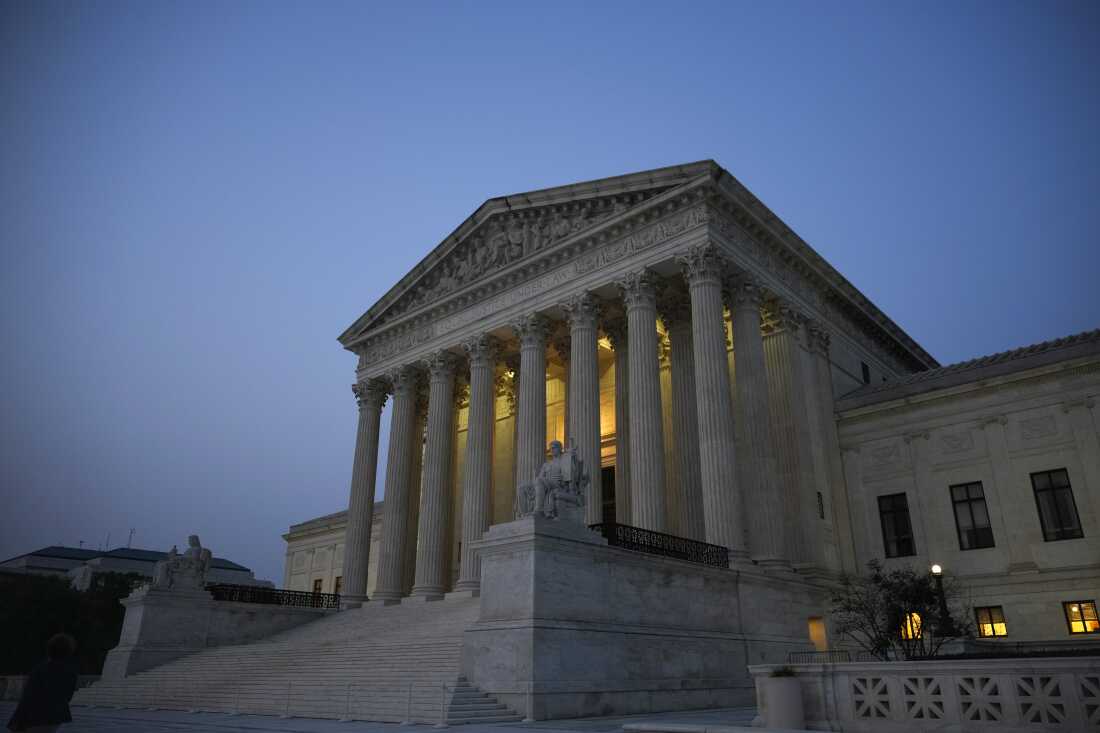
The Supreme Court birthright citizenship ruling has reaffirmed one of the longest-standing constitutional principles in the United States. Specifically, it declared that nearly every child born on American soil is automatically a U.S. citizen under the Fourteenth Amendment. In a 6-3 decision, the Court concluded that the Constitution’s Citizenship Clause provides broad protection. Moreover, this protection cannot be limited through executive action.
The ruling invalidates an executive order signed by President Donald Trump at the beginning of his second term. That order sought to deny automatic citizenship to children born in the United States whose parents were either living in the country without legal authorization or were present under temporary visas.
The decision reinforces more than a century of constitutional interpretation. It also preserves a legal principle that has shaped American citizenship since the adoption of the Fourteenth Amendment following the Civil War.
Fourteenth Amendment Remains the Foundation of Birthright Citizenship
Writing for the majority, Chief Justice John Roberts emphasized that the language of the Fourteenth Amendment was intentionally drafted to establish broad citizenship protections. Specifically, the amendment states that all persons born or naturalized in the United States, and subject to its jurisdiction, are citizens of the United States.
The Court concluded that this constitutional language has consistently been interpreted to guarantee citizenship based on birthplace rather than the immigration status of a child’s parents. According to the majority opinion, neither the executive branch nor presidential authority can alter this constitutional guarantee without an amendment to the Constitution.
The ruling also notes that the Citizenship Clause has remained a stable part of American constitutional law for more than 160 years. It has survived numerous changes in immigration policy and political administrations during that span.
Historic Precedent Played a Central Role in the Decision
A key element of the Court’s reasoning relied on the landmark 1898 decision in United States v. Wong Kim Ark. In that case, the Supreme Court held that a man born in San Francisco to Chinese immigrant parents was an American citizen because he was born within the United States.
That decision established the modern interpretation of the Fourteenth Amendment. Furthermore, it has served as the constitutional foundation for birthright citizenship for more than a century. The Court observed that this precedent has been repeatedly recognized by later courts and reflected in federal law.
The majority further explained that only a small number of narrowly defined exceptions have historically existed. These include children born to accredited foreign diplomats, whose legal status differs under international law.
Decision Preserves Longstanding Constitutional Interpretation
The ruling represents a significant constitutional decision with broad implications for immigration policy and executive authority. While the executive order sought to redefine eligibility for automatic citizenship, the Court determined that any such change would require constitutional action rather than unilateral executive measures.
The majority reaffirmed that the Citizenship Clause protects the legal status of children born in the United States regardless of their parents’ immigration circumstances. Consequently, this interpretation has guided American law for generations.
Three justices dissented from the decision, reflecting continuing legal debate over the scope of the Fourteenth Amendment. Nevertheless, the majority opinion leaves the longstanding constitutional framework governing birthright citizenship unchanged.
The decision is expected to remain one of the most consequential constitutional rulings involving citizenship and immigration in recent years. It also reaffirms principles that have shaped American law since the nineteenth century.