
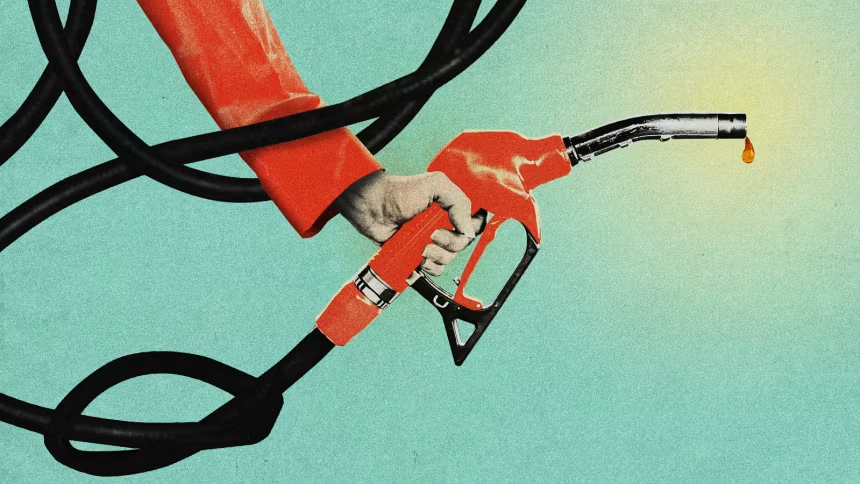
The sharp rise in gasoline prices following tensions in the Middle East has forced many Americans to rethink how much oil they rely on in everyday life. From transportation and shipping to household products and packaging, petroleum remains deeply woven into the economy. As fuel costs continue to climb, consumers are searching for practical ways to reduce spending. Many want to do this without dramatically changing their lifestyles overnight.
Energy analysts say it is impossible to completely disconnect from oil-based products. They point out that fuel prices influence everything from grocery deliveries to manufacturing costs. However, experts also note that individuals can still make meaningful adjustments. These can reduce fuel consumption and improve long-term financial stability.
Many of those changes involve everyday habits that require little or no additional spending. Others involve longer-term decisions such as choosing more fuel-efficient vehicles or changing commuting routines. According to transportation and environmental specialists, the cumulative effect of these small decisions can significantly lower fuel expenses over time.
Driving Habits Can Dramatically Cut Fuel Consumption
One of the most effective ways to reduce gasoline use is simply to drive more efficiently. Experts say aggressive driving habits such as rapid acceleration, speeding and hard braking force vehicles to consume more fuel than necessary. Therefore, maintaining steady speeds on highways and avoiding sudden stops can noticeably improve fuel economy.
Research from the Department of Energy shows that reducing highway speed from 75 miles per hour to 55 miles per hour can lower fuel consumption by as much as 40% in some gasoline-powered vehicles. Fuel efficiency tends to decrease rapidly once speeds exceed moderate highway ranges. As a result, high-speed driving is one of the costliest habits during periods of elevated gasoline prices.
Vehicle maintenance also plays an important role. Properly inflated tires reduce rolling resistance and help engines operate more efficiently. Drivers who routinely check tire pressure and maintain engines according to manufacturer recommendations often see measurable savings at the pump.
Transportation experts also encourage motorists to reduce unnecessary trips whenever possible. Combining errands into a single outing, planning routes more carefully and avoiding repeated drives to the same locations throughout the week can reduce both gasoline use and vehicle wear.
Consumers searching for additional ways to save are increasingly turning to digital platforms such as GasBuddy to compare fuel prices between nearby stations. Analysts say price differences between stations located only a few miles apart can sometimes exceed $1 per gallon. This is especially common during volatile market periods.
Public Transit and Remote Work Gain Attention
As fuel prices rise, many Americans are also reconsidering how frequently they rely on personal vehicles for commuting. Public transportation systems, carpooling programs and remote work arrangements have regained attention as practical alternatives to daily driving.
Data from the U.S. Census Bureau indicates that only a relatively small percentage of American workers regularly use public transportation. Larger shares continue to drive alone to work. However, transportation analysts say prolonged fuel inflation could gradually shift commuting patterns in larger metropolitan areas where train and bus systems are more accessible.
Remote work remains another major factor affecting gasoline demand. Employees who work from home even a few days per week can substantially reduce monthly fuel expenses, parking costs and vehicle maintenance requirements. For this reason, businesses that continue offering hybrid work schedules may indirectly help employees manage higher transportation costs.
Carpooling has also re-emerged as a practical solution for workers facing long commutes. Sharing rides with coworkers allows participants to split fuel expenses while reducing total vehicle traffic on congested highways. Some cities and employers have expanded commuter incentive programs designed to encourage shared transportation and lower emissions.
Meanwhile, rising delivery costs linked to diesel prices are beginning to affect household budgets more broadly. Transportation companies frequently apply fuel surcharges to shipped goods, increasing the price consumers pay for everyday products ranging from groceries to household supplies. Because petroleum is also used in manufacturing plastics and packaging materials, elevated oil prices can ripple through multiple industries simultaneously.
Fuel-Efficient Vehicles and EVs Shape Long-Term Strategies
For consumers considering larger financial decisions, fuel efficiency is becoming a more important factor in vehicle purchases. Traditional hybrid vehicles, plug-in hybrids and fully electric cars are attracting growing interest from drivers. Many want to shield themselves from gasoline price volatility.
Environmental groups such as the Natural Resources Defense Council argue that cleaner transportation technologies offer both financial and environmental advantages over time. Hybrid vehicles, in particular, appeal to consumers seeking improved fuel economy without fully abandoning gasoline-powered transportation.
Electric vehicles continue gaining market share despite relatively high upfront costs. Charging an EV at home can still cost substantially less than repeatedly filling a gasoline tank. Although electricity rates have also risen in several regions, industry analysts note that the elimination of some federal incentives has slowed affordability for certain buyers. However, demand for used electric vehicles remains strong.
Automakers are also investing heavily in improved battery technology and expanded charging infrastructure. This could make EV ownership more practical for a wider portion of the population over the coming years. Consumers weighing vehicle upgrades are increasingly evaluating long-term operating expenses. They are focusing on these instead of only looking at purchase prices.
Energy specialists say no single solution can completely eliminate exposure to rising oil prices. Instead, a combination of smarter driving habits, transportation alternatives and fuel-efficient technology may help households gradually reduce dependence on gasoline. This can be accomplished while maintaining mobility and daily convenience.