
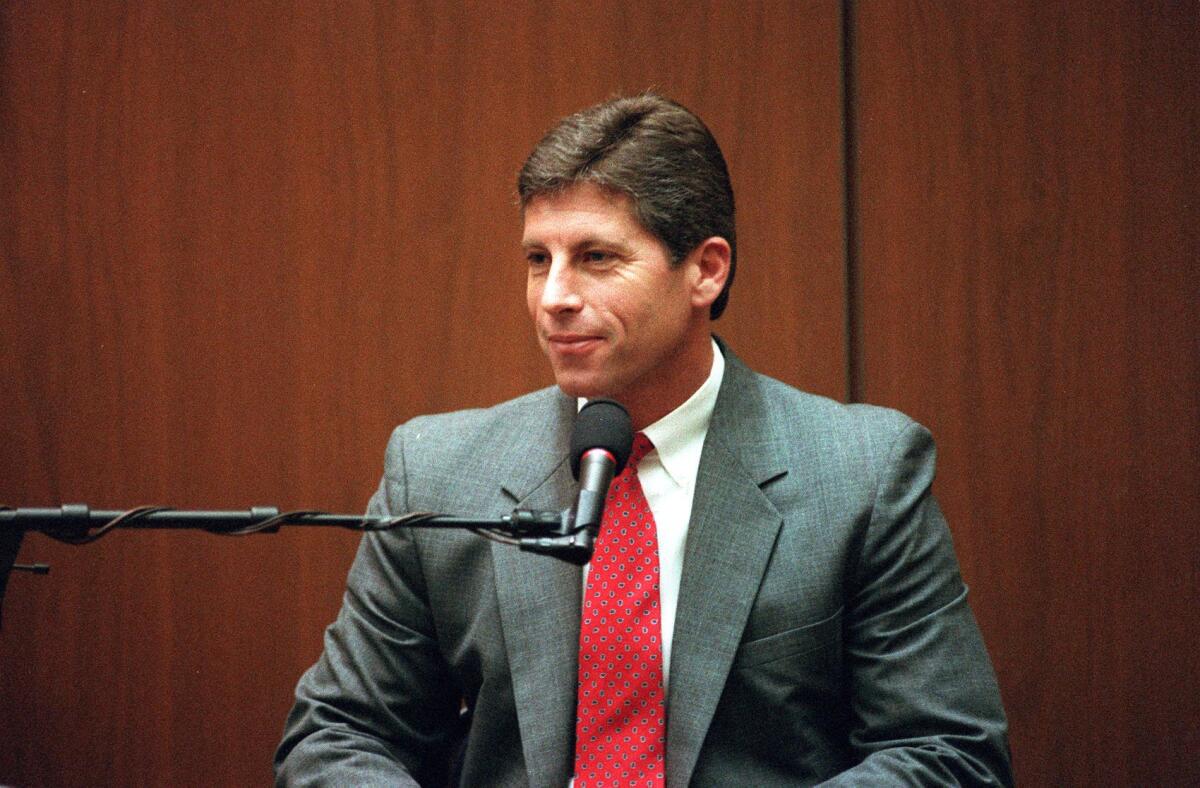
Mark Fuhrman Dies at 74: Former Detective at Center of O.J. Simpson Trial Controversy
The death of Mark Fuhrman marks the passing of one of the most controversial figures in modern U.S. criminal justice history. Fuhrman, a former detective with the Los Angeles Police Department, died on May 12 at the age of 74 in Idaho, according to local authorities. While the cause of death has not been publicly disclosed, his legacy remains closely tied to the highly publicized 1995 trial of O.J. Simpson.
Fuhrman played a central role in the investigation of the 1994 murders of Nicole Brown Simpson and Ronald Goldman, a case that captivated global audiences and reshaped public perceptions of race, policing, and the justice system in the United States.
Role in the O.J. Simpson Trial and Key Evidence
As one of the first detectives assigned to the crime scene, Fuhrman reported discovering a bloody glove at Simpson’s residence—evidence that prosecutors argued linked the former athlete to the killings. The glove later became one of the most iconic and debated pieces of evidence in U.S. legal history.
However, Fuhrman’s credibility was severely challenged during the trial. Under cross-examination, he denied using racist language in the previous decade, a claim later contradicted by recorded evidence. This revelation became a turning point in the case, as Simpson’s defense team used it to argue potential bias and misconduct in the investigation.
Legal strategist Alan Dershowitz later suggested that Fuhrman’s testimony ultimately weakened the prosecution’s case, highlighting how issues of credibility can influence jury perception in high-profile trials.
For further legal context on criminal trials and constitutional protections, see Cornell Law School Legal Information Institute and United States Courts.
Perjury Conviction and Life After Law Enforcement
Following the trial, Fuhrman faced legal consequences for his statements under oath. In 1996, he pleaded no contest to a perjury charge, becoming one of the few law enforcement officers convicted in connection with testimony in such a high-profile case.
He subsequently retired from the LAPD and relocated to Idaho, where he lived a quieter life managing a rural property. Despite his controversial past, Fuhrman remained active in public discourse, transitioning into a media role as a television and radio commentator.
He also authored the book Murder in Brentwood, offering his perspective on the investigation and events surrounding the case. His post-law enforcement career reflected an attempt to reshape his public image while continuing to engage with criminal justice topics.
Additional insights into law enforcement practices and ethics can be explored through Federal Bureau of Investigation and American Bar Association.
Lasting Impact of a Controversial Figure in U.S. Justice
The broader case involving Simpson extended beyond the criminal trial. While he was acquitted in 1995, a later civil trial found him liable for the deaths of Brown and Goldman, ordering him to pay $33,500,000 in damages to their families. Simpson later served prison time for unrelated charges and died in 2024.
Fuhrman’s role in the case continues to be analyzed in discussions about policing, racial bias, and courtroom strategy. His testimony and subsequent conviction are often cited in debates about the integrity of evidence and the importance of accountability within law enforcement institutions.
The legacy of the case remains influential in shaping modern legal standards and public trust. For broader information on civil rights and justice system reforms, visit American Civil Liberties Union and National Criminal Justice Reference Service.
Fuhrman’s death closes a chapter on a figure whose actions and testimony played a pivotal role in one of the most widely scrutinized criminal trials in U.S. history, leaving behind a complex legacy that continues to resonate in legal and societal discussions.