
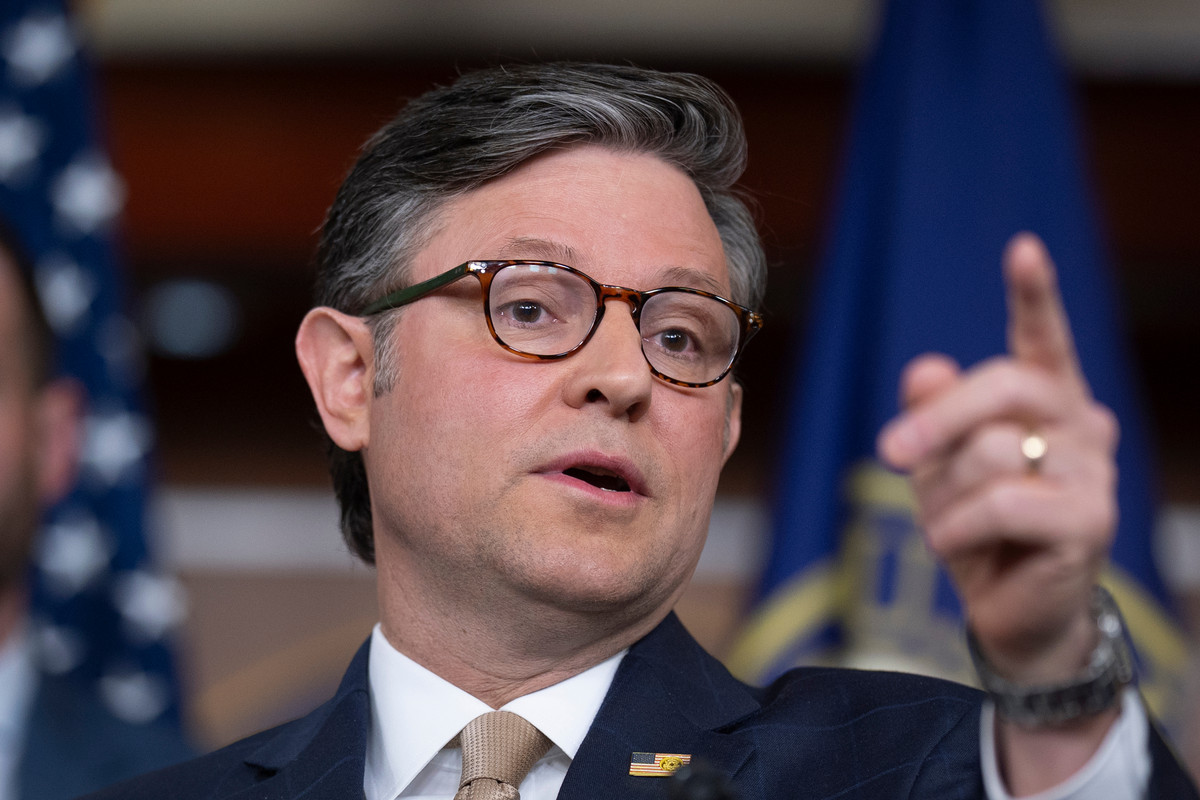
House Speaker Mike Johnson Advances New FISA Section 702 Renewal Plan After Failed Votes
Mike Johnson has introduced a renewed legislative effort to extend Section 702 of the Foreign Intelligence Surveillance Act, following two failed attempts in Congress that exposed deep divisions over privacy protections and national security priorities. The proposal comes as the controversial surveillance authority approaches its April 30 expiration deadline, increasing pressure on lawmakers to reach a consensus.
The latest bill largely mirrors Johnson’s previous proposal but includes limited oversight adjustments aimed at addressing concerns from both parties. However, the absence of a warrant requirement for accessing Americans’ communications continues to fuel debate across the political spectrum.
Debate Intensifies Over Surveillance Powers and Privacy Safeguards
Section 702 has long been a cornerstone of U.S. intelligence operations, enabling agencies such as the Federal Bureau of Investigation and the National Security Agency to collect communications from foreign individuals located outside the United States. While the program targets non-U.S. persons, it can incidentally capture communications involving Americans, raising ongoing concerns about civil liberties.
Lawmakers advocating reform argue that requiring a warrant before reviewing Americans’ data would provide essential constitutional safeguards. Critics of the current framework point to the scale of surveillance activity, noting that hundreds of thousands of foreign targets are monitored annually, increasing the likelihood of incidental data collection involving U.S. citizens.
Despite these concerns, national security proponents maintain that adding judicial requirements could slow intelligence operations and limit the government’s ability to respond to threats in real time. More details on the legal framework can be explored at https://www.intelligence.gov.
Johnson’s Proposal Seeks Middle Ground Without Major Changes
Johnson’s revised plan proposes a three-year extension of Section 702 while introducing new oversight mechanisms. These include mandatory monthly reporting by the FBI to an internal oversight official and stricter penalties for intentional misuse of surveillance data.
Supporters of the proposal describe it as a pragmatic compromise designed to preserve critical intelligence capabilities while enhancing accountability. Some policymakers view the changes as incremental but necessary steps to maintain operational continuity.
However, critics argue that the revisions fall short of meaningful reform. They contend that without a warrant requirement, the bill effectively maintains the status quo. Additional analysis of surveillance policy debates is available at https://www.brennancenter.org.
Bipartisan Divisions Persist as Deadline Approaches
Efforts to reach a bipartisan agreement remain ongoing, with key lawmakers from both parties signaling interest in a more comprehensive reform package. Jim Himes and Hakeem Jeffries have been involved in discussions aimed at crafting a broader consensus, though progress has been limited.
Opposition has also emerged from within Johnson’s own party. Scott Perry and other conservative lawmakers have expressed concerns about insufficient accountability measures, emphasizing the need for stronger protections against potential misuse of surveillance authorities.
At the same time, privacy advocates warn that continuing the program without substantial reforms could erode public trust. They argue that existing safeguards do not adequately prevent unauthorized access to Americans’ communications.
Further context on congressional activity can be found at https://www.congress.gov and https://www.house.gov.
As the expiration deadline nears, the outcome of Johnson’s proposal will likely shape the future of U.S. surveillance policy, balancing the competing demands of national security and individual privacy in an increasingly complex global threat environment.