
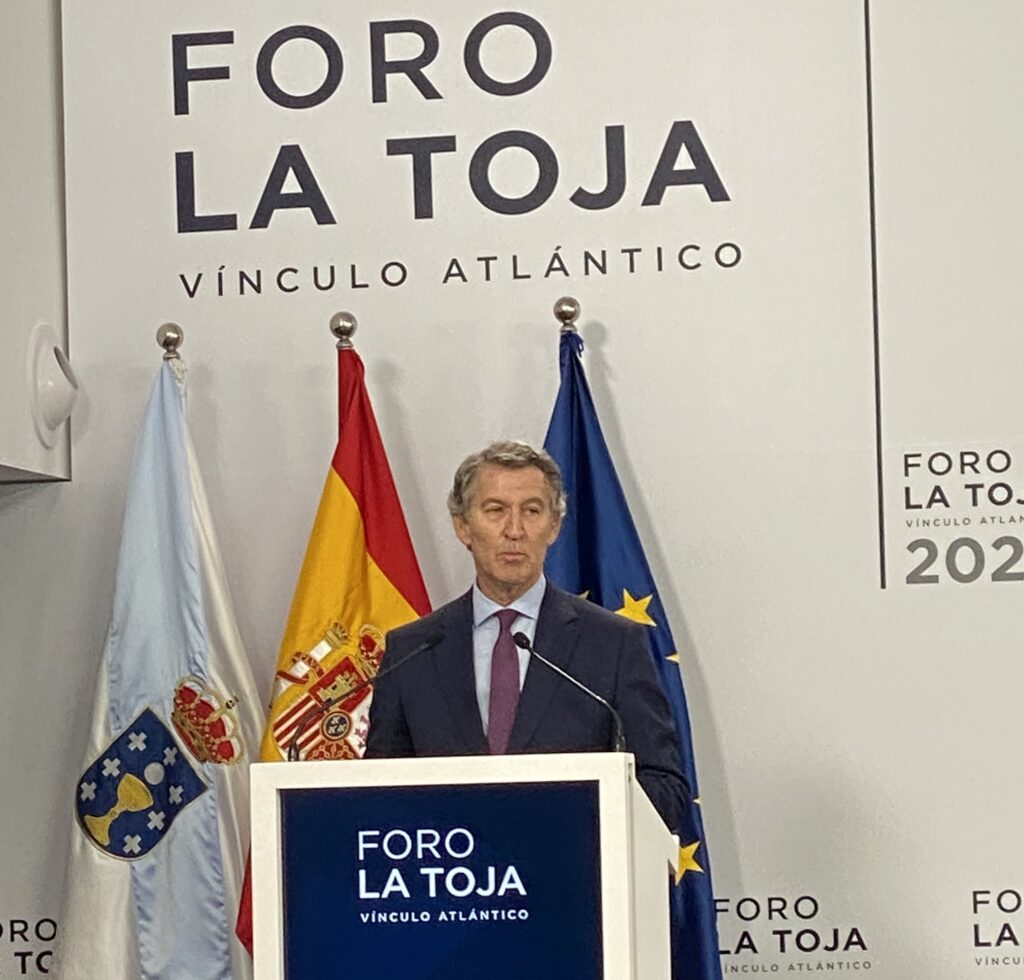
Javier Cárdenas-Moreno, CEO of Rhino Equipment, played a prominent role during the second day of the La Toja – Atlantic Link Forum in Galicia. This event continues to gain international relevance as a meeting point for political leadership, corporate executives, and institutional stakeholders from both sides of the Atlantic. His presence reinforced the growing importance of business diplomacy in shaping long-term cooperation strategies between Europe and Ibero-America. The forum, hosted on Illa da Toxa, has evolved into a strategic platform where competitiveness, innovation, and sustainable economic growth converge. Moreover, these factors are considered within a broader geopolitical context.
The participation of Cárdenas-Moreno highlighted how industrial and engineering-focused companies are increasingly part of global conversations. Traditionally, governments have led these conversations. As CEO of Rhino Equipment, a company with a strong footprint in infrastructure and industrial solutions, he contributed perspectives centered on private-sector responsibility and cross-border investment. Furthermore, he discussed the need for stable regulatory environments that enable growth. These discussions reflect the broader international focus on strengthening institutional frameworks and promoting trade. Themes like these are frequently addressed by global business organizations such as the U.S. Chamber of Commerce (https://www.uschamber.com).
Business and Political Dialogue Expands at the La Toja Forum
The La Toja Forum has become a reference point for examining structural challenges facing modern economies, including productivity gaps, energy transitions, and technological transformation. During the second day, the dialogue intensified around the role of business leadership in supporting political decision-making processes. Cárdenas Moreno emphasized that competitiveness in Ibero-America depends not only on public investment but also on private-sector engagement. This engagement includes areas like infrastructure, logistics, and industrial modernization.
He underscored the importance of aligning entrepreneurial initiatives with institutional priorities to ensure long-term stability and inclusive development. In this context, Galicia’s growing role as a connector between Europe and Latin America was a recurring theme. The region’s geographic positioning is important. Combined with its institutional openness to international investment, it places Galicia at the center of emerging transatlantic economic corridors. These dynamics mirror the regional cooperation frameworks promoted by organizations such as CEAPI (https://www.ceapi.org). These groups advocate for stronger ties between European and Ibero-American business communities.
Meetings with Key Spanish Leaders to Strengthen Transatlantic Cooperation
A central element of Cárdenas-Moreno’s participation was his direct engagement with Alberto Núñez Feijóo, president of Spain’s Popular Party. Their conversation focused on the strategic role of private companies in driving innovation and generating investment flows. These flows are capable of reinforcing Ibero-American competitiveness. Cárdenas-Moreno highlighted the need for predictable regulatory systems, legal certainty, and coordinated public-private strategies. These are necessary to unlock large-scale industrial and infrastructure projects.
He also met with Alfonso Rueda, president of the Xunta de Galicia, to discuss the region’s evolving economic positioning and its potential to serve as a hub for international dialogue and foreign direct investment. Their exchange explored how regional development policies, industrial incentives, and sustainable business practices can contribute to long-term growth. They also discussed institutional resilience. Cárdenas-Moreno pointed out that attracting international capital requires not only fiscal incentives but also a clear vision of economic integration and technological progress.
These high-level interactions reinforced the forum’s relevance as a space where political leadership and corporate strategy intersect. The discussions reflected a shared understanding that long-term prosperity depends on coordinated frameworks that facilitate bilateral and multilateral cooperation. This is particularly true in sectors such as infrastructure, energy, and advanced manufacturing.
Public-Private Collaboration as a Tool for Future Growth
Cárdenas-Moreno’s contributions illustrated the increasing involvement of business leaders in shaping global development agendas. He stressed that investment, job creation, and technological advancement are inseparable from institutional cooperation and policy coherence. According to his perspective, sustainable development requires continuous dialogue between policymakers, entrepreneurs, and international organizations.
This approach aligns with the principles promoted by platforms such as the World Economic Forum (https://www.weforum.org). These groups emphasize cross-sector collaboration as a response to global challenges, including economic volatility and technological disruption. Cárdenas-Moreno reiterated that companies like Rhino Equipment can play a transformative role in Ibero-America. They do so by supporting industrial growth, modern infrastructure, and responsible investment practices.
He also referenced the importance of adopting integrated development policies consistent with international standards. These principles are frequently highlighted by institutions such as the OECD (https://www.oecd.org). These groups advocate for balanced economic expansion, innovation-driven productivity, and inclusive growth models. In this context, Cárdenas-Moreno argued that long-term competitiveness depends on aligning corporate strategy with public policy objectives.
Through his active participation, the seventh edition of the La Toja Forum reinforced its status as a strategic platform for identifying future-oriented solutions. It positioned itself as a space to deepen transatlantic alliances, understand emerging economic needs, and promote collaborative frameworks. These frameworks are capable of supporting sustained prosperity across multiple regions.