
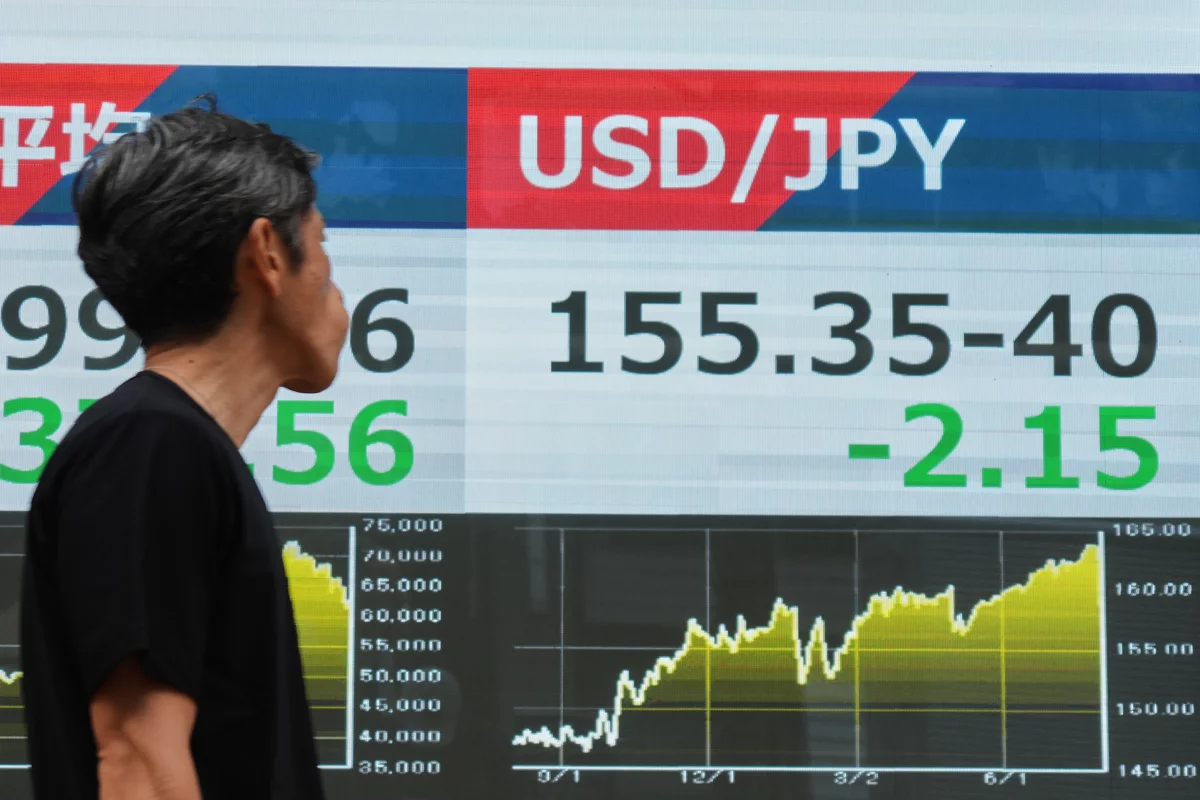
The U.S. dollar lost ground against the Japanese yen after officials in Washington and Tokyo confirmed coordinated action aimed at stabilizing currency markets. The announcement followed several days of speculation among investors, who had noticed unusually sharp movements in the foreign exchange market after the dollar climbed to multi-decade highs against Japan’s currency.
The confirmation marked a significant moment for global financial markets, underscoring the willingness of both governments to cooperate when exchange-rate volatility threatens economic stability. Currency traders quickly adjusted their positions as the intervention sent the yen higher and reduced pressure on Japanese import costs.
Joint Market Intervention Boosts the Yen
For months, the Japanese yen had remained under intense pressure as higher U.S. interest rates continued attracting global capital toward dollar-denominated assets. The widening gap between monetary policies in the United States and Japan contributed to one of the weakest periods for the yen in decades.
Japanese authorities have repeatedly argued that excessive currency volatility creates uncertainty for businesses and households. A weaker yen raises the cost of imported fuel, food, industrial materials and consumer goods, placing additional pressure on inflation and corporate expenses.
Following the official confirmation, investors interpreted the coordinated intervention as a signal that policymakers were prepared to act against rapid and disorderly market movements rather than defend a specific exchange-rate level.
Foreign exchange market information and currency statistics are available through https://www.federalreserve.gov/“>Federal Reserve and the Japanese government’s financial updates published by https://www.mof.go.jp/english/“>Japan Ministry of Finance.
Markets React to Currency Stabilization Efforts
The dollar declined noticeably against the yen as traders reassessed expectations for future intervention. Currency analysts noted that while official actions can produce immediate market reactions, their longer-term effectiveness often depends on broader economic fundamentals, including inflation, interest-rate policies and investor confidence.
Financial institutions also continue monitoring signals from central banks regarding future monetary decisions. Any divergence between U.S. and Japanese interest rates could influence whether recent gains by the yen prove sustainable over the coming months.
Market participants closely follow international economic indicators published by institutions including the https://www.imf.org/“>International Monetary Fund, which regularly evaluates exchange-rate developments and global financial stability.
Investors Watch for the Next Policy Signals
Although the intervention temporarily altered market sentiment, economists caution that exchange rates remain influenced by numerous global factors beyond government action. Economic growth, inflation trends, bond yields and geopolitical developments all contribute to daily currency fluctuations.
Investors will now focus on upcoming policy meetings, inflation reports and central bank communications for indications about future interest-rate paths in both countries. Those decisions are expected to shape capital flows and determine whether the yen can maintain its recent recovery against the dollar.
Additional data on international financial markets and currency developments can be accessed through https://www.bis.org/“>Bank for International Settlements, whose research tracks global monetary and foreign exchange conditions.