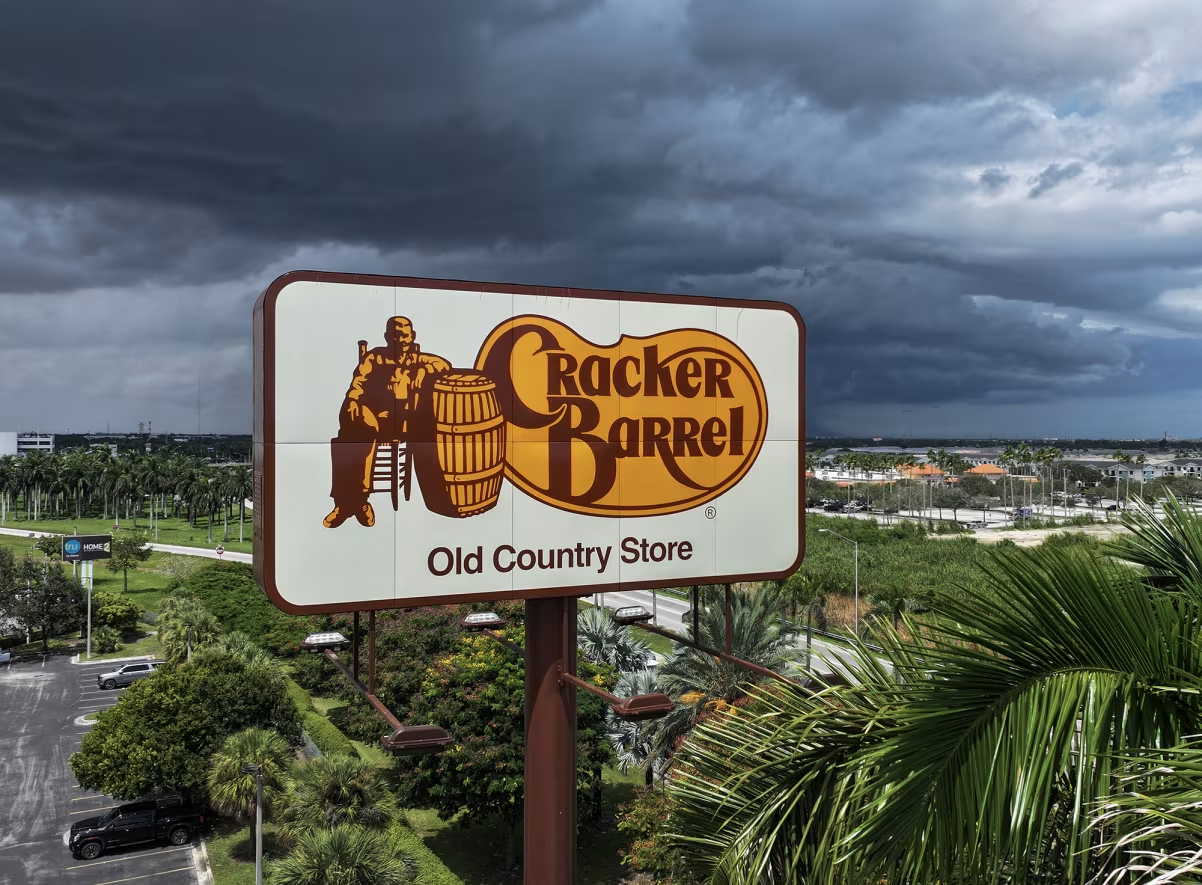
Cracker Barrel Old Country Store is entering a new chapter after a year of intense public scrutiny over a branding overhaul. This overhaul unexpectedly evolved into one of the most debated corporate controversies in the United States. What began as an effort to modernize the restaurant chain’s image quickly became a flashpoint in broader cultural and political discussions. As a result, this exposed the challenges companies face when updating long-established brands in an increasingly polarized digital landscape.
The leadership transition announced this week comes as the company continues balancing business transformation with the expectations of a loyal customer base. This customer base strongly identifies with its traditional image and heritage.
A Modernization Strategy Met Unexpected Resistance
When Cracker Barrel introduced a refreshed visual identity and announced plans to renovate stores, executives described the initiative as part of a long-term strategy. Their goal was to attract younger consumers while maintaining the company’s Southern-inspired hospitality.
Management argued that evolving customer preferences, increasing competition in the casual dining sector and changing demographics required investments in both restaurant design and digital engagement. The objective was not to abandon the brand’s roots. Instead, the aim was to make the experience more appealing to new generations without alienating longtime guests.
However, the redesigned logo and updated store concept quickly generated widespread criticism across social media platforms. Thousands of users interpreted the changes as an unnecessary departure from the nostalgic identity that had defined the restaurant chain for decades.
Industry analysts note that corporate rebranding projects have become significantly more sensitive in recent years. Online discussions often transform ordinary marketing decisions into larger cultural debates. Information about publicly traded companies and corporate governance can be found through U.S. Securities and Exchange Commission. Securities and Exchange Commission, while consumer market trends are regularly analyzed by U.S. Census Bureau Retail Statistics.
Social Media Amplified the Public Reaction
The controversy rapidly expanded beyond branding itself. Influencers, political commentators and online communities framed the redesign through competing ideological narratives, generating millions of interactions across multiple platforms.
Marketing specialists observed that the discussion became less about typography, logos or restaurant interiors and more about symbolism. As the debate intensified, Cracker Barrel found itself responding not only to customer feedback but also to broader conversations surrounding corporate identity, consumer expectations and brand authenticity.
Several communications experts argue that digital platforms increasingly reward emotionally charged content. This trend makes even relatively small corporate decisions capable of generating outsized public reactions.
Research into consumer behavior and branding continues through institutions such as American Marketing Association Marketing Association. Additionally, broader economic data affecting the restaurant industry is published by U.S. Bureau of Economic Analysis.
Leadership Change Marks the Company’s Next Phase
Following the leadership transition, Cracker Barrel now faces the challenge of restoring momentum. At the same time, it must continue efforts to modernize its business without losing the identity that helped build its reputation over more than five decades.
The company remains focused on expanding digital capabilities, improving operational efficiency and adapting restaurant locations to changing consumer habits. At the same time, executives recognize that preserving customer trust will remain central to future decisions involving branding, menu development and the in-store experience.
Analysts believe the episode illustrates how brand management has evolved into a complex balancing act. Now, financial performance, public perception and online discourse increasingly influence one another. For companies with deeply established identities, even modest visual updates can become defining moments. These can shape customer relationships long after the redesign itself has ended.