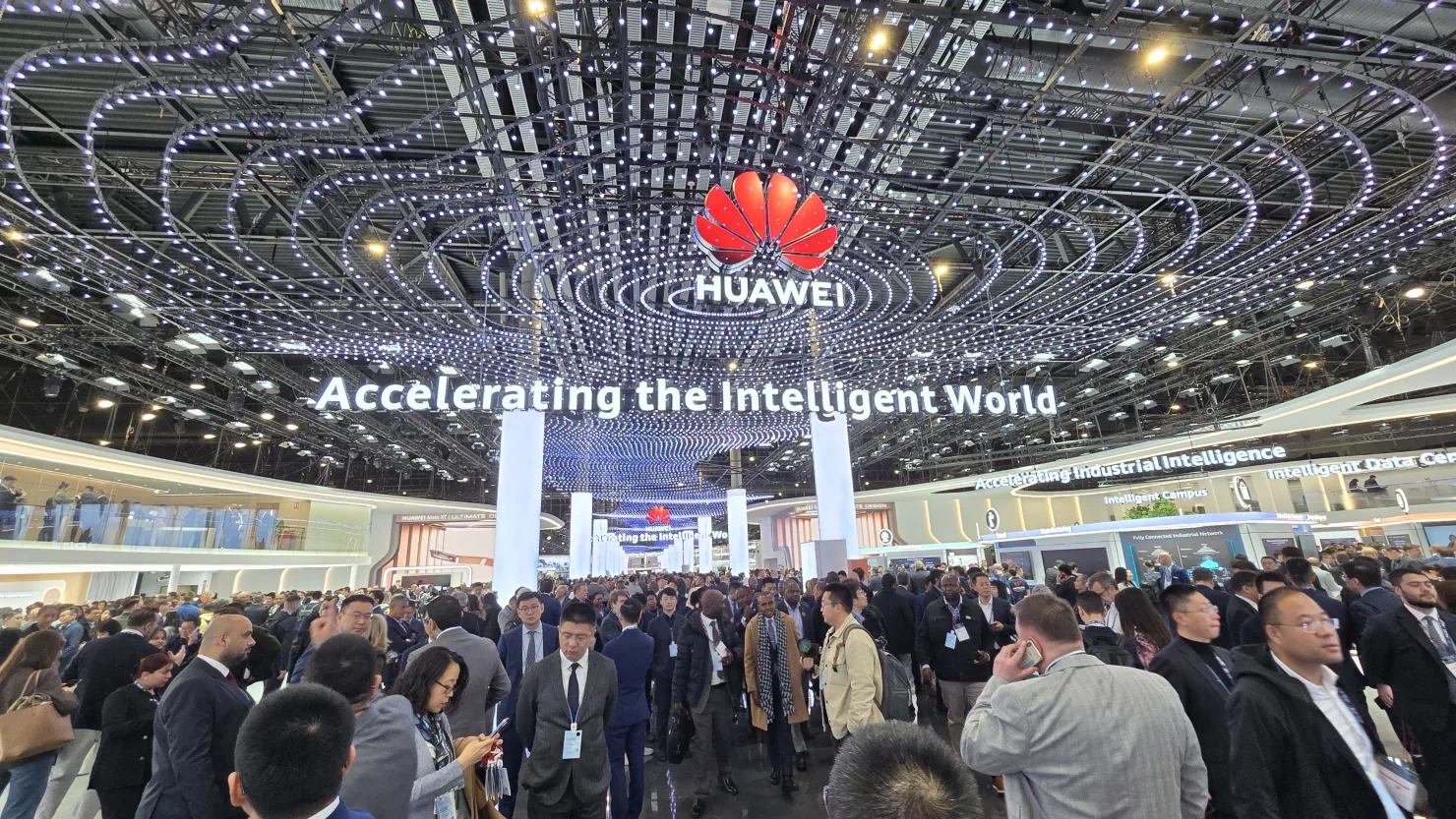
HP has signed a multi-year global agreement with Huawei to license certain Wi-Fi patents from the Chinese telecommunications company. This creates an unusual technology partnership between a major U.S. hardware maker and a company that has faced extensive U.S. export restrictions since 2019.
The agreement, announced Wednesday, gives HP access to Huawei’s patented wireless technology. It also includes reciprocal patent rights from HP, according to Steven Geiszler, who represented Huawei in the negotiations.
The deal highlights the continuing commercial value of Huawei’s wireless technology outside China. Even so, the company remains subject to U.S. export controls. Huawei was added to the U.S. Commerce Department’s Entity List in May 2019. This list imposes additional licensing requirements on exports, reexports and transfers involving listed Huawei entities.
U.S. Commerce Department’s Huawei Entity List designation
The agreement also follows a patent dispute involving HP, Huawei and other technology companies. That dispute was resolved last year through HP’s entry into the Sisvel Wi-Fi 6 patent pool. This move gave the company access to a portfolio of roughly 2,000 patents recognized as essential to the 802.11ax Wi-Fi 6 standard.
HP and Huawei Expand a Relationship Built Around Wi-Fi Patents
The new agreement goes beyond HP’s earlier participation in the Sisvel Wi-Fi 6 patent pool.
In November 2025, HP and Sisvel reached an agreement that made HP a licensee of the Wi-Fi 6 pool. The deal followed a mediation process connected to patent infringement litigation brought against HP by Wilus Institute of Standards and Technology.
The settlement also resolved separate actions brought against HP by Huawei and Philips, both licensors in the Sisvel pool. HP gained access to approximately 2,000 patents spanning 245 patent families. These patents had been independently evaluated as essential to the Wi-Fi 6 standard.
HP’s Sisvel Wi-Fi 6 patent licensing agreement
That agreement helped establish a framework for HP to use patented wireless technologies without continuing the litigation.
Huawei has been an important contributor to Wi-Fi standards. The company maintains a large portfolio of patents covering wireless connectivity. Huawei joined the Sisvel Wi-Fi 6 patent pool as a founding member in 2022 and became both a licensor and licensee within the program.
The latest agreement therefore represents another step in a broader licensing strategy. In this strategy, Huawei monetizes intellectual property through partnerships rather than relying only on sales of its own networking hardware.
Huawei currently operates a dedicated Wi-Fi licensing program covering both Wi-Fi 6 and Wi-Fi 7 technologies. The company’s published licensing terms list a royalty rate of $0.50 per unit for consumer-grade products using either standard.
Huawei’s Wi-Fi patent licensing program
For HP, licensing patented wireless technology can provide a way to incorporate standardized connectivity into its products. This also helps manage intellectual property obligations across global markets.
The agreement is also notable because it involves reciprocal rights. Geiszler said Huawei receives “valuable reciprocal patent rights from HP,” indicating that the relationship is not simply a one-way transfer of Huawei technology.
Cross-licensing agreements of this type allow companies with large patent portfolios to exchange access to technologies. This can reduce the risk of prolonged disputes over standard-essential patents.
Huawei’s Patent Business Continues Despite U.S. Restrictions
The HP agreement illustrates the distinction between U.S. export restrictions and the global patent system.
Huawei’s placement on the U.S. Entity List created licensing requirements for exports, reexports and transfers of items subject to the U.S. Export Administration Regulations. The restrictions were imposed because the U.S. government determined that there was reasonable cause to believe Huawei had been involved in activities contrary to U.S. national security or foreign policy interests.
Those restrictions have significantly complicated Huawei’s relationships with U.S. technology suppliers. They do not, however, eliminate Huawei’s ownership of patents or prevent the company from pursuing licensing relationships in markets and circumstances where applicable laws permit them.
That distinction is increasingly important as Huawei develops its intellectual property business.
The company says it has entered into more than 260 patent licensing agreements with major ICT companies across Europe, the United States, Japan and South Korea. It also reported holding more than 165,000 active patents at the end of 2025.
Huawei’s Wi-Fi portfolio is part of that larger intellectual property strategy. In June 2026, the company announced a $0.50-per-unit royalty rate for consumer-grade Wi-Fi 7 devices. It also said its patent licensing agreements covered more than 1.2 billion consumer electronic devices worldwide by the end of 2024.
The HP agreement comes at a significant moment for both companies.
HP remains one of the world’s largest personal computing and printing companies. Its Personal Systems business generated $10.2 billion in revenue during its fiscal 2026 second quarter. The company is scheduled to report its fiscal third-quarter results on Thursday.
HP’s fiscal 2026 financial results
The timing also means the licensing agreement could draw attention from investors and technology companies. These groups are watching how U.S. restrictions interact with intellectual property licensing.
For Huawei, the deal demonstrates that its wireless patents continue to have value to major international technology companies.
For HP, it provides access to patented Wi-Fi technology while establishing a broader cross-licensing relationship with Huawei.
The companies’ agreement does not remove Huawei from the U.S. Entity List, nor does it change the export-control framework governing Huawei-related transactions. Instead, it demonstrates how patent licensing can continue across a highly restricted technology environment, provided the specific arrangement complies with applicable rules.
HP’s latest partnership with Huawei therefore sits at the intersection of two very different forces shaping the technology industry. One is Washington’s effort to restrict Huawei’s access to sensitive technology. The other is Huawei’s effort to commercialize its own intellectual property around the world.