
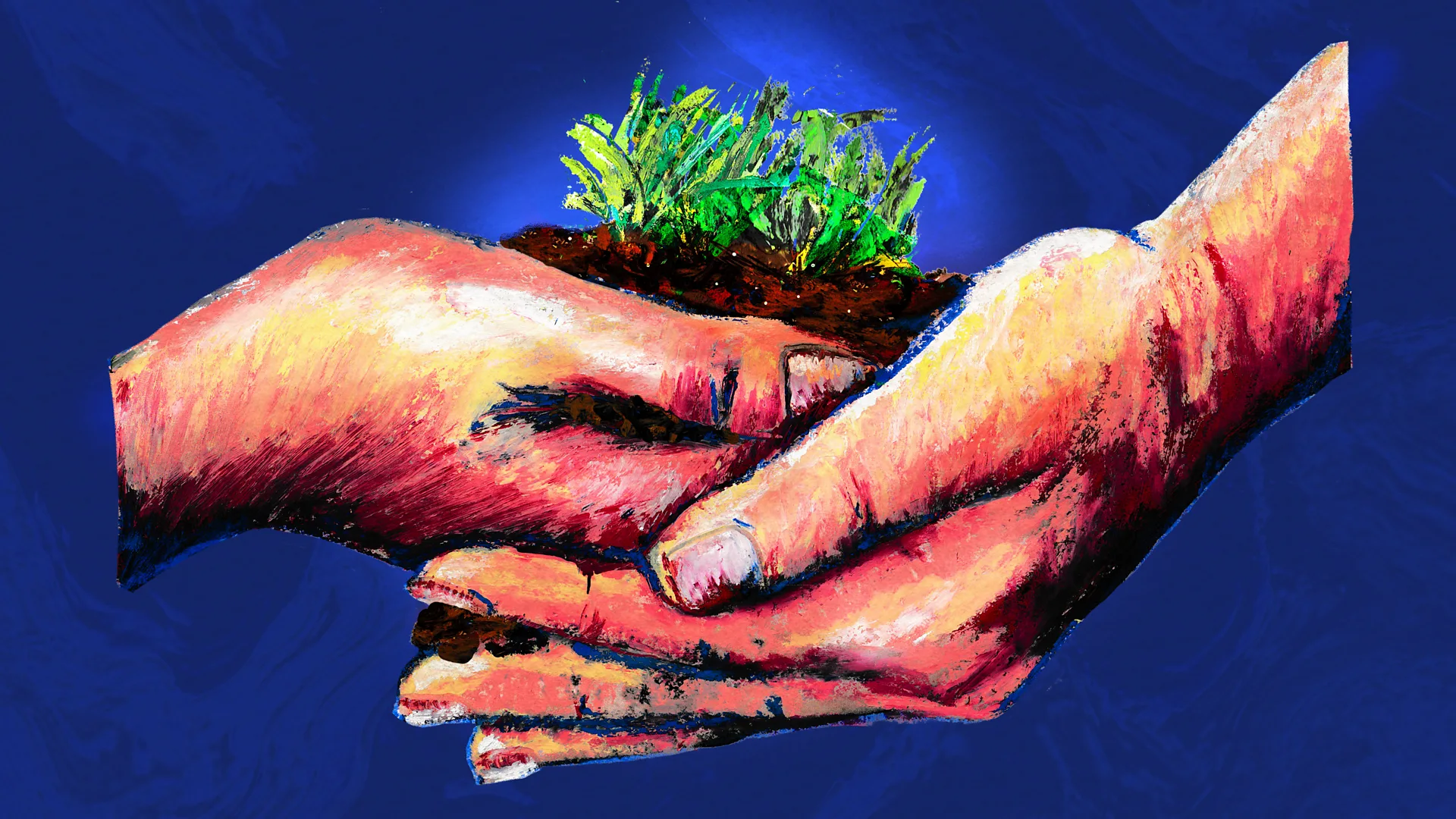
The health benefits of getting your hands dirty may extend beyond the simple pleasure of spending time outdoors. Research in Finland suggests that regular contact with soil, moss, plants and other natural materials can increase the diversity of microbes living on the skin, while some studies indicate that these changes may also influence immune-system activity.
For many people, contact with nature is primarily visual and atmospheric. A walk through a park might involve trees, flowers, birds and fresh air, while the hands remain clean throughout. Yet researchers studying the relationship between biodiversity and human health are increasingly interested in what happens when people physically interact with natural environments.
Mira Grönroos, an ecologist and nature-health researcher at the Finnish Environment Institute, tested this idea by asking participants to rub soil, peat and moss between their hands for 20 seconds. The experiment produced a marked increase in both the abundance and variety of microbes found on their skin. The difference remained detectable even after participants rinsed their hands with tap water.
The finding is important because the presence of bacteria on the skin is not necessarily harmful. Human skin naturally supports a complex microbial community, and a diverse population of microorganisms can help prevent potentially harmful bacteria from becoming dominant. In this context, biodiversity may be part of the skin’s natural defense system rather than something that needs to be eliminated.
However, the changes observed after brief contact with nature did not appear to last indefinitely. Grönroos found that the skin microbiota returned relatively quickly toward its previous state. That suggests that frequent or prolonged interaction with natural materials could be more relevant than an occasional 20-second exposure.
Health Benefits of Getting Your Hands Dirty Start With the Skin
The relationship between nature and human health is particularly interesting when viewed through the skin. The skin is not simply a protective covering. It hosts a large and diverse community of microorganisms that interact with one another and with the body’s immune system.
Research led by environmental scientist Marja Roslund provides another example. In studies involving Finnish daycare centers, researchers introduced elements of the forest floor into children’s outdoor environments, including peat and planting areas. Children who regularly played in these settings developed greater microbial diversity on their skin than children who spent their outdoor time in paved environments.
The research also found fewer potential pathogens on the skin of children who played on the forest floor. One explanation is that a richer microbial community leaves less opportunity for potentially harmful organisms to become dominant. Roslund has compared the balance of a healthy microbial community with a democracy, contrasting it with disease-causing organisms taking control like a dictator.
The findings formed part of the research behind the Vahvistu project, which is examining how bringing natural materials into daycare environments can affect children’s microbiome and immune systems over a longer period. Aurinkolinna daycare center in central Finland is among 43 daycare centers involved in the project.
Children at the center spend several hours outdoors in a wooded playground. Their activities include climbing, building sandcastles, playing in puddles and handling soil and woodchips. Researchers are tracking changes in microbes found on the children’s skin, saliva and faeces, while also examining blood and hair samples over a three-year period.
Earlier research conducted in 2016 and 2017 found that children who regularly played in an outdoor environment incorporating forest-floor material had greater microbial diversity on their skin a year after the intervention than children who played in a paved yard.
These observations support the broader biodiversity hypothesis, which proposes that exposure to diverse environmental microbes can influence the human microbiome and, in turn, aspects of human health. Research has also explored whether declining environmental biodiversity could be connected with the increasing prevalence of immune-related conditions.
The evidence does not establish that contact with soil, plants or moss prevents conditions such as asthma, eczema or allergies. Grönroos emphasizes that the mechanisms are still being investigated. Nevertheless, the findings suggest that environmental microbial diversity may influence how the immune system regulates its response to potential threats.
One particularly notable finding concerns gammaproteobacteria. Roslund found that greater diversity within this bacterial group on children’s skin was associated with increased numbers of regulatory T cells. These immune cells help regulate immune responses and maintain balance within the immune system.
Gardening and Green Spaces Can Expand Nature Contact
The potential relationship between microbial diversity and immune regulation is not limited to children. Adults have also been studied in experiments designed to increase everyday contact with biologically diverse environments.
In one study, adults grew vegetables indoors during winter. Some participants used soil containing greater microbial diversity, while others used visually similar soil with lower microbial diversity. Participants cared for the plants daily for a month and ate the vegetables they produced.
Those who used the microbially diverse soil experienced an increase in bacterial diversity on their skin. Researchers also observed changes in anti-inflammatory cytokines in their blood, whereas the comparison group did not show the same changes.
The results suggest that gardening could provide a relatively accessible form of regular contact with environmental microorganisms. Unlike a one-time encounter with soil or moss, tending plants creates repeated interaction with natural materials over an extended period.
Other research has examined whether similar effects can be achieved inside workplaces. Researchers installed living green walls made from plants in Finnish offices and assessed workers after two weeks. The intervention was associated with increased microbial diversity on workers’ skin and lower levels of pro-inflammatory cytokines in their blood.
Researchers also observed an increase in Lactobacillus microbes on the skin. These bacteria have been studied for their potential role in maintaining skin health, adding another dimension to research into how exposure to diverse environmental microbes may interact with the human microbiome.
The scientific literature continues to develop around these findings. Research examining related evidence has explored the relationship between environmental biodiversity, the microbiome and immune regulation, including research on biodiversity and human health and the broader biodiversity hypothesis.
That research also raises questions about how changes in the environments where people live could affect exposure to microorganisms. Studies have examined links between declining biodiversity and immune-mediated conditions, although these relationships remain an active area of scientific investigation. Research into biodiversity loss and human health and more recent work on immune-related conditions forms part of this wider field.
For Grönroos, the practical implications extend beyond individual gardening habits. She argues that cities could be designed to make contact with nature easier and more frequent, rather than requiring people to deliberately seek out a park or forest. Vegetation, soil and natural materials could become part of everyday routes to school, work and other destinations.
That approach would also make nature contact less dependent on a conscious decision to pursue it. Children could interact with sticks, cones, soil and vegetation during outdoor play, while adults could encounter plants and biologically diverse materials through gardening or green spaces.
The evidence does not mean that people should abandon ordinary hygiene or deliberately seek out harmful contamination. Instead, the research points toward a more nuanced understanding of cleanliness and microbial exposure. A healthy microbial environment is not necessarily one in which every microorganism has been removed.
For people spending time outdoors, that may mean allowing a little more physical contact with the natural environment: touching tree bark, sitting on grass, tending plants or handling soil. The potential health effects remain an area of ongoing research, but the existing studies suggest that regular exposure to diverse natural microbes may influence both the skin microbiome and aspects of immune-system regulation.