
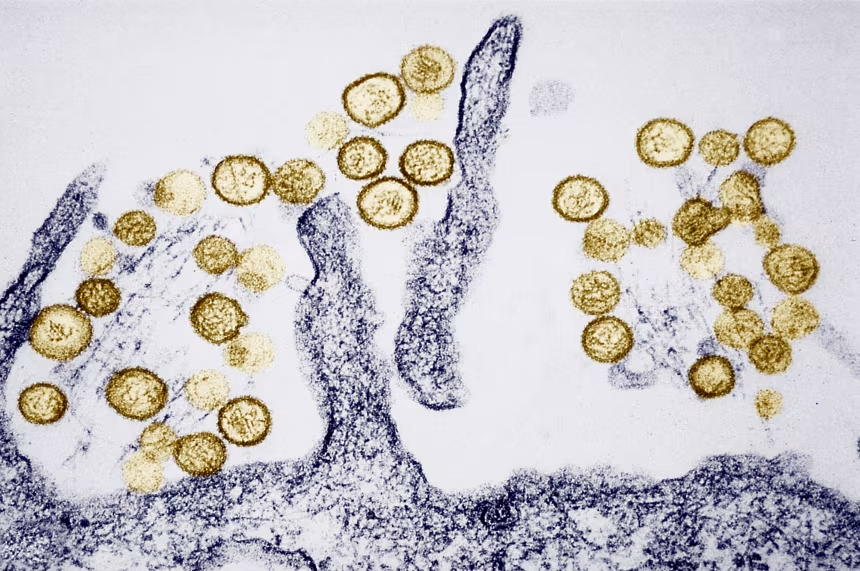
Rare outbreak raises new health concerns
A rare infectious disease known as hantavirus has drawn renewed attention. This follows suspected cases linked to a cruise ship journey across the Atlantic. Health authorities have confirmed multiple infections. Meanwhile, several additional cases remain under investigation. As a result, questions are arising about how the virus may have spread in such a confined environment.
According to the World Health Organization, the overall risk to the general public remains low. Even so, experts continue to analyze the circumstances surrounding the outbreak. The vessel had traveled between South America and West Africa. Therefore, there is a possibility that exposure may have occurred either onboard or during earlier stops.
Hantavirus infections are uncommon but can become severe if not identified early. Initial symptoms often resemble common viral illnesses, which can make early detection difficult. As the disease progresses, it may affect vital organs, leading to serious complications in some patients.
How hantavirus spreads and affects the body
Hantavirus refers to a group of viruses primarily transmitted through contact with infected rodents. Humans typically become infected by inhaling airborne particles contaminated with rodent urine, droppings, or saliva. This can occur during routine cleaning activities when dried particles are disturbed and released into the air.
Health agencies such as the Centers for Disease Control and Prevention explain that transmission through bites or direct contact is less common but still possible. While most strains are not known to spread between humans, a specific variant identified in South America has shown limited person-to-person transmission. This occurs under certain conditions.
The illness manifests in two main forms. In parts of Europe and Asia, infections may lead to hemorrhagic fever with renal syndrome. This condition affects the kidneys and can potentially cause internal bleeding. In the Americas, hantavirus pulmonary syndrome is more common. It targets the lungs and leads to breathing difficulties as fluid accumulates.
Symptoms usually begin with fatigue, fever, muscle aches, and chills. As the condition worsens, patients may experience shortness of breath, chest tightness, and in severe cases, organ failure. The incubation period can range from one to eight weeks, making it difficult to trace the exact source of infection.
Prevention, treatment and ongoing investigations
There is currently no specific cure for hantavirus, making prevention a critical strategy in reducing risk. Medical care typically focuses on managing symptoms, including hydration, respiratory support, and monitoring for complications. Early intervention significantly improves outcomes, particularly in severe cases.
Preventive measures emphasize limiting exposure to rodents and their habitats. Proper sanitation, sealing entry points in homes, and safe cleaning practices are essential steps. These are recommended by institutions such as the National Health Service. Using protective equipment and disinfectants when handling potentially contaminated areas can reduce the likelihood of infection.
The recent outbreak has also highlighted the challenges of identifying transmission pathways in complex environments like ships. Experts suggest that rodents may have been present onboard or that exposure occurred prior to boarding. Researchers are conducting detailed analyses, including environmental sampling and genetic sequencing, to determine the specific strain involved.
Global health monitoring organizations, including the European Centre for Disease Prevention and Control, continue to track cases and provide guidance as investigations progress. Their goal is to better understand how such outbreaks occur and how they can be prevented in the future.