
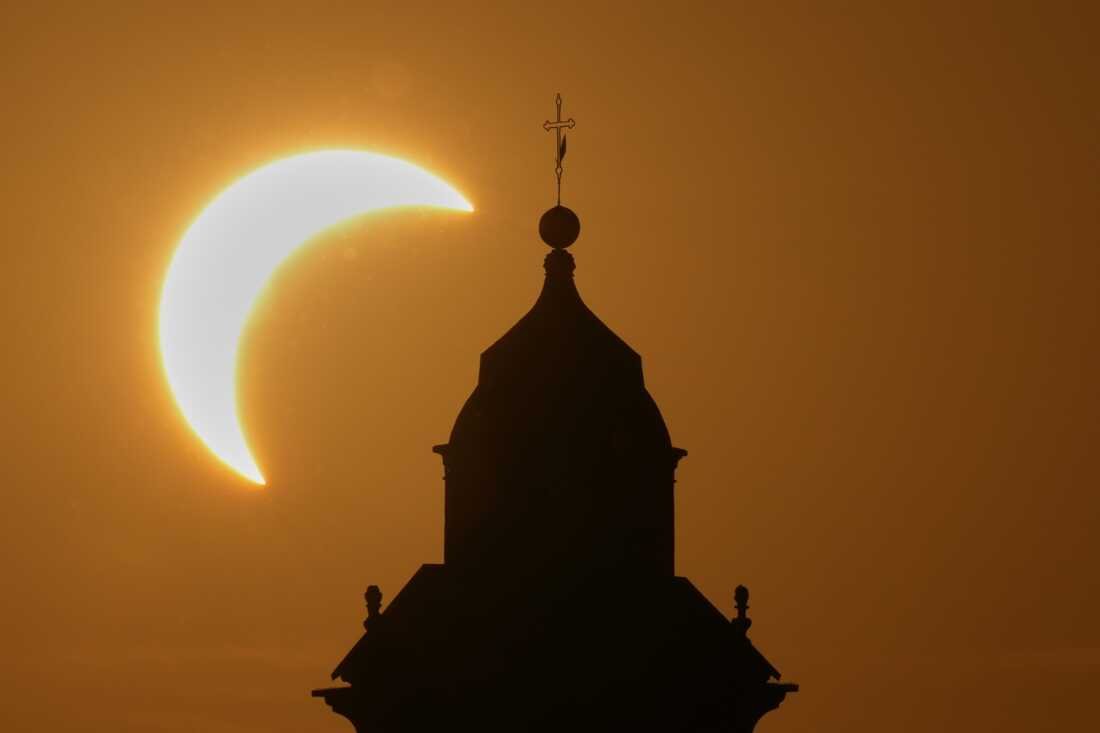
Europe’s total solar eclipse transformed the skies on August 12, 2026. Millions of people gathered in parks, observatories, coastlines and public spaces to witness one of the most extraordinary astronomical events of the decade.
The celestial phenomenon darkened portions of Greenland, Iceland, Spain and a small area of Portugal. Meanwhile, millions of additional observers across Europe, North America and Africa experienced a partial eclipse.
For many spectators, the event represented a historic opportunity. Mainland Spain witnessed its first total solar eclipse since 1905. Meanwhile, Europe experienced its first large-scale total solar eclipse in more than two decades. The event generated unprecedented interest among astronomers, photographers, tourists and science enthusiasts.
Europe’s Total Solar Eclipse Creates Historic Moments Across Spain and Iceland
The path of totality crossed some of the most spectacular landscapes in the Northern Hemisphere.
The Moon’s shadow first moved across the Arctic before reaching eastern Greenland and western Iceland. It then continued across the Atlantic Ocean. After that, it entered northern Spain, creating dramatic sunset conditions that produced some of the year’s most memorable photographs.
Cities throughout Spain became gathering points for thousands of visitors seeking the best viewing locations. In addition, beaches, mountain viewpoints, observatories and urban parks quickly filled with people wearing protective eclipse glasses while waiting for the sky to darken.
The eclipse produced a particularly striking visual effect because it occurred close to sunset in several European locations. As daylight faded, the Moon completely covered the Sun. This revealed the solar corona and created an unusual combination of twilight and total darkness.
Detailed information about the eclipse trajectory can be found at https://science.nasa.gov/eclipses/future-eclipses/total-solar-eclipse-on-august-12-2026/” target=”_blank” rel=”noopener noreferrer”>NASA’s eclipse map.
Astronomers also highlighted the scientific importance of the event. Researchers used specialized instruments, atmospheric balloons and aircraft to collect data and observe changes in the Sun’s outer atmosphere.
Millions Gathered to Photograph One of the Most Anticipated Astronomical Events of 2026
Photography quickly became one of the defining elements of the eclipse experience.
Professional photographers captured remarkable images of the solar corona. Meanwhile, amateur observers documented the event from city rooftops, coastlines and rural landscapes.
The eclipse also generated a significant increase in astronomy tourism. Iceland welcomed thousands of international visitors. Spanish destinations along the path of totality experienced a surge in travel activity as hotels, festivals and public viewing events attracted large crowds.
Interactive maps showing the exact areas affected by the eclipse are available at https://www.timeanddate.com/eclipse/solar/2026-august-12” target=”_blank” rel=”noopener noreferrer”>Time and Date.
Several European institutions organized educational programs to help the public safely observe the phenomenon. Scientists encouraged viewers to use certified eclipse glasses and approved solar filters to protect their eyesight during every phase of the event except totality.
Educational resources explaining the science behind the eclipse can be explored at https://www.esa.int/Science_Exploration/Space_Science/Join_ESA_for_a_total_solar_eclipse_on_12_August_2026” target=”_blank” rel=”noopener noreferrer”>European Space Agency.
Future Solar Eclipses Will Continue to Attract Global Attention
Although the August 2026 event has already become one of the most memorable astronomical moments in recent European history, additional opportunities for eclipse observation are approaching.
A partial solar eclipse will be visible across several regions of the United States on August 2, 2027. Meanwhile, another total solar eclipse will cross parts of Spain less than one year after the 2026 event. This will continue an exceptional period for astronomical observation in Europe.
Astronomy enthusiasts can review future eclipse calendars and visibility maps through https://www.timeanddate.com/eclipse/list.html” target=”_blank” rel=”noopener noreferrer”>Future Eclipse Calendar.
The 2026 eclipse demonstrated the unique ability of astronomical events to bring together scientists, travelers, photographers and entire communities under the same sky. This created a shared experience that extended across continents.