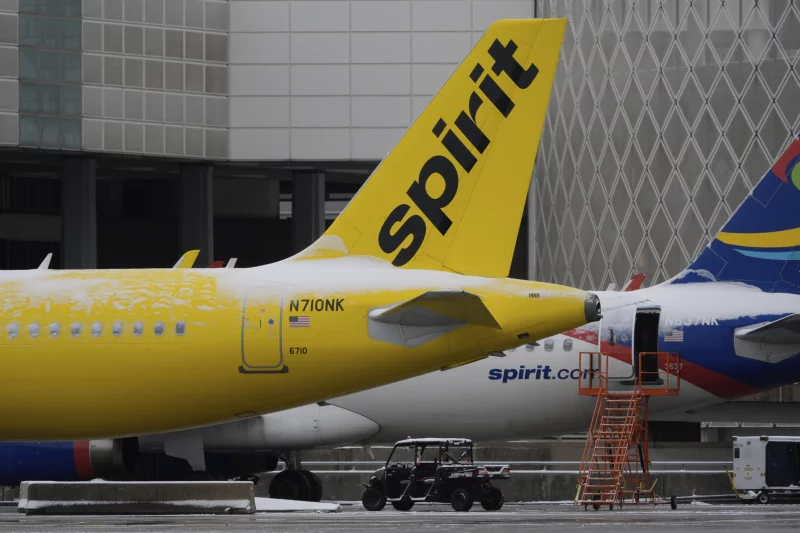
Mounting Financial Pressure on Spirit Airlines
Spirit Airlines has faced a series of financial setbacks that have placed its future in serious doubt. After filing for bankruptcy protection twice since late 2024, the ultra low-cost carrier has struggled to stabilize its operations while navigating a challenging economic environment. Many travelers and industry experts have been closely watching the Spirit Airlines bankruptcy impact on ticket prices, routes, and overall competition in the airline market. Rising jet fuel prices—driven in part by geopolitical tensions—have added further strain, complicating efforts to restructure and return to profitability.
Although the airline has indicated plans to exit bankruptcy protections in the coming months, industry analysts remain cautious. Oversight and regulatory scrutiny, including attention from agencies such as the Department of Transportation, highlight the broader implications of a potential collapse. Experts suggest that shrinking operations is rarely a viable long-term solution for airlines, as reduced capacity often leads to diminished competitiveness and revenue.
Spirit’s business model has historically relied on offering low base fares while charging separately for additional services. This approach allowed the airline to attract budget-conscious travelers, even as it faced operational challenges such as aircraft maintenance issues and limited fleet availability.
What a Shutdown Could Mean for Airfare Competition
The potential disappearance of Spirit Airlines could significantly reshape the competitive landscape of the aviation industry. As one of the leading ultra low-cost carriers, Spirit has played a key role in keeping ticket prices down by forcing larger airlines to offer more affordable options. Data tracked by institutions like the Bureau of Transportation Statistics shows that while Spirit’s overall market share remains relatively small, its influence on pricing strategies extends far beyond its size.
Without Spirit in the market, competitors such as Delta, American, and United may face less pressure to maintain lower fares, particularly in the budget travel segment. This could lead to gradual increases in base ticket prices, especially on routes where Spirit currently operates. The ripple effect may also impact other low-cost carriers, which could struggle to maintain the same level of pricing discipline without a major disruptor in the space.
However, some analysts argue that the airline’s limited market share means its exit would not drastically alter the industry. Larger carriers dominate the majority of domestic routes, and their extensive networks allow them to absorb demand shifts relatively quickly. In key hubs like Fort Lauderdale, where Spirit has historically maintained a strong presence, the impact could be more pronounced, potentially leading to localized fare increases and reduced route options.
Industry Challenges and the Road Ahead
Spirit’s financial difficulties stem from a combination of internal and external factors. Beyond rising fuel costs, the airline has faced setbacks including grounded aircraft and a failed merger attempt that could have strengthened its position. The blocked deal, challenged under antitrust concerns aligned with policies enforced by the U.S. Department of Justice, prevented Spirit from gaining the scale and resources needed to compete more effectively.
Meanwhile, global energy market volatility continues to influence operational costs across the aviation sector. Insights from organizations like the International Energy Agency indicate that fuel prices remain a critical variable affecting airline profitability, particularly for carriers operating on thin margins.
Spirit has signaled intentions to focus on its strongest routes and introduce more premium offerings as part of its recovery strategy. Whether these adjustments will be enough to secure its long-term survival remains uncertain, as the airline navigates a complex mix of financial pressure, competitive dynamics, and shifting consumer expectations.