Archaeologists working at Pompeii have introduced a new technological approach to understanding one of history’s most devastating natural disasters. By using artificial intelligence, researchers have digitally reconstructed the face of a man who died during the eruption of Mount Vesuvius in AD 79. This marks a significant advancement in archaeological visualization.
The reconstruction provides a detailed representation of a victim’s final moments. It transforms skeletal remains and excavation data into a lifelike image. This project reflects a broader effort to merge traditional archaeology with cutting-edge digital tools. As a result, it enhances both research accuracy and public engagement.
AI Brings New Life to Ancient Discoveries
The digital reconstruction was developed by the Pompeii Archaeological Park in collaboration with the University of Padua. Using excavation data from the Porta Stabia necropolis, researchers applied AI-driven modeling and advanced imaging techniques. Consequently, they could recreate the man’s facial features and physical appearance.
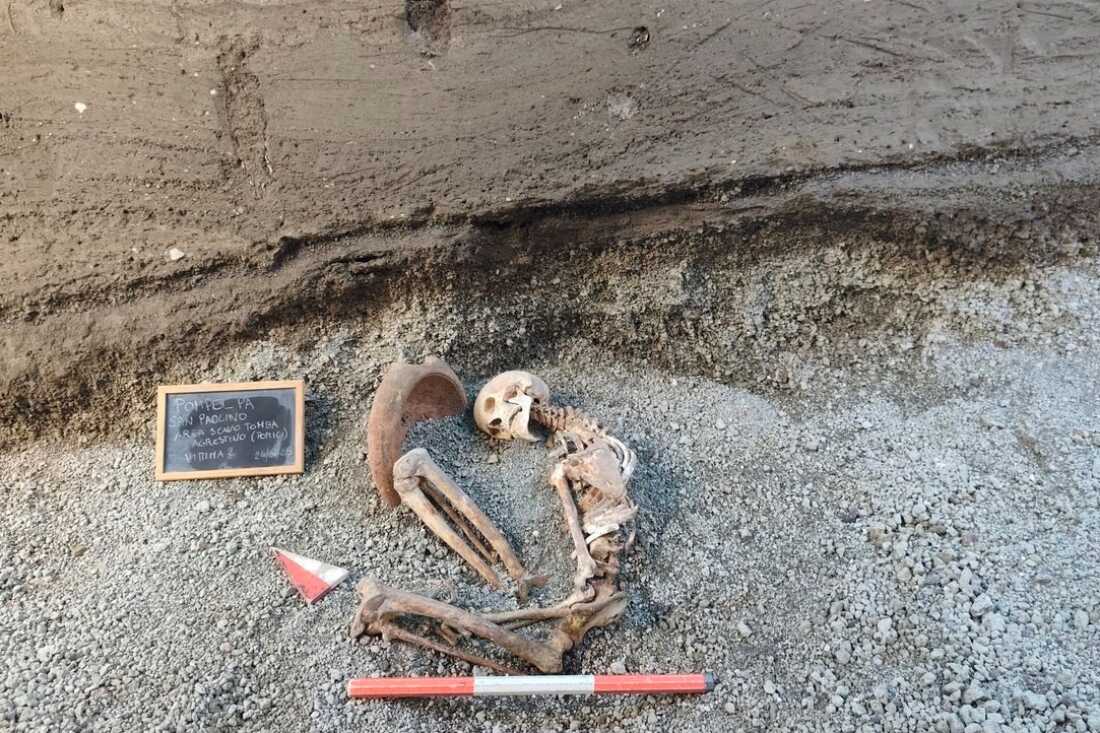
The remains were discovered alongside another individual as they attempted to flee the city during the early stages of the eruption. Evidence suggests the man died during intense volcanic fallout. At that time, pumice and debris rained down across the region.
The AI-generated image depicts him running along a debris-covered path, holding a terracotta object above his head as protection—an interpretation based on the artifacts found with the remains. This level of reconstruction allows scientists to present historical events in a more human and relatable way.
Insights Into Daily Life and Final Moments
Artifacts recovered with the victim offer valuable insight into both his identity and the broader social context of Pompeii before the disaster. Among the items found were a terracotta mortar, believed to have been used as a shield, an oil lamp, a small iron ring, and 10 bronze coins.
These personal belongings suggest the man may have been attempting to escape quickly while carrying essential items. This highlights the sudden and chaotic nature of the eruption. Historical accounts, including those from Pliny the Younger, describe residents using everyday objects to protect themselves as ash clouds and volcanic stones engulfed the المدينة.
The reconstruction aligns with these written records, reinforcing the accuracy of both archaeological findings and historical testimony. By combining physical evidence with documented accounts, researchers can build a more comprehensive picture of life—and death—during the catastrophe.
Technology Reshaping Archaeology and Public Engagement
The use of artificial intelligence in archaeology represents a growing trend aimed at managing vast amounts of data while making discoveries more accessible to the public. According to project leaders, AI enables researchers to process complex datasets. Moreover, it helps create visual narratives that resonate beyond academic circles.
This approach not only enhances scientific analysis but also strengthens cultural preservation efforts. By transforming raw data into compelling visual reconstructions, institutions can better communicate the human stories behind archaeological findings.
As digital tools continue to evolve, projects like this demonstrate how innovation can deepen our understanding of ancient civilizations. They also help preserve their legacy for future generations. The integration of AI into archaeological research is expected to expand further. This will open new possibilities for reconstructing historical events with unprecedented detail and accuracy.