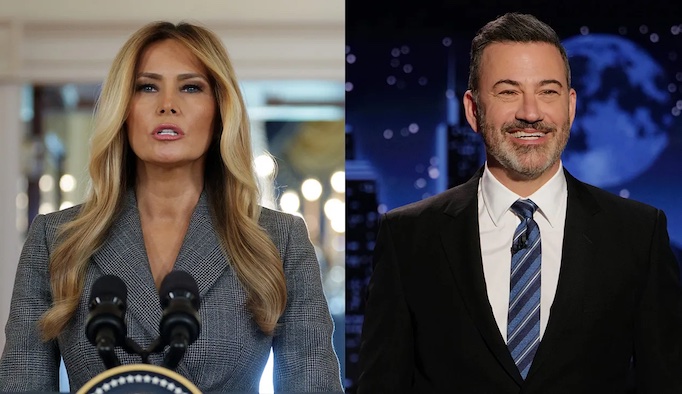
A public dispute between Melania Trump and late-night host Jimmy Kimmel has intensified discussions around the boundaries of comedy, media responsibility, and political discourse in the United States. The controversy began after a joke delivered during Jimmy Kimmel Live! drew criticism from the First Lady. She described the remarks as “hateful and violent.”
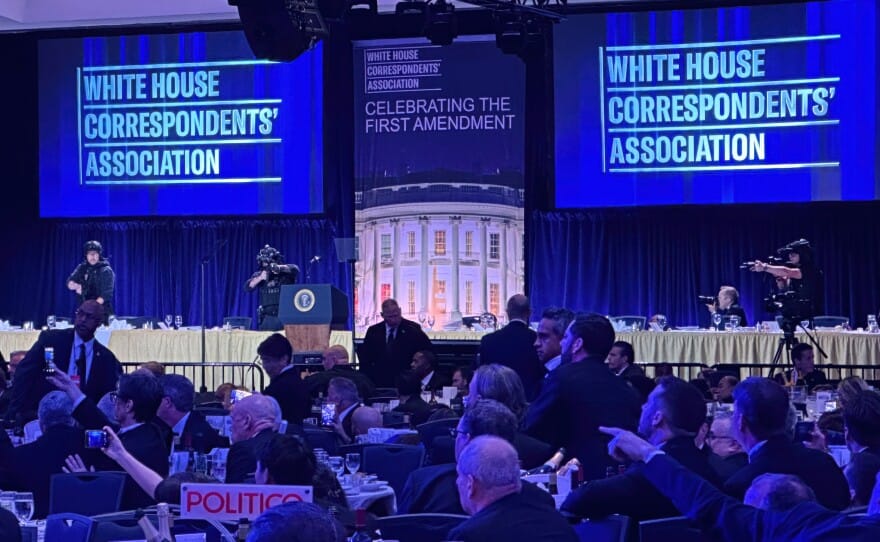
The segment, which aired as part of a satirical alternative to the White House Correspondents’ Dinner, quickly gained attention online and triggered strong reactions from political figures and media audiences alike. As a result, the situation has since evolved into a broader debate about the role of entertainment in shaping public conversation.
First Lady Calls for Action From ABC
In a statement shared on social media, Melania Trump condemned the joke and called on ABC to take a stronger stance regarding content aired on its platform. She argued that such commentary contributes to what she described as a growing “political sickness” in the country.
Her message questioned how long network leadership would continue to support content she views as harmful. She emphasized concerns about the influence of televised comedy on public attitudes. The remarks were later reinforced by Donald Trump, who publicly supported the call for consequences and urged action from both ABC and its parent company, The Walt Disney Company.
The response highlights ongoing tensions between political figures and media personalities. This is particularly true when satire intersects with sensitive topics or public figures.
Jimmy Kimmel Responds to Backlash
During a subsequent broadcast, Jimmy Kimmel addressed the controversy directly, defending the segment as a comedic “roast” rather than a harmful statement. He clarified that the joke was intended to reference public perceptions and not to incite or endorse violence.
Kimmel also reiterated his longstanding public stance against gun violence. He emphasized that the interpretation of the joke as something more serious was, in his view, misplaced. His response reflects a broader pattern in late-night television, where hosts often navigate the fine line between satire and political commentary.
This incident is not the first time Kimmel has faced backlash. Previous controversies have led to temporary suspensions and public criticism. This demonstrates the increasing scrutiny faced by media figures in a polarized environment.
Broader Debate Over Comedy and Free Speech
The dispute has reignited longstanding debates about freedom of expression, censorship, and the responsibilities of major broadcasters. Regulatory voices, including Brendan Carr, have previously weighed in on similar controversies. They have raised questions about whether networks should intervene in response to public pressure.
Supporters of Kimmel argue that satire is a protected form of expression and plays a vital role in democratic societies by challenging authority and encouraging dialogue. However, critics contend that certain types of humor can contribute to division and should be more carefully moderated by networks.
The broader public reaction has been mixed, with social media platforms reflecting both support for the First Lady’s position and defense of Kimmel’s comedic approach. The discussion also touches on the evolving standards of acceptable discourse in media. This is particularly relevant at a time when political tensions remain high.
As debates over media influence and accountability continue, this episode underscores the complex relationship between entertainment, politics, and public perception in the modern information landscape.