From Loyalist to Leading Challenger
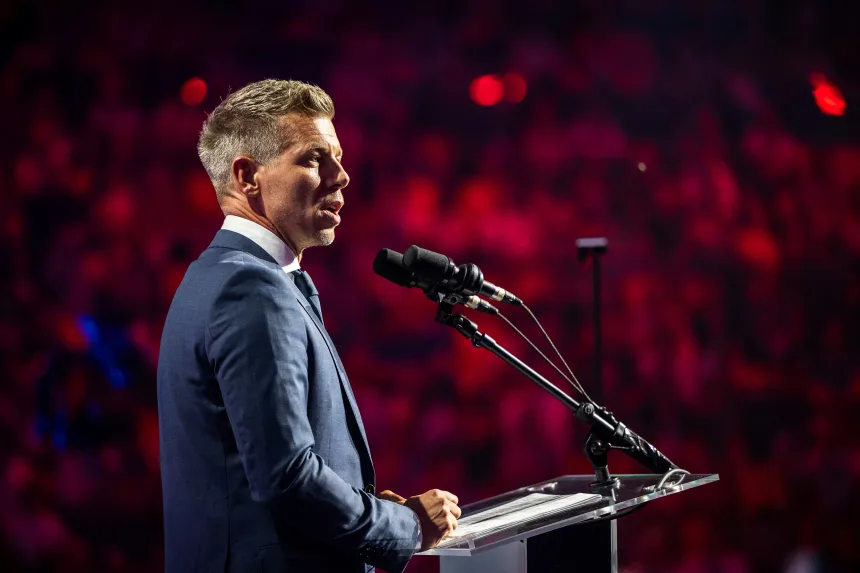
Péter Magyar’s political journey reflects a dramatic shift within Hungary’s modern history. As a young man growing up during the country’s transition to democracy, he once admired Viktor Orbán, who at the time was seen as a reformist figure advocating for freedom and sovereignty. Decades later, Magyar has emerged as the central figure poised to bring an end to Orbán’s 16-year tenure as prime minister.
Born into a prominent Budapest family with deep professional and political ties, Magyar built his early career within elite circles. His background includes legal expertise and diplomatic experience, including years spent in Brussels working within European institutions. His proximity to power extended into his personal life, as he was married to a high-profile political figure within the ruling party.
For years, Magyar was part of the same political ecosystem that sustained Orbán’s dominance. However, a turning point came amid a high-profile domestic controversy that triggered public outrage and exposed internal fractures within the ruling establishment. The episode not only reshaped public opinion but also created an opening for new leadership. Magyar stepped into that vacuum, positioning himself as a credible alternative at a moment when dissatisfaction was growing.
Hungary’s political system, often criticized for structural imbalances, has long favored incumbents. Analysts referencing frameworks such as those outlined by the Freedom House have highlighted concerns about electoral fairness and media influence. Despite these challenges, Magyar’s emergence signals a shift in voter sentiment.
Building Momentum in a Divided Landscape
Magyar’s rapid ascent has been fueled by a campaign focused heavily on domestic concerns, particularly economic stagnation and allegations of systemic corruption. Rather than engaging in polarizing international debates, he concentrated on issues that resonate directly with voters’ daily lives.
His messaging struck a chord with a wide cross-section of the population, from conservative voters disillusioned with the status quo to younger, more liberal constituents seeking reform. This broad coalition has become one of his defining strengths, even as it presents challenges in maintaining ideological cohesion.
A key moment in his rise came with a widely viewed public interview in which he openly criticized the concentration of wealth and influence among a small group of elites. His remarks echoed broader concerns about inequality and governance, themes frequently examined in European policy discussions, including those shaped by institutions like the European Commission.
Magyar’s political vehicle, the Tisza party, quickly gained traction under his leadership. Within months, it transformed from a relatively minor force into a major contender, achieving significant electoral gains in European parliamentary voting. The party’s name, associated with both national identity and a major river, has become symbolic of a movement that aims to reshape Hungary’s political current.
His campaign strategy also included extensive grassroots engagement. Traveling across cities and rural areas alike, Magyar prioritized direct interaction with citizens, often extending events to speak personally with supporters. This approach helped reinforce his image as an accessible and responsive leader.
Political Strategy and Uncertain Path Ahead
One of Magyar’s most notable tactics has been his careful navigation of politically sensitive topics. Rather than engaging in debates that could be used against him, he maintained a disciplined focus on unity and governance. On divisive social and foreign policy issues, his responses have been measured, avoiding clear alignment with positions that might alienate segments of his coalition.
This strategic restraint has made it more difficult for opponents to define him within traditional political labels. Observers note that his understanding of the existing political machinery has allowed him to anticipate and neutralize potential attacks before they gain traction.
At the same time, Hungary’s relationship with the European Union remains a critical factor. Billions of dollars in EU funding have been withheld over concerns related to governance and democratic standards. These financial pressures have had a tangible impact on the national economy, increasing the stakes for any incoming administration. Economic indicators and fiscal dynamics, often analyzed through platforms like the International Monetary Fund, highlight the broader implications of prolonged political tensions.
Magyar’s potential leadership also raises questions about Hungary’s future role within Europe. While some analysts expect a shift toward stronger alignment with EU institutions, others caution that domestic political realities may shape a more gradual transition.
Public perception of Magyar remains complex. While many view him as a vehicle for change, others remain cautious about his long-term vision and ability to maintain unity across a diverse political base. Electoral behavior studies, including those explored by organizations such as the International IDEA, suggest that broad coalitions often face internal pressures once in power.
As Hungary enters a new political phase, Magyar has emphasized that systemic transformation will require time, signaling a step-by-step approach to reforming institutions and rebuilding public trust.