A Brotherhood Forged Through Shared Loss
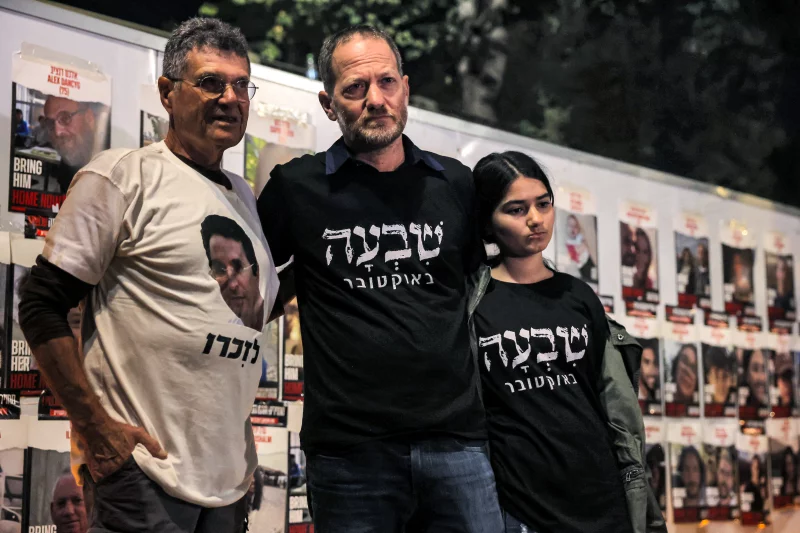
In a region marked by decades of conflict, two men from opposite sides of the divide have formed an unlikely alliance rooted in personal tragedy and a shared vision for peace. Aziz Abu Sarah, a Palestinian, and Maoz Inon, an Israeli, have transformed their individual experiences of loss into a joint effort aimed at fostering understanding and reconciliation across communities.
Their story gained renewed significance following the escalation of violence in 2023, when the conflict deeply impacted both societies. Inon lost his parents during the attacks that shook southern Israel, an event that left a lasting emotional impact. In the midst of grief, it was Abu Sarah who reached out, offering support and connection at a time when despair could have easily turned into resentment.
For both men, this connection evolved beyond friendship into something they describe as a profound brotherhood. Their journey and message are reflected in their collaborative work, including their book and public speaking engagements, which seek to challenge entrenched narratives and encourage dialogue. Through initiatives inspired by organizations such as the <a href="/es/”https://www.peaceworks.org”/">Alliance for Middle East Peace</a>, they emphasize the importance of grassroots cooperation as a foundation for long-term stability.
From Parallel Lives to a Shared Mission
Before their paths fully converged, Abu Sarah and Inon lived remarkably similar lives. Both were involved in the tourism sector, believing that cultural exchange could bridge divides and reshape perceptions. Their initial meeting years ago in Jerusalem planted the seeds for a relationship that would later take on far greater significance.
Abu Sarah’s perspective was shaped by his own early experiences of loss. As a child, he lost a close family member during a period of unrest, an event that initially fueled anger and a desire for revenge. Over time, exposure to new perspectives through education and cross-cultural interaction helped reshape his worldview. He became deeply committed to promoting coexistence, eventually founding initiatives that encourage dialogue between Israelis and Palestinians.
Inon, meanwhile, shifted his focus toward activism following his personal loss. He redirected his professional energy toward advocating for peace and building partnerships that challenge division. Together, they now travel internationally, sharing their story and engaging with audiences interested in conflict resolution. Their efforts align with broader diplomatic and civil society initiatives supported by entities like the <a href="/es/”https://www.un.org”/">United Nations</a>, which has long emphasized dialogue as a critical tool in resolving regional conflicts.
Their collaboration extends beyond public appearances. By exploring communities across Israel and the West Bank, they highlight both the shared humanity and the deeply rooted tensions that define daily life in the region. Their approach avoids rigid debates over language or terminology, focusing instead on mutual respect and empathy.
Grassroots Hope Amid Deepening Divisions
Despite ongoing violence and entrenched political positions, both men believe that change is possible through collective action at the community level. They point to examples of individuals and small groups working to protect one another and resist extremism, even in highly polarized environments.
Abu Sarah has observed increasing participation from younger generations and women in peace-oriented initiatives, suggesting a gradual shift in public engagement. These emerging voices, he argues, represent a potential foundation for future leadership that prioritizes coexistence over conflict. Programs connected to institutions like the <a href="/es/”https://www.ipcri.org”/">Israel Palestine Center for Research and Information</a> continue to support such grassroots efforts, fostering dialogue and cooperation across divides.
Inon echoes the urgency of these efforts, emphasizing that waiting for political solutions alone may not be sufficient. He stresses the need for immediate action to prevent further loss and to create space for reconciliation. Their shared message underscores the idea that meaningful change often begins outside formal political structures, driven by individuals willing to challenge narratives of division.
Their advocacy also intersects with broader regional and international discussions on peacebuilding, including initiatives supported by the <a href="/es/”https://www.worldbank.org”/">World Bank</a> that focus on economic cooperation and stability as pathways to reducing conflict. By combining personal storytelling with practical engagement, Abu Sarah and Inon continue to push for a future defined not by past grievances, but by the possibility of coexistence.