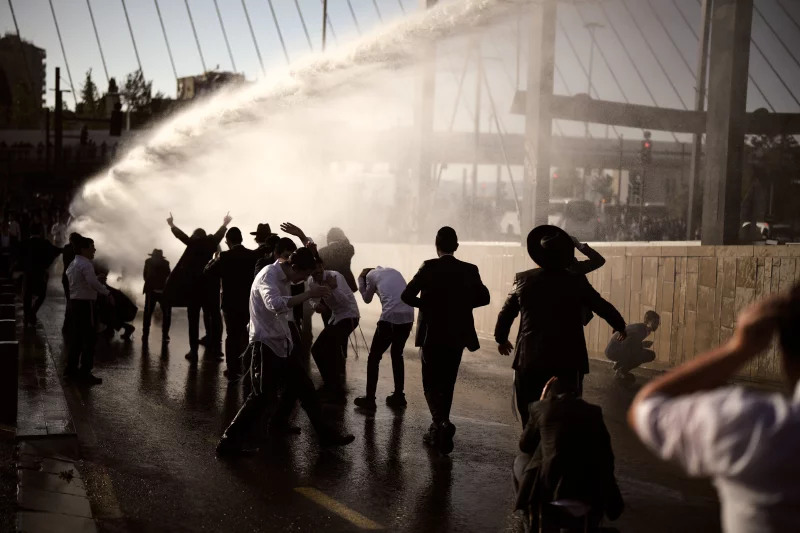
Israel’s governing coalition is facing one of its most serious political crises in recent years. This follows after ultra-Orthodox parties signaled they may abandon Prime Minister Benjamin Netanyahu over disagreements surrounding mandatory military service.
The growing conflict centers on whether ultra-Orthodox Jewish citizens should continue receiving exemptions from military duty. This dispute continues while the country remains engaged in prolonged regional conflict and mounting security operations. Coalition tensions intensified after Netanyahu reportedly informed religious political leaders that he would not immediately move forward with legislation protecting those exemptions.
Political observers in Israel now believe the government could collapse within days. This would potentially trigger national elections as early as September. The dispute has placed enormous pressure on Netanyahu’s fragile coalition. It has also reopened a decades-long debate over military obligations, religion, and political influence inside Israeli society.
Ultra-Orthodox Parties Threaten to Dissolve Parliament
The latest political turmoil erupted after members of Degel HaTorah, one of the ultra-Orthodox factions supporting Netanyahu’s coalition, publicly declared they no longer trusted the prime minister’s leadership on the military draft issue.
The party accused Netanyahu of failing to protect long-standing arrangements that allowed ultra-Orthodox students to avoid military service while pursuing religious education. According to reports circulating in Israeli political circles, Netanyahu suggested postponing any new exemption legislation until after possible future elections. This proposal angered key coalition partners.
As tensions escalated, calls quickly emerged for dissolving parliament and forcing a new national vote. Under Israeli law, if the parliament is dissolved, elections must be held within several months. This could potentially reshape the country’s political landscape during an already volatile period.
The political uncertainty has drawn intense attention from both domestic and international observers. Analysts say the collapse of the coalition could weaken government stability during ongoing regional security challenges and complicated diplomatic negotiations.
The dispute has also intensified debate over the role of religion in Israeli politics. Ultra-Orthodox parties have historically wielded significant influence in coalition governments. They often use that leverage to preserve religious exemptions and social policies important to their communities.
Meanwhile, criticism has continued to grow among secular and military-serving Israelis who argue that exemptions create unequal burdens during wartime. Organizations connected to military veterans and civil equality movements have increasingly pushed for broader participation in national service obligations.
The issue has also attracted international attention through institutions such as the Israel Defense Forces. Recruitment shortages and operational demands have become a major topic during the ongoing conflict environment.
Military Service Debate Divides Israeli Society
Mandatory military service has long been considered one of the foundations of Israeli civic life. Most Jewish citizens are expected to serve in the armed forces after reaching adulthood. Men and women participate in varying capacities depending on military needs and eligibility.
For decades, however, ultra-Orthodox communities received exemptions that allowed many young men to remain in religious seminaries rather than enlist. Originally limited in scale, the exemptions expanded significantly as the ultra-Orthodox population grew and gained greater political representation.
The ongoing Gaza conflict and wider regional instability have dramatically intensified public frustration surrounding the issue. Military officials have repeatedly emphasized the growing need for personnel, reservists, and expanded recruitment as operations continue.
Last year, Israel’s Supreme Court ruled that the government could no longer indefinitely maintain broad exemptions without updated legal justification. That decision increased pressure on Netanyahu’s administration to either formally legislate new protections or begin enforcing wider military recruitment among ultra-Orthodox citizens.
The controversy has divided the country politically and socially. Religious leaders argue that Torah study is essential to preserving Jewish identity and spiritual life. However, critics maintain that equal national responsibilities should apply to all citizens during periods of conflict.
Public discussions surrounding the draft have spread across universities, community organizations, and labor groups. Some economists have also warned that continued exemptions may affect workforce participation and long-term economic productivity within rapidly growing demographic sectors.
The broader constitutional and legal implications are also being examined by institutions including the Israeli Ministry of Justice. Lawmakers and legal experts continue debating how future legislation might withstand judicial review.
Opposition Leaders Position Themselves for Possible Elections
As coalition instability deepens, opposition parties are already preparing for a possible election campaign that could reshape Israeli leadership. Former Prime Minister Naftali Bennett has emerged as one of the leading challengers to Netanyahu. This is according to recent polling trends reported across Israeli media.
Bennett is expected to cooperate closely with centrist opposition leader Yair Lapid in an effort to unite anti-Netanyahu voters and capitalize on public dissatisfaction with the coalition crisis. Their alliance could attract support from moderate conservatives, secular voters, and citizens frustrated by ongoing political deadlock.
Political strategists say Netanyahu still retains strong support among core right-wing voters, particularly those prioritizing national security and conservative policies. However, repeated coalition disputes and legal controversies have weakened confidence among some independent voters.
If parliament dissolves next week, Netanyahu would likely remain caretaker prime minister until a new government is officially formed. Coalition negotiations in Israel are often lengthy and unpredictable due to the country’s fragmented parliamentary system.
Economic markets and foreign governments are also monitoring the situation closely. Concerns over government instability could affect investment sentiment, defense planning, and diplomatic coordination during a period of heightened regional tension.
International organizations including the United Nations continue closely following developments connected to Israel’s domestic political stability and broader Middle East security concerns.
At the same time, policy analysts at institutions such as the Brookings Institution note that the military draft dispute reflects deeper structural divisions inside Israeli society regarding religion, governance, and national identity. Those tensions are expected to dominate public debate if the country heads toward another national election campaign in the coming months.