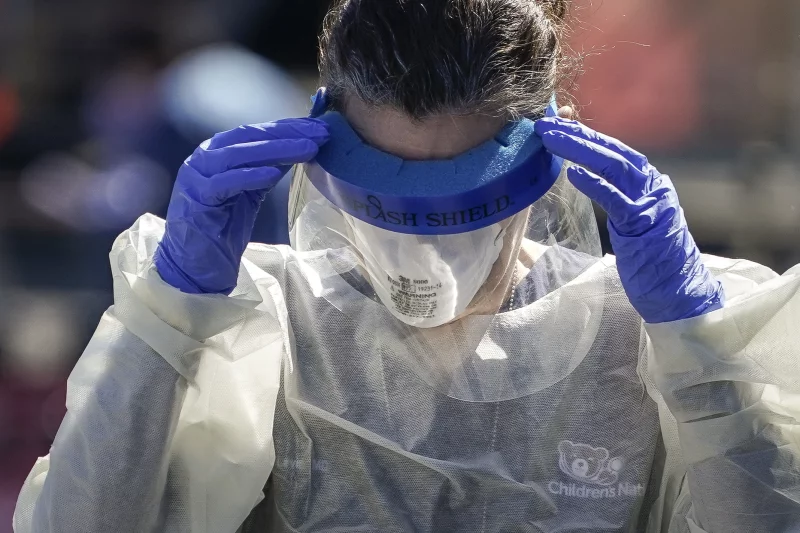
Recent outbreaks involving Ebola in the Democratic Republic of Congo and hantavirus cases linked to a cruise ship have reignited anxiety among many Americans still affected by the emotional aftermath of the COVID-19 pandemic. Social media platforms have rapidly amplified public concern. In particular, videos, memes, online debates, and internet searches reflect growing fears about another possible global health crisis.
For many people, memories of lockdowns, overwhelmed hospitals, and widespread uncertainty remain deeply embedded in everyday life. That lingering psychological impact is influencing how the public reacts whenever unfamiliar infectious diseases make headlines.
Search activity related to the word “pandemic” has increased in recent weeks. At the same time, discussions across online communities continue to compare Ebola and hantavirus to COVID-19 despite major scientific differences between the illnesses. Health specialists say the reaction highlights how dramatically the pandemic changed public awareness around infectious disease outbreaks.
Experts from institutions including the Centers for Disease Control and Prevention emphasize that the current risk to the average American remains very low. However, they acknowledge that the trauma associated with COVID-19 has made many people far more sensitive to health-related news than they were before 2020.
Social Media Amplifies Pandemic Anxiety
Public health experts say social media has become one of the strongest drivers of fear during modern disease outbreaks. Viral videos, alarming headlines, and emotionally charged commentary can spread rapidly online, often blending accurate information with speculation and misinformation.
Medical researchers note that diseases such as Ebola naturally create heightened public anxiety because of their severe symptoms and high fatality rates. Even though illnesses like seasonal influenza kill significantly more people globally each year, Ebola tends to trigger stronger emotional reactions because of its dramatic presentation and media attention.
Organizations such as the World Health Organization have repeatedly explained that Ebola spreads very differently from airborne viruses like COVID-19. Ebola is primarily transmitted through direct contact with infected bodily fluids, including blood and vomit, rather than through casual airborne exposure.
Hantavirus also differs significantly from COVID-19. Most cases occur after exposure to infected rodent droppings, saliva, or urine. Only extremely rare strains show any evidence of person-to-person transmission. Infectious disease specialists say these biological differences are crucial but are often overlooked during moments of public panic.
Researchers believe the collective memory of COVID-19 has created what some experts describe as a “dread factor,” where any emerging virus immediately raises fears of lockdowns, travel restrictions, and societal disruption. The psychological connection is especially strong among families who experienced illness, hospitalization, or personal loss during the pandemic years.
Mental health specialists say repeated exposure to pandemic-related news can also reinforce anxiety cycles. This is particularly true when social media algorithms continuously promote emotionally intense content designed to maximize engagement.
Experts Say Ebola and Hantavirus Are Different From COVID-19
Infectious disease physicians continue to stress that neither Ebola nor hantavirus currently presents the type of widespread transmission risk associated with COVID-19. Scientists explain that COVID spread globally at unprecedented speed because it transmitted easily through respiratory droplets and airborne particles. Consequently, asymptomatic individuals could unknowingly infect others.
Ebola outbreaks, while dangerous, generally require far closer physical contact for transmission. Public health systems have decades of experience containing Ebola through isolation procedures, contact tracing, and specialized treatment centers. Moreover, researchers from Johns Hopkins Bloomberg School of Public Health say modern outbreak responses are significantly more advanced than they were during earlier epidemics.
Still, experts acknowledge concerns surrounding the current Ebola outbreak in Central Africa. Delayed detection, political instability, population displacement, and limited healthcare infrastructure can complicate containment efforts in affected regions. International health agencies continue monitoring the situation closely while coordinating surveillance and emergency response operations.
Health officials also note that public trust in institutions changed dramatically during COVID-19. Debates surrounding vaccines, masking, lockdown policies, and government messaging created lasting divisions. These continue influencing how people interpret new health emergencies today.
At the same time, epidemiologists emphasize that outbreaks themselves are not unusual. Throughout history, societies have repeatedly faced epidemics ranging from influenza and SARS to Zika, H1N1, mpox, and Ebola. Specialists say the existence of outbreaks does not automatically mean another global pandemic is imminent.
Scientists point out that rapid advances in genomic sequencing, disease monitoring, vaccine development, and international communication now allow authorities to identify and respond to infectious threats faster than at almost any other point in history.
Americans Continue Adapting Their Health Habits
One lasting effect of COVID-19 has been a permanent shift in personal health behavior among many Americans. Hand sanitizer use, improved hygiene awareness, mask usage during illness, and avoidance of crowded indoor spaces have become more common even years after the height of the pandemic.
Medical professionals from institutions like Stanford Medicine encourage the public to focus on practical risk assessment instead of reacting emotionally to alarming headlines. Experts recommend evaluating how diseases spread, understanding actual exposure risks, and relying on verified scientific information rather than viral online speculation.
Epidemiologists say asking simple questions can help reduce unnecessary fear. Key considerations include whether a disease spreads easily between people, whether local transmission exists, and whether public health officials believe there is meaningful community risk.
Public health researchers also warn that misinformation remains one of the biggest modern challenges during disease outbreaks. False claims, exaggerated death tolls, conspiracy theories, and misleading videos can circulate online faster than official scientific updates. This increases confusion and panic.
Even so, experts believe the experience of COVID-19 also produced positive long-term effects. Many people are now more aware of how viruses spread, more likely to stay home when sick, and more attentive to public health recommendations than before the pandemic.
Researchers say future outbreaks will likely continue triggering strong emotional reactions. This is because COVID fundamentally changed how millions of people think about infectious diseases, global travel, hospitals, and everyday public interactions.